Key takeaways
- Five concrete cut off saws compared on listing facts: blade diameter, cutting depth, power source and included blades for masonry cutting jobs.
A cut off saw decision is really three decisions: how deep you need to cut, which decides blade diameter; how the saw is powered, which decides where it can work; and whether a blade is in the box, which decides whether you cut on delivery day. The listings below state those facts unevenly, and this guide prints only what each one states.

The five saws span the real range of the type: two electric disc cutters from one brand, a large gas machine, a cordless power cutter kit, and an electric angle cutter sold for masonry work. Depths run from a stated 4.5 inches to 5 inches where stated at all — and where a listing does not state depth, the entry says so.
Quick Picks
As an Amazon Associate we earn from qualifying purchases.
| Product | Best for | Key spec from title |
|---|---|---|
| Evolution R300DCT 12″ Electric Disc Cutter | Pavers, blocks and slabs up to its stated depth, with a blade in the box and no fuel to mix. | 12-inch blade, 4.5-inch cut depth, electric, blade included |
| Evolution DISCCUT1 12″ Disc Cutter | Mains-powered masonry cutting in the 12-inch class, from a long-running listing. | 20-amp electric, 12-inch diamond blade |
| Husqvarna K 770 14″ Gas Cut-Off Saw (967682101) | Site work away from power, needing the deepest stated cut and all-day fuelled running. | 74cc X-Torq engine, 14-inch blade, 5-inch cut depth |
| Makita XEC01PT1 36V (18V X2) LXT 9″ Power Cutter Kit | Paver and tile work where cordless freedom matters more than maximum depth. | Cordless 36V kit, 9-inch cutter, 4 batteries included |
| Makita 4114X 14″ SJS Electric Angle Cutter | Mains-powered 14-inch cutting with a blade included, without fuel or batteries. | 14-inch electric angle cutter, diamond blade included |
How to Choose
Blade diameter is really a depth decision
Cutting depth follows blade size: the stated figures here give 4.5 inches from a 12-inch blade and 5 inches from the 14-inch gas saw. A standard paver or block sits comfortably inside either; a thick slab or a kerb may not. Work out your thickest regular cut first and buy the blade class that covers it in one pass, because a saw that needs two passes from opposite sides doubles the work and the inaccuracy. Where a listing states no depth, treat the depth as unknown rather than assuming it matches a sibling model.
Power source decides where the saw can work
The three power stories here suit three working lives. Mains electric saws start instantly, run indoors and never need fuel, within a cord’s reach of a socket. The gas saw works anywhere and all day, with mixing, noise and exhaust as its price. The cordless kit frees shallow work from both cord and can, bounded by battery rotation. None is best in the abstract: the right answer is the one that matches where your cutting actually happens, a driveway with an outdoor socket, a road crew’s route, or a roof.
A blade in the box is a stated fact worth money
Two listings here state a diamond blade included; the others’ captured facts do not settle the question either way. A masonry diamond blade is a significant consumable, and a saw that arrives without one cannot cut on delivery day. Read the included-components wording on the live page for any pick whose entry does not state a blade, and count the blade’s cost into your comparison if it is absent. The same applies to the cordless kit’s batteries: four stated packs are a working rotation, not a detail.
Stated facts beat family resemblance
These five saws include two pairs from the same brands, and the pairs differ in exactly the figures that matter: one Evolution listing states its depth and the other does not; the two Makitas are different types at different blade sizes. Brand families share colours and styling, not specifications. Compare each listing on its own stated blade, depth, power and contents, and let a missing figure count as missing rather than borrowing it from the model beside it. That discipline is what keeps a buying guide honest, and it is the rule this one is written by.
The 5 Best Options
Evolution R300DCT 12″ Electric Disc Cutter
The R300DCT is the electric route to a stated depth: its title gives a 12-inch blade and a 4.5-inch cut depth, with a diamond masonry blade included in the box, and the United States version is a 15-amp machine per the mirror of its US listing. No gas and no oil mixing means it starts on a trigger pull indoors or out, and the included blade means the first cut happens the day it arrives. For pavers, blocks and slabs within its depth, it is the most completely stated package here. This guide prints only the US listing’s code; several non-US codes circulate for the same model family.
Specs
- Blade: 12 inches per listing title
- Cut depth: 4.5 inches per title
- Power: electric, 15A in the US version per listing mirror
- Blade included: diamond masonry blade per title
- Fuel: none, electric per title
Best for: Pavers, blocks and slabs up to its stated depth, with a blade in the box and no fuel to mix.
Watch out for: Non-US versions of this model circulate under different product codes; the code printed here is the US listing, so confirm the page shows the 15-amp US version before ordering.
Evolution DISCCUT1 12″ Disc Cutter
The DISCCUT1 is the older, heavier-current sibling in Evolution’s electric line: the listing states a 20-amp electric disc cutter with a 12-inch diamond blade, and its item type name adds an 1800W figure. It shares the R300DCT’s basic proposition — mains power, a 12-inch blade, masonry cutting without fuel — in a longer-running listing. Its captured fields do not state a cut depth, so this guide prints none and the entry rests on the blade size and power figures the listing does state. Buyers comparing the two Evolution saws should read both live pages for the depth and accessory differences before choosing.
Specs
- Blade: 12-inch diamond blade per listing
- Power: 20-amp electric per listing
- Power figure: 1800W in item type name per listing
- Type: electric disc cutter per listing
Best for: Mains-powered masonry cutting in the 12-inch class, from a long-running listing.
Watch out for: No cut depth was captured from this listing, so do not assume it matches the R300DCT’s stated 4.5 inches: read the live page’s specification before relying on a depth.
Husqvarna K 770 14″ Gas Cut-Off Saw (967682101)
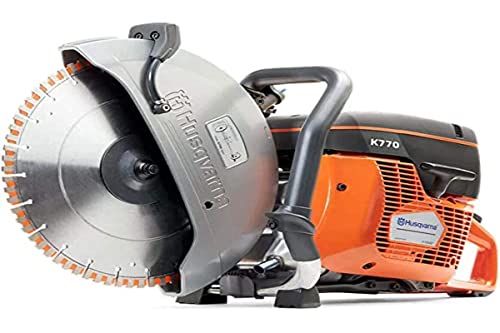
The K 770 is the gas flagship of this set and the deepest stated cut: manufacturer and listing figures give a 74cc X-Torq engine at 5 horsepower, a maximum blade diameter of 14 inches and a maximum cutting depth of 5 inches. That combination is the road-and-site pattern — full-depth cuts through kerbs, slabs and masonry away from any power outlet, at the cost of fuel mixing, noise and exhaust. It is the only pick here whose working life is measured in engine hours rather than cord length or battery packs, and for contractors cutting daily, that is precisely the point of it.
Specs
- Engine: 74cc X-Torq per listing and manufacturer figures
- Output: 5 hp per stated figures
- Blade: 14 inches maximum diameter per stated figures
- Cut depth: 5 inches maximum per stated figures
- Model: 967682101 per listing
Best for: Site work away from power, needing the deepest stated cut and all-day fuelled running.
Watch out for: A newer updated-version listing for this saw family circulates under a different code on weaker evidence; the code printed here is the established listing, so confirm the model number 967682101 on the live page.
Makita XEC01PT1 36V (18V X2) LXT 9″ Power Cutter Kit
The XEC01PT1 is the cordless answer: a 36-volt power cutter built from two 18-volt LXT batteries, in a kit whose title states four 5.0-amp-hour batteries, a brushless motor, AFT anti-kickback technology and an electric brake. The 9-inch blade class makes it a smaller, lighter tool than the 12 and 14-inch picks, suited to pavers, tile and shallow cuts where carrying a cord or a fuel can is the main obstacle. One limit is printed plainly: no cutting depth was captured from this listing, so this guide states none, and depth-critical buyers must read it on the live page.
Specs
- Power: 36V from two 18V LXT batteries per title
- Motor: brushless per title
- Blade: 9 inches per title
- Kit: 4 batteries at 5.0Ah per title
- Safety: AFT and electric brake per title
- Type: power cutter kit per title
Best for: Paver and tile work where cordless freedom matters more than maximum depth.
Watch out for: Cutting depth was not captured from this listing and is not printed here; confirm it on the live page, and do not import a figure from the manufacturer’s site or another model.
Makita 4114X 14″ SJS Electric Angle Cutter
The 4114X enters this set as what its listing calls it: a 14-inch electric angle cutter with SJS anti-vibration technology and a 14-inch diamond blade included. That makes it the large-blade electric option, matching the gas Husqvarna’s blade diameter without fuel, for workshop and site work within reach of mains power. Its listing’s captured facts are thinner than the others — blade size, the SJS feature and the included blade are what they state — so the entry rests on those and claims no depth figure. For a buyer who wants 14-inch electric capacity from an established tool line, it is the stated-facts candidate.
Specs
- Blade: 14 inches per listing title
- Blade included: 14-inch diamond blade per title
- Feature: SJS per title
- Power: electric per title
- Type: angle cutter for masonry cutting per listing
Best for: Mains-powered 14-inch cutting with a blade included, without fuel or batteries.
Watch out for: This listing calls the tool an angle cutter rather than a cut off saw; the facts printed are its own, and buyers needing a stated depth figure should read the live page before ordering.
Which One Fits Your Situation
Pavers and blocks at home, power nearby
Take the Evolution R300DCT: stated 4.5-inch depth, a diamond blade in the box and mains power that starts on a trigger pull. Its 15-amp draw is the one household caveat: give it a circuit that can carry it and it repays you with fuel-free cutting all day.
Road and site work all day, no power on site
Take the Husqvarna K 770 for its 74cc engine, 14-inch blade and the deepest stated cut here at 5 inches. Confirm the model number on the live page against the newer updated-version listing, because the two saws share a family name and a silhouette.
Shallow cuts where cords and fuel cans obstruct
Take the Makita XEC01PT1 kit: cordless 36-volt running with four batteries in the box, after confirming its depth on the live page. Four batteries rotate through the charger across a working day, and the stated AFT and brake features suit stop-start cutting around a site.
A 14-inch electric option for the workshop
Take the Makita 4114X, the large-blade mains pick with a diamond blade included, sold under its own angle cutter name. Its captured facts are thinner than the others, so the live page read matters most for this pick before the order is placed.
Common Mistakes
- Buying blade diameter by habit instead of by the thickest material you actually cut, then discovering the depth is short.
- Assuming a sibling model’s stated depth or contents apply to the listing you are buying, when the two listings state different facts.
- Ordering a saw without checking whether a diamond blade is included, and losing the first working day to a second order.
- Choosing gas for indoor or enclosed work, or mains electric for a site with no power, by ignoring the power source decision.
- Importing a specification from a manufacturer page or a foreign listing for a product whose own Amazon listing does not state it.
Frequently Asked Questions
Which saw here cuts deepest?
The Husqvarna K 770, with a stated maximum cutting depth of 5 inches from its 14-inch blade. The Evolution R300DCT states 4.5 inches from a 12-inch blade. The other three listings do not state a depth in their captured facts, so this guide prints none for them.
Why do two entries have no cutting depth?
Because their listings’ captured fields do not state one. The DISCCUT1 and the Makita XEC01PT1 may well publish depths on their live pages, but this guide prints only listing-stated facts it has captured, and flags the gap in each entry instead of filling it from other sources.
Is an angle cutter the same as a cut off saw?
They overlap in masonry work. The Makita 4114X is sold under its listing’s own name, angle cutter, with a 14-inch diamond blade for concrete and masonry cutting. It is included under that honest label rather than renamed, and its entry prints only its stated facts.
Do the electric saws need special circuits?
The US version of the R300DCT is stated as a 15-amp machine and the DISCCUT1 as 20-amp, which is at or above many household circuit ratings. Check your circuit capacity before ordering either, and treat the stated amp figure as part of the purchase decision.