Key takeaways
- Compare the best battery miter saws for trim, framing and DIY work, from compact 7-1/4 inch cordless models to a larger 10 inch dual-bevel pick.
A miter saw earns its place in a workshop by doing one job extremely well: making straight, angled and beveled cuts that fit together the first time. For years that accuracy came with a power cord, a nearby outlet and a fair amount of cable management. Battery power has changed the equation. Modern cordless miter saws run on the same battery platforms as drills, impact drivers and circular saws, so a trim carpenter, a remodeler or a keen DIYer can set up on a driveway, in a finished room or at the far end of a garden without hunting for power.


A quick note on naming before we start: this guide covers battery (cordless) miter saws only, and every pick below runs on rechargeable lithium-ion packs rather than mains power. That focus matters, because a cordless saw is bought as part of a battery system. The saw itself is only half the purchase; the packs and charger you already own, or still need to buy, decide the real cost and how long you can cut between charges.
This guide compares three cordless miter saws from three different battery platforms: a compact DEWALT 20V MAX sliding model, a larger Makita 18V X2 (36V) dual-bevel model, and a budget-friendlier Ryobi 18V ONE+ sliding model. Each one suits a different kind of work, and none of them is the right answer for everyone. We explain how each saw is built, what its listing says about capacity and speed, who it fits best, and where its limits sit. We have not tested these saws ourselves; the specifications below come from the product listings, and you should confirm the current configuration and price on the product page before ordering.
Disclosure: As an Amazon Associate, we earn from qualifying purchases. When you buy through links in this article, we may earn a commission at no extra cost to you.
How We Chose These Cordless Miter Saws
The first filter was simple: the saw had to be a genuine battery miter saw. Corded models, however good, were excluded, because a buyer searching for a battery saw usually wants freedom from outlets, or already owns packs from a platform they want to extend. The second filter was blade size and cutting role. We wanted a spread of capacities, from a light 7-1/4 inch saw that one person can carry up stairs all day, to a 10 inch saw that can handle wider boards and taller molding.
The third filter was platform logic. A cordless miter saw makes the most sense when its batteries also power the other tools in your kit. DEWALT’s 20V MAX system, Makita’s 18V LXT system and Ryobi’s 18V ONE+ system are three of the most widely owned platforms, so most readers will already have a stake in at least one of them. If you own packs from one of these systems, the matching saw on this list is usually the sensible starting point, even before you compare cutting capacities.
Finally, we looked at the details that separate a pleasant saw from a frustrating one: whether the saw slides, whether it bevels one way or both, how the miter stops are arranged, what the listing says about weight, and what is actually included in the box. A tool-only saw looks cheaper until you add two batteries and a charger, so we flag what each package includes as clearly as the listings allow.
Quick Comparison
| Saw | Platform | Blade | Bevel | Format |
|---|---|---|---|---|
| DEWALT DCS361B | 20V MAX | 7-1/4 inch | Single bevel (listing highlights bevel capability) | Tool only |
| Makita XSL06PT | 18V X2 LXT (36V) | 10 inch | Dual bevel | Kit with two 5.0Ah batteries |
| Ryobi PBT01B | 18V ONE+ | 7-1/4 inch | Sliding compound | Tool only |
1. DEWALT 20V MAX 7-1/4 Inch Sliding Miter Saw (DCS361B) — Best for Trim Work on 20V MAX
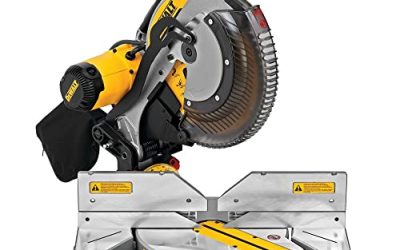
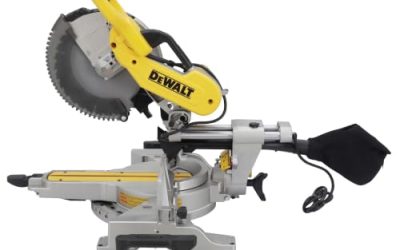
The DEWALT DCS361B is the saw most 20V MAX owners will look at first, and the listing explains why. It is a 7-1/4 inch sliding compound miter saw powered by a single 20V MAX battery, sold as a tool only, so it drops straight into an existing DEWALT kit without forcing you to buy duplicate packs and chargers. The product description says the saw delivers, on average, 183 cuts of 2×4 pine or 275 cuts of 3-1/4 inch pine baseboard per charge, figures that frame it clearly as a trim and finishing saw rather than a framing workhorse.
The listing lists a no-load speed figure in its specifications and describes a compact, lightweight design intended to be easy to carry and set up. DEWALT’s own description emphasizes accurate cuts, and the included components listed are practical ones: a carbide blade, a material clamp, a blade wrench and a user guide. The clamp matters more than it might seem. Small trim pieces want to creep as the blade enters them, and a proper clamp is what keeps a delicate profile still while you concentrate on the cut line.
The sliding action is the other headline. A 7-1/4 inch blade on a fixed chop saw has a limited crosscut width, but sliding rails let the blade travel through wider stock, which is how a small saw manages baseboards, shelving boards and laminate flooring planks that would otherwise need a bigger machine. If your typical work is skirting, architrave, picture frames, flooring transitions and general repair carpentry, this size covers a surprising amount of it.
Who should buy it: DEWALT 20V MAX owners who mostly cut trim, flooring and small stock, and who value a saw they can carry in one trip from the van. Who should look elsewhere: anyone regularly cutting wide decking boards, deep crown molding or thick hardwood, where the 10 inch Makita below offers more capacity, and anyone with no 20V MAX batteries at all, because the tool-only price is only the start of the real cost.
Things to check before ordering: the listing is for the bare tool, so confirm you have a suitable 20V MAX battery and charger, and check which blade is included so you can plan a finer-tooth blade purchase if your work is mostly delicate trim.
2. Makita 18V X2 LXT (36V) 10 Inch Dual-Bevel Sliding Compound Miter Saw Kit (XSL06PT) — Best for Larger Capacity
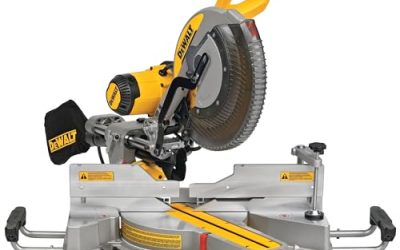
The Makita XSL06PT takes a different approach to battery power. Instead of one pack, it runs on two 18V LXT batteries in series, giving it 36V performance while staying inside Makita’s 18V platform. For LXT owners that is an elegant arrangement: the same packs that run your drill and impact driver pair up to run a 10 inch saw. The listing describes a brushless motor delivering up to 4,400 RPM, with automatic speed change technology that adjusts cutting speed and torque under load.
Capacity is where this saw pulls ahead of the two 7-1/4 inch models. The 10 inch blade, the dual-bevel design and the sliding system are aimed at wider and taller work. Makita’s description highlights a two-steel-rail sliding system designed for smooth, accurate cutting, and a reduced footprint that lets the saw sit closer to a wall than a conventional long-rail design. In a small workshop, that detail is genuinely useful: a sliding saw normally needs a deep bench or a lot of clear space behind it, and a compact rail layout eases that problem.
The dual bevel deserves a plain explanation. A single-bevel saw tilts one way, so some compound cuts require you to flip or rotate the workpiece. A dual-bevel saw tilts both ways, so you can keep the good face of the material up and the long end of the board pointing the way that suits your bench. On crown molding and long trim runs, that saves time and reduces handling mistakes.
This kit format also changes the buying maths. The listing describes the XSL06PT as a kit with batteries included — two 18V LXT batteries are required and listed as included — along with a blade, bag, charger, hex wrench, triangular rule and vertical vise among the listed components. That makes the headline price easier to compare against a finished setup, because you are not adding packs afterwards. The trade-off is size and weight: the listing gives a shipping weight of 80.5 pounds for the kit, so this is a saw you move deliberately, ideally on a stand, rather than one you toss in the car for a quick repair.
Who should buy it: Makita LXT owners who cut wider boards, larger molding or more demanding stock and want one saw for the workshop and site. Who should look elsewhere: buyers who mainly need portability, or who are not already invested in LXT batteries and would pay a premium to enter the system through a large kit.
3. Ryobi 18V ONE+ 7-1/4 Inch Sliding Compound Miter Saw (PBT01B) — Best Value for ONE+ Owners

Ryobi’s ONE+ platform has one of the longest-running battery promises in the business: one 18V battery family across a very wide tool range. The PBT01B brings that platform to a 7-1/4 inch sliding compound miter saw. The Amazon listing describes it as the RYOBI ONE+ 18V Cordless 7-1/4 inch Sliding Compound Miter Saw, with part number PBT01B, and lists the included components as the saw with a 40-tooth carbide-tipped blade, a blade wrench, a dust bag, a work clamp and two carrying handles.
That component list tells a story about intended use. Carrying handles, a dust bag and a clamp suggest a saw meant to be moved around a house project by project: cut flooring in one room, move to the garden for a fence repair, then back inside for trim. The 40-tooth blade is a general-purpose starting point; finish carpenters often fit a finer blade for cleaner trim edges, and the listing’s standard blade makes that upgrade path worth budgeting for if your work is mostly visible molding.
Like the DEWALT, this is a tool-only style purchase in most listings, so the value case depends entirely on already owning ONE+ batteries and a charger. For a household that already runs ONE+ drills, lights and garden tools, adding this saw is usually far cheaper than entering a new platform, even if a rival saw looks sharper on paper. For a buyer starting from zero, compare the full kit cost — saw, two decent-capacity batteries and a charger — against the Makita kit above before deciding which is really the budget option.
Who should buy it: ONE+ owners doing DIY renovation, flooring, fencing and trim who want sliding capacity without professional-kit pricing. Who should look elsewhere: professionals who need dual bevel and 10 inch capacity daily, or anyone whose battery shelf is already committed to another platform.
Things to check before ordering: confirm whether the listing you buy is tool only, which batteries the seller recommends for runtime, and whether the included blade suits your material, because blade choice changes cut quality more than almost any other single factor on a small saw.
What to Consider Before Buying a Battery Miter Saw
Blade size decides your real capacity
Blade diameter is the quickest guide to what a saw can cut. A 7-1/4 inch saw handles most trim, flooring and 2x material with its slide, and rewards you with low weight. A 10 inch saw adds depth and width for taller baseboards, wider shelves and bigger molding, at the cost of bulk. Buy for the stock you actually cut most months, not the one exceptional project you might do once.
Sliding rails and bevel range
A sliding saw pulls the blade through wide boards instead of forcing you to flip them. Dual bevel saves flipping in the other plane. Neither feature improves a simple straight crosscut, but both reduce handling on compound work. If you cut crown molding or picture frames regularly, put more weight on bevel range; if you cut wide planks, put more weight on slide travel.
Batteries are the running cost
Runtime claims on listings are averages in specific materials, such as the DEWALT description’s cuts per charge in pine. Dense hardwood, thick stock and cold weather all reduce real runtime. Two mid-size packs and a charger that can keep up are the minimum sensible setup for a day of intermittent cutting, and larger-capacity packs are worth prioritizing over a second accessory for most buyers.
Accuracy comes from setup, not badges
Any miter saw needs its fence and blade checked for square when it arrives and after it has been transported. Detents help you return to common angles quickly, but a test cut on scrap, measured with a square, tells you the truth about your individual saw. Budget ten minutes for setup and your results will improve more than they would from stepping up a price tier.
Dust, stands and blades
A stand or solid bench at a comfortable height matters for long boards, which need support at both ends. Match the blade to the job: fewer teeth for fast framing cuts, more teeth for clean trim edges.
Frequently Asked Questions
Are battery miter saws powerful enough for hardwood?
For trim, flooring and typical DIY stock, the listings for modern cordless saws describe speeds and runtimes aimed squarely at that work. Thick, dense hardwood in wide sections is where larger blades and higher-voltage arrangements, like the two-battery Makita in this guide, have an advantage. Match the saw size to your hardest regular job rather than your easiest one.
Is a 7-1/4 inch saw enough for baseboards?
In many homes, yes, especially with a sliding model. The DEWALT listing, for example, frames its runtime around cuts in 3-1/4 inch pine baseboard. Taller modern skirting or large crown profiles may exceed a small saw’s vertical capacity, so measure your molding and compare it with the capacity figures on the product page before ordering.
Should I buy a kit or a bare tool?
Buy the bare tool when you already own suitable batteries and a charger on that platform. Buy a kit when you are entering a platform, or when your existing packs are small or aging. Always compare the total working cost, not the saw-only headline price.
Can one battery platform really run everything?
That is the design idea behind systems like 20V MAX, LXT and ONE+. Staying on one platform simplifies chargers and spares, which is why platform choice usually matters more than small specification differences.
Verdict
Choose the DEWALT DCS361B if you own 20V MAX batteries and your work is trim, flooring and general repairs that benefit from a light sliding saw. Choose the Makita XSL06PT if you need 10 inch dual-bevel capacity, prefer a kit with batteries included, and already live in the LXT system. Choose the Ryobi PBT01B if ONE+ is your household platform and you want sensible sliding-saw capability for renovation and DIY work at a platform-friendly cost. Whichever you pick, confirm the current configuration, included components and price on the product page, fit a blade that suits your material, and check the saw for square before your first real cut.