Key takeaways
- Find the best aluminum cutting saws for clean, accurate cuts in extrusions, trim, and plate. Compare four miter saws built for non-ferrous metal work.
Aluminum is a forgiving material in some ways and unforgiving in others. It cuts easily compared with steel, yet it grabs blades, throws fine chips, and punishes a saw that wanders off its line. A good aluminum cutting saw therefore needs three things: a motor that holds speed under load, a blade with enough carbide teeth to shear the metal instead of tearing it, and a fence and miter system that keeps long extrusions square while you cut.


The saws in this guide are all miter saws, because that is the tool most people reach for when they need to cut aluminum extrusions, angle stock, flat bar, and trim to length at precise angles. Each one handles aluminum well when fitted with a high-tooth-count carbide blade made for non-ferrous metals, which matters as much as the saw itself: most miter saws ship with general-purpose wood blades, so plan on fitting a non-ferrous blade before your first aluminum cut.
Before you buy, think about the longest piece you will cut and the widest profile you will crosscut. A 10-inch saw is easier to carry and store, while a 12-inch sliding saw handles wider extrusions and taller profiles without flipping the workpiece. Corded saws run all day, while a cordless saw earns its place when the work happens away from an outlet. The sections below compare four saws across those trade-offs so you can match the tool to the job.
At a Glance
| Saw | Blade Size | Motor | Key Feature | Best For |
|---|---|---|---|---|
| DEWALT DWS780 | 12 in | 15 amp corded, 3,800 RPM | XPS shadow cut line | Wide extrusions and daily shop use |
| Makita LS1040 | 10 in | 15 amp corded, 4,600 RPM | Dual-post pivot arm, machined aluminum base | Compact benches and trim-length cuts |
| Bosch GCM12SD | 12 in | 15 amp corded, 4,000 RPM | Axial-Glide system | Tight workshops where rails need clearance |
| Milwaukee 2734-21HD | 10 in | M18 FUEL cordless | Cordless sliding capacity | Jobsites without nearby power |
1. DEWALT DWS780 12-Inch Double-Bevel Sliding Compound Miter Saw
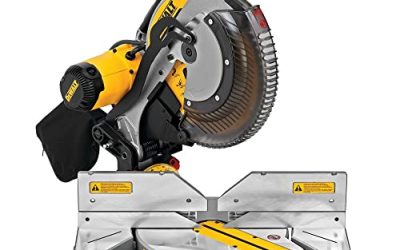
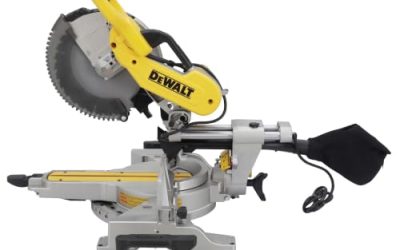
The DEWALT DWS780 is the workhorse pick in this guide. Its 12-inch blade and sliding head give it the largest cutting capacity here, with a horizontal capacity of 13-7/8 inches and a vertical capacity of 6-3/4 inches against the fence. The back fence design lets it cut a 2 by 16 at 90 degrees and a 2 by 12 at 45 degrees, which covers the wide aluminum extrusions and trim profiles that smaller saws force you to flip and re-cut.
The feature that sets the DWS780 apart is the XPS crosscut positioning system. An LED casts the shadow of the blade onto the workpiece, so the line you see is exactly where the kerf will land. Unlike a laser guide, the shadow never needs recalibration when you change blades, which matters when you swap between a wood blade and a non-ferrous blade for aluminum. For aluminum work, that visible cut line helps you place the blade precisely on a marked extrusion without creeping into the mark.
The saw miters 60 degrees to the right and 50 degrees to the left, with an adjustable stainless steel miter detent plate and 10 positive stops. It bevels 0 to 49 degrees in both directions, so you can cut mirror angles without flipping a long piece of aluminum angle or channel. The 15 amp motor spins the blade at 3,800 RPM, and the dual horizontal steel rails ride on linear ball bearings for a smooth, steady slide. It ships with a carbide blade, a blade wrench, a dust bag, and a vertical material clamp.
Considerations
The DWS780 is heavy, at roughly 56 pounds, and its footprint with the rails extended is large. It suits a fixed spot on a bench or a dedicated miter stand better than a saw you carry to a new location every day. The dust bag collects only part of the fine aluminum chips, so a shop vacuum on the dust port is a better plan. The included blade is a general-purpose blade, so budget for a high-tooth-count non-ferrous blade before cutting aluminum.
2. Makita LS1040 10-Inch Compound Miter Saw
The Makita LS1040 is the compact pick in this guide, and the one to choose when bench space is tight or the saw needs to move. Its 10-inch blade spins at 4,600 RPM on a 15 amp direct-drive motor, and the direct drive design means there are no belts to slip or replace. The saw weighs about 24 to 27 pounds depending on the configuration, which makes it one of the easiest saws here to lift onto a bench or carry to a job.
What makes the LS1040 notable for aluminum work is its build. The precision-machined aluminum base and dual-post compound pivoting arm hold the head steady with less flex than a single-post design, and that rigidity shows up as cleaner, squarer cuts in extrusions and flat bar. The miter range runs 0 to 52 degrees to the right and 0 to 45 degrees to the left, with 9 positive stops at common angles, and the bevel range runs 0 to 45 degrees to the left. A fluorescent light illuminates the work surface independently of blade rotation, which helps when you are lining up a cut line on a bright aluminum surface.
The saw ships with a 10-inch 40-tooth micro-polished carbide blade, a vertical vise, a dust bag, a socket wrench, and a triangular rule. The vertical vise is genuinely useful for aluminum: it holds extrusions and angle stock firmly against the fence so the piece cannot shift or lift as the blade enters the cut.
Considerations
The LS1040 is a single-bevel saw, so bevel cuts to the right require flipping the workpiece. Its 10-inch blade and non-sliding head also limit horizontal capacity compared with the 12-inch sliding saws here, so very wide extrusions need to be cut in more than one pass or on a larger saw. The included 40-tooth blade is a general-purpose blade; for aluminum, fit a blade with a higher tooth count and a grind made for non-ferrous metals.
3. Bosch GCM12SD 12-Inch Dual-Bevel Glide Miter Saw

The Bosch GCM12SD takes a different approach to the sliding mechanism. Instead of rails that extend behind the saw, it uses a patented Axial-Glide system with articulated arms. That design saves about 12 inches of workspace behind the tool, which makes the GCM12SD the right choice when your bench sits against a wall or your workshop is short on depth. The glide action stays smooth and controlled through the full travel of the head, and the saw keeps its alignment over time because the arms move on fixed pivots rather than sliding tubes.
Capacity is generous: 14 inches horizontal and 6-1/2 inches vertical against the fence, with 6-1/2 inches of crown capacity. The saw miters 52 degrees to the left and 60 degrees to the right, and bevels 47 degrees in both directions, with marked detents and roof pitch angles on the scales. The 15 amp motor delivers 4,000 RPM, and the included 60-tooth carbide blade is a reasonable starting point for general work. The Squarelock fences are pre-aligned and tall enough to support long extrusions squarely, and the upfront bevel and miter controls put adjustments within easy reach.
For aluminum, the GCM12SD has two practical advantages. First, the smooth glide lets you feed the blade into the metal at a steady pace, which reduces chatter and leaves a cleaner edge. Second, the large capacity means wide flat bar and broad extrusions can be cut in a single pass, which keeps both faces of the cut square to each other.
Considerations
At about 65 pounds, the GCM12SD is the heaviest saw in this guide, so it is best treated as a semi-permanent bench tool. The Axial-Glide arms need clearance on the sides of the saw rather than behind it, so check your bench layout before you commit. As with the other saws here, the included blade is a general-purpose blade, and aluminum work calls for a dedicated non-ferrous blade with a higher tooth count.
4. Milwaukee 2734-21HD M18 FUEL 10-Inch Dual-Bevel Sliding Compound Miter Saw
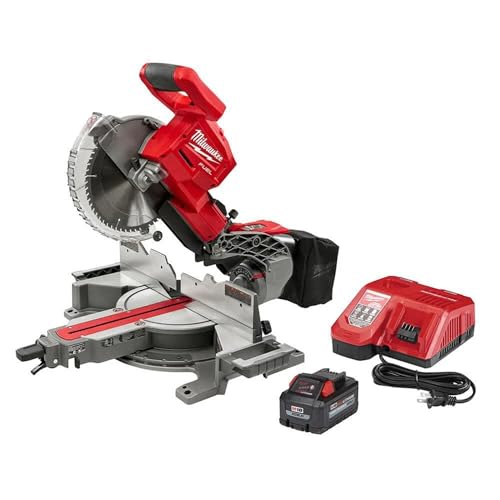
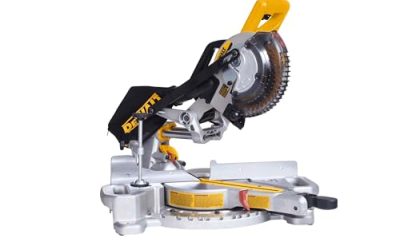
The Milwaukee 2734-21HD is the cordless pick in this guide, and the one to choose when the aluminum cutting happens away from an outlet. It runs on the M18 FUEL platform, and the kit includes a high-capacity battery and a rapid charger. The brushless motor delivers corded-style performance in a 10-inch sliding package, with a vertical capacity of 5-3/4 inches and enough horizontal travel to crosscut a 2 by 12. The manufacturer states the saw can make up to 400 cuts on a single battery charge, which covers a full day of trim and extrusion work for most users.
It miters and bevels in both directions without flipping the workpiece. That matters on a jobsite, where flipping a long length of aluminum extrusion takes space you may not have. The sliding head gives it more capacity than a non-sliding 10-inch saw, while the 10-inch blade keeps the tool lighter and more compact than a 12-inch corded slider. The M18 battery platform is a practical advantage if you already own Milwaukee tools, since the same batteries run the rest of the kit.
For aluminum work, the cordless design has a real benefit beyond portability: you can set the saw up next to the material instead of carrying long extrusions to a fixed bench. That reduces handling, and handling is where long aluminum pieces pick up scratches and dents. Keep a second battery charged if your cutting sessions run long, and fit a non-ferrous blade before your first aluminum cut.
Considerations
Cordless capacity depends on the battery, so heavy all-day cutting in thick aluminum will drain a battery faster than light trim work. The 10-inch blade gives up some capacity to the 12-inch saws here, so the widest extrusions may need a larger saw. The kit format means the saw, battery, and charger arrive together, so check the kit contents against your needs if you already own M18 batteries.
How to Choose
Start with the material. Measure the widest and thickest aluminum you cut regularly, then check each saw’s horizontal and vertical capacity against those numbers. A saw that forces you to flip a wide extrusion mid-cut will cost you accuracy, so buy capacity for the largest profile you cut, not the average one.
Next, think about the blade. Every saw in this guide ships with a general-purpose blade, and none of them is ideal for aluminum out of the box. A non-ferrous carbide blade with a high tooth count, typically 80 teeth or more on a 10-inch or 12-inch blade, shears aluminum cleanly and reduces the burr on the cut edge. Look for a blade with a negative hook angle and a grind made for non-ferrous metals, and keep it sharp: a dull blade generates heat, and heat is what makes aluminum stick to the teeth.
A 15 amp corded motor holds its speed under load, which keeps the cut smooth. For cordless saws, the battery platform and the number of batteries you own matter more than the headline voltage. If you cut aluminum all day, a corded saw is the simpler choice. If you cut on site, a cordless saw with a spare battery is the practical one.
Consider the miter and bevel range against the angles you actually cut. Most aluminum trim and framing work uses 45-degree miters and the occasional bevel, which every saw here handles. If you cut compound angles for custom enclosures or angled brackets, a dual-bevel saw saves you from flipping long pieces.
Finally, weigh the saw against your workspace. A sliding saw with rear rails needs clearance behind the bench. An Axial-Glide saw needs clearance at the sides. A compact 10-inch saw fits a small bench and a car trunk. Measure your bench before you order, and remember that the saw plus a length of extrusion sticking out both sides needs more room than the saw alone.
Fit and Installation Considerations
Mount the saw on a stable bench or a dedicated miter stand before you cut aluminum. A saw that rocks or shifts will not cut square, and aluminum shows every error. Bolt the saw down or clamp it to the bench, and support long extrusions on both sides of the saw with roller stands or sawhorses at the same height as the saw table. An unsupported end will droop as the cut finishes, and the blade will bind or the piece will kick.
Clamp the workpiece whenever you can. Aluminum extrusions are light for their length, and the blade can lift or shift a piece that is only held by hand. Use the vertical clamp or vise that comes with the saw, or a separate bar clamp, and keep your hands well clear of the blade path. Wear safety glasses and hearing protection: aluminum chips are fine, sharp, and fast, and miter saws are loud in an enclosed shop.
Fit the non-ferrous blade and check that it spins freely with the guard in place. Set the miter and bevel detents to zero and make a trial cut on a scrap piece, then check the cut with a square. If the cut is not square, adjust the fence or the detent before cutting your good material. Use a cutting lubricant made for aluminum on thick sections: a light application reduces heat and keeps chips from welding to the blade teeth. Clear chips from the saw table and the blade guard between cuts, since packed chips can throw the next cut off line.
Dust collection deserves attention. Aluminum chips are heavier than sawdust and do not float the way wood dust does, but the fine particles still spread across the shop. Connect a shop vacuum to the dust port, and sweep the area after a cutting session. Keep a brush handy to clear the fence and the miter slots, where chips collect and stop the workpiece from seating squarely.
FAQ
Can I cut aluminum with a regular miter saw?
Yes, with the right blade. A standard miter saw becomes an effective aluminum cutting saw when you fit a carbide-tipped blade made for non-ferrous metals, with a high tooth count and a grind suited to soft metals. The saw itself does not need to be a dedicated metal saw. Clamp the workpiece, feed at a steady pace, and use cutting lubricant on thick sections.
What blade should I use for cutting aluminum?
Use a carbide-tipped blade with a high tooth count, usually 80 teeth or more on a 10-inch or 12-inch blade, with a negative hook angle and a grind made for non-ferrous metals. A high tooth count shears the aluminum instead of tearing it, which leaves a smoother edge and less burr. Avoid abrasive cutoff wheels for precision work: they cut slowly, leave a rough edge, and generate far more heat than a carbide blade.
Why does aluminum stick to the saw blade?
Aluminum is soft and its chips can weld to the blade teeth when the blade gets hot, a problem known as galling. It happens most often with a dull blade, a blade with too few teeth, or a fast feed that overloads the teeth. A sharp non-ferrous blade, a steady feed rate, and a light application of cutting lubricant on thick material all reduce the problem. If chips do build up, stop the saw and clean the blade before continuing.
Is a 10-inch or 12-inch saw better for aluminum?
A 12-inch saw cuts wider and taller profiles in a single pass, which suits wide extrusions, flat bar, and trim. A 10-inch saw is lighter, easier to move, and costs less, and it handles most trim and angle stock without trouble. Choose the 12-inch size if you regularly cut profiles wider than about 8 inches. Choose the 10-inch size if you value portability and your material fits within its capacity.
Conclusion
The best aluminum cutting saw is the one that matches your material, your workspace, and how often you cut. The DEWALT DWS780 is the strongest all-round choice, with the largest capacity and the shadow cut line that makes accurate placement easy. The Makita LS1040 is the compact choice, with a rigid dual-post design and a weight that makes it easy to move. The Bosch GCM12SD is the choice for a tight workshop, since its Axial-Glide system saves space behind the bench without giving up capacity. The Milwaukee 2734-21HD is the choice for site work, bringing full sliding capacity to places without power.
Whichever saw you choose, the blade decides the quality of the cut. Fit a sharp non-ferrous carbide blade, clamp the workpiece, support long pieces on both sides, and check your first cut with a square, and any of these saws will cut aluminum cleanly and accurately for years.
As an Amazon Associate, we earn from qualifying purchases.