Our Short List of 3
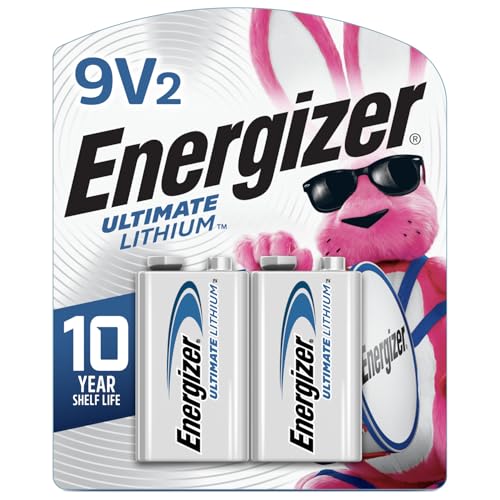
- Chemistry: Primary lithium, single use, not rechargeable
- Model: L522BP2
- Storage life stated by maker: Up to 10 years
- Operating range stated by maker: Minus 40 to 140 degrees Fahrenheit

- Chemistry: Primary lithium, single use, not rechargeable
- Capacity stated in listing: 1200 mAh
- Shelf life stated in listing: 10 years

- Chemistry: Alkaline, single use
- Model number: 522BP-2
- Shelf life stated by maker: Up to 5 years in storage
All 5 Picks at a Glance
| Product | Specs | Action |
|---|---|---|
| 1. Energizer Ultimate Lithium 9V (2 Pack) — Best Long-Life Pick |
| Check price on Amazon |
| 2. Tenergy 9V Lithium Batteries, 1200mAh (2 Pack) — High-Capacity Lithium Alternative |
| Check price on Amazon |
| 3. Energizer MAX 9V (2 Pack) — Best All-Round Alkaline |
| Check price on Amazon |
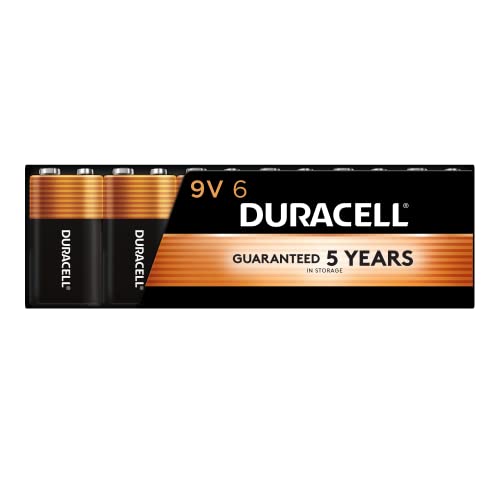 4. Duracell Coppertop 9V (6 Count) — Best for a Whole House |
| Check price on Amazon |
 5. Amazon Basics 9V Alkaline (4 Pack) — Best Value Alkaline |
| Check price on Amazon |
Key takeaways
- The best smoke detector battery 9V options compared: long-life lithium and dependable alkaline 9V cells, with alarm manufacturer guidance and replacement tips.
As an Amazon Associate we earn from qualifying purchases.
The 9-volt battery is the quiet guardian inside millions of smoke alarms. It is also, famously, the battery that starts chirping at three in the morning. Choosing the right 9V for a smoke detector is not really about raw power — every name-brand 9V will run an alarm — it is about how long the cell lasts in the alarm, how long a spare stays good on the shelf, and whether your specific alarm’s manufacturer approves that chemistry. A battery that dies early or leaks in the compartment is not a small inconvenience in a safety device; it is the difference between an alarm that works and one that only looks like it works.
This guide compares the two chemistries that belong in a 9V smoke alarm: alkaline and primary lithium. Both are correct types for this job, and alarm manufacturers themselves list both in their manuals. We explain where each one makes sense, what the alarm makers actually specify, and which specific products to buy, with the listing details that matter for a smoke detector rather than for a toy or a guitar pedal.
Affiliate Disclosure: This article contains affiliate links. If you buy through a link on this page, we may earn a commission at no extra cost to you. Product details are taken from manufacturer and retailer listings, and availability should be confirmed on the product page before ordering.
First, Check What Your Alarm Maker Approves
Before any brand comparison, there is a rule that outranks all of them: use only the battery types your alarm manufacturer specifies. The National Fire Protection Association gives the same advice, and alarm manuals are specific about it. Classic Kidde and First Alert manuals, for example, list approved replacement batteries by type — carbon-zinc, alkaline, and in some models lithium — and name exact examples. Kidde manuals have historically listed alkaline cells such as the Energizer 522 and Duracell MN1604, and a lithium option in the Ultralife U9VL, while warning that using a different battery may have a detrimental effect on the alarm.
Two practical consequences follow. First, an alkaline 9V from a major maker is approved in the widest range of alarms, which is why alkaline remains the default recommendation for most homes. Second, some alarm manuals approve lithium and some do not, and a few explicitly say not to use lithium cells. A lithium 9V is a superb long-life choice only where the manual allows it. Read the battery list printed inside your alarm’s battery door or in its manual before choosing a chemistry, and never install a rechargeable 9V in a smoke alarm: rechargeable cells have different voltage behavior and can interfere with the low-battery warning your alarm depends on.
Alkaline vs. Lithium 9V for Smoke Alarms
Alkaline 9V batteries are the standard for a reason. A fresh alkaline cell typically powers a smoke alarm for about a year, which lines up neatly with the long-standing advice to replace alarm batteries annually, often tied to a clock-change weekend so the habit sticks. Alkaline cells are approved by essentially every alarm maker, they behave predictably as they run down — the voltage decline is what triggers the low-battery chirp with time to spare — and a spare holds its charge in storage for up to about five years in the case of the major brands’ 9V lines.
Primary lithium 9V batteries are the long-haul option. Energizer rates its Ultimate Lithium 9V for up to ten years of power in storage, and lithium cells generally deliver roughly double the service capacity of alkaline in low-drain duty, with a much wider operating temperature range. That makes lithium the natural pick for alarms that are hard to reach, for battery backup in hardwired alarms where the cell only works during outages and may sit for years, and for unheated spaces where alkaline performance sags in the cold. The trade-offs are a higher cost per cell and the approval question above: lithium only belongs in alarms whose manuals list it.
Shelf life deserves its own sentence, because it decides whether the spare in your drawer is trustworthy. The lithium picks in this guide state up to ten years in storage; the alkaline picks state five years. Either way, write the installation date on the battery with a marker when you fit it. Future you, standing on a chair at three in the morning, will be grateful.
Our Picks: 9V Batteries for Smoke Detectors
1. Energizer Ultimate Lithium 9V (2 Pack) — Best Long-Life Pick
- Chemistry: Primary lithium, single use, not rechargeable
- Model: L522BP2
- Storage life stated by maker: Up to 10 years
- Operating range stated by maker: Minus 40 to 140 degrees Fahrenheit
Energizer’s Ultimate Lithium 9V is the cell for alarms you want to think about least often. Energizer frames it as a long-term backup battery, stating up to ten years of backup service in AC-powered smoke detectors and up to ten years of power held in storage. Its leak-resistant construction matters in a device that may hold the same battery for years, and its stated temperature range covers alarms in cold garages, cabins, and unheated hallways where alkaline cells weaken. The listing names smoke detectors and carbon monoxide alarms among its intended uses, which is the fit check that matters for this guide.
Use it where your alarm manual approves lithium — many do, especially for hardwired alarms with battery backup — and where access is awkward, such as alarms over stairwells or in rental units. If your manual lists alkaline only, respect that and choose from the alkaline picks below instead. Do not put this cell in a charger; like every battery in this guide, it is a single-use design.
2. Tenergy 9V Lithium Batteries, 1200mAh (2 Pack) — High-Capacity Lithium Alternative
- Chemistry: Primary lithium, single use, not rechargeable
- Capacity stated in listing: 1200 mAh
- Shelf life stated in listing: 10 years
Tenergy’s lithium 9V leads with a stated capacity figure of 1200 milliamp-hours, which is at the strong end for this format, and its listing names smoke alarms directly among its recommended uses. A ten-year stated shelf life matches the Energizer’s storage claim, so a spare pair bought today remains a credible spare years from now. For battery-only alarms in hard-to-reach spots — the alarm at the top of a tall stairwell is the classic case — that combination of capacity and shelf life is exactly what reduces nuisance chirps and ladder trips.
The same lithium rule applies: confirm your alarm manual approves lithium cells before installing. Tenergy is a specialist battery brand rather than an alarm maker, so the approval check against your Kidde, First Alert, or other alarm manual is entirely on you. Within that condition, this is a sound, purpose-listed lithium option.
3. Energizer MAX 9V (2 Pack) — Best All-Round Alkaline
- Chemistry: Alkaline, single use
- Model number: 522BP-2
- Shelf life stated by maker: Up to 5 years in storage
If lithium is not approved for your alarm, or you simply follow the replace-every-year routine, the Energizer MAX 9V is the default done right. The MAX line’s 522 cell is literally one of the batteries named in classic smoke alarm manuals as an approved alkaline replacement, which is about as direct a fit endorsement as a battery can get. Energizer states that its 9V MAX cells hold power for up to five years in storage, and the line is built around leak resistance under normal use, an important quality in a compartment you may not open for a year at a time.
The two-pack format suits the typical home: one cell in the alarm, one dated spare in the drawer, or two alarms serviced in one round. Because alkaline is approved almost everywhere, this is also the safest recommendation to hand to a landlord, a parent, or anyone whose alarm manual you have not personally read.
4. Duracell Coppertop 9V (6 Count) — Best for a Whole House
- Chemistry: Alkaline, single use
- Storage guarantee stated by maker: 5 years for 9V batteries
- Pack format: 6 count
Duracell’s Coppertop 9V is the other alkaline name that alarm manuals themselves cite — the MN1604 designation appears in approved-battery lists — and this six-count pack is the practical way to service a whole house in one pass. Homes with an alarm in every bedroom, hallway, and level can easily need five or six cells at once, and a single pack keeps every alarm on the same replacement date, which makes the annual routine far easier to keep. Duracell states a five-year storage guarantee for its 9V batteries, so the last cell out of the pack is still fresh when its turn comes.
Pick this pack if you are doing a full round of replacements. If you only maintain one or two alarms, the smaller Energizer MAX pack above avoids spares aging in a drawer. Either way, Coppertop alkaline is approved-manual territory, so compatibility worries are minimal.
5. Amazon Basics 9V Alkaline (4 Pack) — Best Value Alkaline
- Chemistry: Alkaline, single use
- Model number: 6LR61-4PK
- Shelf life stated in listing: 5 years
Amazon Basics’ 9V alkaline pack is the budget workhorse of this list, and its listing is written for exactly this job: it names smoke and carbon monoxide detectors among its uses and states a five-year shelf life. The cell dimensions published for the pack — about 1.04 by 0.69 by 1.91 inches, the standard 6LR61 format — let you confirm fit in a cramped alarm compartment before ordering. In independent multi-brand load testing reported in the press, Amazon’s 9V alkaline has performed at or near the top of the field, which supports using it in a safety device rather than treating it as a compromise.
This is the pick for routine annual replacement rounds where you would rather put fresh cells in every alarm on schedule than stretch expensive cells. The chemistry is the universally approved one, the format is standard, and the listing’s own smoke detector positioning makes the intended use unambiguous.
How to Replace a Smoke Alarm Battery Correctly
Replacement technique matters more than most people realize. When the chirp starts, replace the battery promptly — the low-battery warning typically continues for at least seven days, but an alarm with a dying battery is not protecting you at full reliability. Twist the alarm off its mounting plate, open the battery door, and note that many alarms will not close or remount unless a battery is correctly installed; that reminder feature is deliberate. Fit the new cell with the polarity matched to the compartment markings, press the test button afterward to confirm the horn and circuitry respond, and remount the alarm.
Write the date on the new battery before you install it. Test every alarm monthly with its test button, vacuum dust from alarms periodically since dust causes both false alarms and missed detections, and remember that the alarm unit itself expires: most smoke alarms should be replaced entirely after ten years, whatever battery is in them. Finally, store spare 9V batteries with their terminals protected. The NFPA warns that a metal object touching both terminals of a loose 9V can short the cell and generate enough heat to start a fire, so keep the plastic cap on spares or a strip of tape over the terminals.
Alkaline or Lithium: The Short Decision
Choose alkaline if your alarm manual lists alkaline only, if you replace batteries on a yearly schedule anyway, or if you are buying for several alarms at once on a budget. Choose lithium if your manual approves it and the alarm is hard to reach, serves as backup in a hardwired unit, or lives somewhere cold. Never choose rechargeable for a smoke alarm, and never mix an old and new cell in alarms that take more than one battery. When in doubt, match the manual — the manufacturer of the alarm, not the battery, has the final word.
Frequently Asked Questions
How often should a 9V smoke alarm battery be replaced? With alkaline, plan on yearly replacement whether or not the chirp has started, and replace immediately when chirping begins. Lithium cells approved by your alarm maker can serve far longer, but follow the manual’s stated interval and test monthly regardless.
Can I use a lithium 9V in any smoke detector? No. Many manuals approve lithium, some approve only specific lithium models, and some prohibit it. Check the battery list in your alarm’s manual or inside the battery door first.
Why not use rechargeable 9V batteries in a smoke alarm? Their voltage behavior differs from primary cells and can undermine the low-battery warning, and alarm manufacturers do not list them as approved replacements. Smoke alarms are primary-battery devices.
My alarm still chirps with a new battery. What now? Reseat the battery and confirm polarity, press the test button, and check the alarm’s manufacture date. Chirping with a fresh, correctly fitted battery often means the alarm itself has reached end of life and the whole unit needs replacing.
Do hardwired alarms need 9V batteries too? Most hardwired alarms carry a 9V backup battery so they keep working during power outages. That backup role, where the cell mostly sits in reserve, is one of the best uses for a long-shelf-life lithium cell if the manual approves it.
Bottom Line
For most homes, the Energizer MAX 9V and Duracell Coppertop 9V are the safest pair of choices in this guide: alkaline cells that alarm manuals name directly, with the Coppertop six-count suiting whole-house replacement rounds and the Amazon Basics four-pack covering the same job on a tighter budget. Where your manual approves lithium, the Energizer Ultimate Lithium 9V is the long-life upgrade for hard-to-reach and hardwired-backup alarms, with the Tenergy 1200mAh lithium as a high-capacity alternative. Whichever you fit, date it, test the alarm, and keep a terminal-protected spare — a smoke alarm is only ever as good as the small battery inside it.