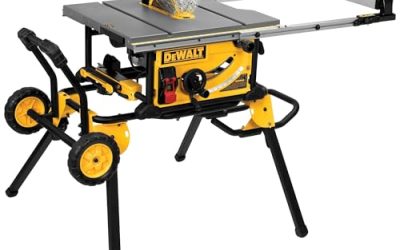
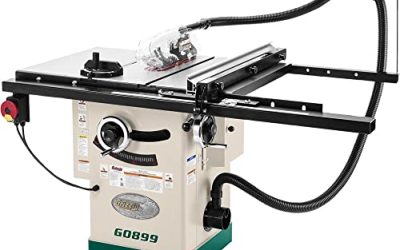
Our Short List of 3

- Best for: A home woodworker buying a first belt-drive saw for a garage shop on standard wiring.
- 2 HP induction motor, 120V or 240V, prewired for 120V on a 20-amp circuit
- 10-inch blade spinning at 3,450 RPM
- 30-inch rip capacity to the right, 15 inches to the left
- Precision-ground cast iron table with steel wings, 40-1/4 by 27 inches

- Best for: A small-shop woodworker who wants cabinet-saw smoothness and a top-tier fence without a 230V circuit.
- 1-3/4 HP induction motor, 115V or 230V, prewired for 115V
- 10-inch blade with 30-inch Accu-Fence rip capacity
- Poly-V belt drive for reduced vibration
- 3-1/8 inch depth of cut at 90 degrees
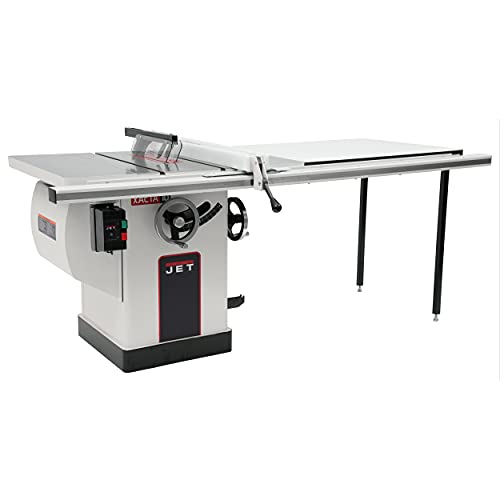
- Best for: A pro shop or dedicated cabinet maker ripping sheet goods and hardwoods all day.
- 3 HP motor, 230V single phase, Poly-V belt system
- 10-inch blade
- 50-inch rip capacity with XACTA Fence II
- Cast iron table, 29 by 20 inches, with cast iron extension wings
All 4 Picks at a Glance
| Product | Specs | Action |
|---|---|---|
| Shop Fox W1837 10-Inch Hybrid Table Saw |
| Check price on Amazon |
| Powermatic PM1000 10-Inch Cabinet Table Saw |
| Check price on Amazon |
| JET 708675PK 10-Inch Deluxe XACTA Cabinet Saw |
| Check price on Amazon |
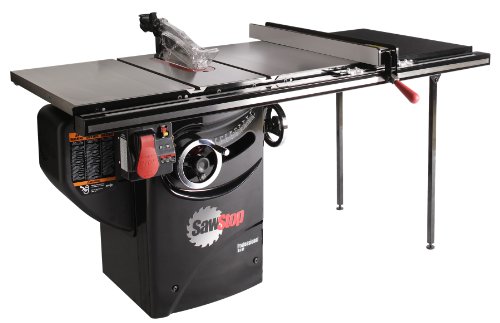 SawStop PCS31230-TGP236 10-Inch Professional Cabinet Saw |
| Check price on Amazon |
Key takeaways
- Compare the best belt drive table saws for home shops and pro workshops, from hybrid saws to full cabinet saws, with the specs that matter for clean cuts.
A belt-drive table saw sends power from an induction motor to the blade through a belt, and that single design choice changes how the saw feels in use. The motor sits away from the blade, so vibration stays low, the cut stays smooth, and the motor lasts longer than the screaming universal motors found in jobsite saws. The trade is size and weight: these are shop machines, not saws you carry to a job, and most of them need a real look at your wiring before you buy.
This guide is for woodworkers setting up a fixed shop who want a saw that rips hardwoods all day without bogging down. The five saws below were chosen from names and specs on Amazon product pages, and every one of them is a belt-driven saw with an induction motor, from compact hybrid models that run on household current to full cabinet saws built for sheet goods and cabinet work.
Quick Picks
As an Amazon Associate we earn from qualifying purchases.
| Product | Best for | Key spec from title |
|---|---|---|
| Shop Fox W1837 | A first hybrid saw on a 120V circuit | 2 HP motor, 30-inch rip capacity |
| Grizzly G0771Z | A heavy hybrid saw for serious hobby work | 2 HP motor, T-shaped fence |
| Powermatic PM1000 | A compact cabinet saw with a smooth cut | 1-3/4 HP motor, Poly-V belt drive |
| JET 708675PK | Ripping full sheets in a pro shop | 3 HP motor, 50-inch rip capacity |
| SawStop PCS31230-TGP236 | A safety-first cabinet saw for shared shops | 3 HP motor, 36-inch T-Glide fence |
How to Choose
Match the motor to your wiring
Horsepower only helps if your shop can feed it. A 2 HP hybrid saw that runs on a 120V, 20-amp circuit fits a normal garage, while a 3 HP cabinet saw usually needs a dedicated 230V circuit wired by an electrician. Check your panel before you order, because a saw that trips the breaker on every thick rip is useless no matter how good the fence is. Also look at whether the motor is prewired for 120V or 230V, since switching voltage later means opening the motor cover and moving wires.
Pick rip capacity for the work you actually do
Rip capacity is the distance from the blade to the fence at its widest setting, and it decides whether you can cut sheet goods without a helper or a track saw. A 30-inch capacity handles most furniture parts and cabinet panels, while a 50-inch fence lets you rip a full sheet of plywood down the middle in one pass. Bigger fences need more floor space, so measure the wall behind the saw and leave room for the fence rail to stick out.
Judge the fence before anything else
A table saw lives or dies by its fence, because a fence that drifts a fraction of an inch turns every cut into sanding work. Look for a T-square style fence that locks at the front and stays parallel to the blade along its full length. Cast iron tables and steel extension wings add mass that damps vibration, and a smooth-sliding fence rail makes repeat cuts faster. If the fence needs constant adjustment, the saw will frustrate you every single day.
Plan for dust, weight, and safety gear
Belt-drive saws are heavy, and the five models here run from around 260 pounds to more than 500, so think about how the saw gets into your shop and whether you need a mobile base. A 4-inch dust port hooks straight to a collector and keeps the cabinet from filling with sawdust, which matters for both health and cut quality. Every saw here ships with a riving knife and blade guard, and the SawStop adds a flesh-detection brake that stops the blade on contact.
The 5 Best Options
Shop Fox W1837 10-Inch Hybrid Table Saw
- Best for: A home woodworker buying a first belt-drive saw for a garage shop on standard wiring.
- 2 HP induction motor, 120V or 240V, prewired for 120V on a 20-amp circuit
- 10-inch blade spinning at 3,450 RPM
- 30-inch rip capacity to the right, 15 inches to the left
- Precision-ground cast iron table with steel wings, 40-1/4 by 27 inches
A home woodworker buying a first belt-drive saw for a garage shop on standard wiring.
Confirm your outlet is a 20-amp circuit before ordering, and check the fence alignment with a square during setup.
The Shop Fox W1837 is the most approachable way into a belt-drive saw, because it brings a real induction motor and a cast iron table to a shop that only has standard household wiring. Its open-stand design keeps the weight down for a hybrid, and the built-in mobile base lets one person roll it against the wall when the shop needs floor space. The lift-off fence locks firmly and the enclosed lower cabinet feeds a dust port, so the saw behaves like a much larger machine.
Watch out for: Confirm your outlet is a 20-amp circuit before ordering, and check the fence alignment with a square during setup.
Grizzly G0771Z 10-Inch Hybrid Table Saw
The Grizzly G0771Z sits a step above entry-level hybrids, with a heavier build and a T-shaped fence that holds its setting through long ripping sessions. Its enclosed cabinet gives the saw a planted feel, and the cast iron top stays flat under wide boards. This is the saw for a hobbyist who has outgrown a jobsite saw and wants cabinet-saw manners without rewiring the shop for 230 volts, since the motor runs on either voltage.
Specs
- 2 HP induction motor, 120V or 240V, spinning at 3,450 RPM
- 10-inch blade with a 40-tooth blade included
- 30-inch rip capacity to the right, 15 inches to the left
- 3-1/4 inch depth of cut at 90 degrees, 2-1/4 inches at 45 degrees
- T-shaped rip fence with front and rear locking
- 4-inch dust port, riving knife, and blade guard included
- Table measures 40-1/2 by 27 inches
Best for: A serious hobbyist who wants a heavy, stable hybrid saw that still plugs into household current.
Watch out for: The saw ships in a heavy crate, so plan for help or a lift gate on delivery day.
Powermatic PM1000 10-Inch Cabinet Table Saw
- Best for: A small-shop woodworker who wants cabinet-saw smoothness and a top-tier fence without a 230V circuit.
- 1-3/4 HP induction motor, 115V or 230V, prewired for 115V
- 10-inch blade with 30-inch Accu-Fence rip capacity
- Poly-V belt drive for reduced vibration
- 3-1/8 inch depth of cut at 90 degrees
A small-shop woodworker who wants cabinet-saw smoothness and a top-tier fence without a 230V circuit.
The 30-inch rip version and the 52-inch rip version are separate listings, so confirm the fence size on the listing before ordering.
The Powermatic PM1000 packs cabinet-saw construction into a footprint that fits a small shop, and its Poly-V belt drive is the reason the cut feels so smooth. The Accu-Fence is one of the best-regarded fences in this class, locking square with one lever and staying put cut after cut. At 1-3/4 HP it asks less of your wiring than the 3 HP cabinet saws, yet the cast iron table and trunnions give it the same solid, vibration-free character.
Watch out for: The 30-inch rip version and the 52-inch rip version are separate listings, so confirm the fence size on the listing before ordering.
JET 708675PK 10-Inch Deluxe XACTA Cabinet Saw
- Best for: A pro shop or dedicated cabinet maker ripping sheet goods and hardwoods all day.
- 3 HP motor, 230V single phase, Poly-V belt system
- 10-inch blade
- 50-inch rip capacity with XACTA Fence II
- Cast iron table, 29 by 20 inches, with cast iron extension wings
A pro shop or dedicated cabinet maker ripping sheet goods and hardwoods all day.
This saw needs a 230V circuit and a freight delivery plan, since it weighs more than 500 pounds.
The JET 708675PK is a full-size cabinet saw built for production-style work, with a 3 HP motor and a 50-inch XACTA fence that swallows whole sheets of plywood. Its Poly-V belt system keeps the heavy motor turning smoothly under load, and the cast iron wings extend the table far enough to support long boards without a helper. This is a saw you buy once and build the shop around, not a machine you rearrange every weekend.
Watch out for: This saw needs a 230V circuit and a freight delivery plan, since it weighs more than 500 pounds.
SawStop PCS31230-TGP236 10-Inch Professional Cabinet Saw
- Best for: A shared or teaching shop where blade-contact safety matters as much as cut quality.
- 3 HP induction motor, 230V single phase, 13 amps
- 10-inch blade
- 36-inch T-Glide fence system
- Flesh-detection safety system with blade brake
A shared or teaching shop where blade-contact safety matters as much as cut quality.
The brake cartridge is a consumable that fires on contact, so keep a spare on hand and budget for a replacement blade as well.
The SawStop PCS31230-TGP236 pairs a 3 HP cabinet saw with the flesh-detection brake that made the brand famous, stopping the blade within milliseconds of skin contact. Beyond the safety system, it is a thoroughly built cabinet saw with a 36-inch T-Glide fence, a cast iron table, and a dust collection shroud around the blade. For a shared shop, a school, or anyone who has ever felt uneasy feeding stock past a spinning blade, the brake alone justifies the saw.
Watch out for: The brake cartridge is a consumable that fires on contact, so keep a spare on hand and budget for a replacement blade as well.
Which One Fits Your Situation
Your garage has standard household wiring
Pick the Shop Fox W1837 or the Grizzly G0771Z. Both run their 2 HP motors on a 120V circuit, so you can start cutting without calling an electrician. The Shop Fox is lighter and rolls on its built-in base, while the Grizzly is heavier and steadier if the saw will stay in one spot. Either one is a real step up from a jobsite saw.
You cut full sheets of plywood for cabinets
Pick the JET 708675PK. Its 50-inch fence rips a full sheet down the middle in one pass, and the 3 HP motor holds speed through thick stock without slowing. The cast iron wings support long boards, so you can work alone. Just make sure the shop has a 230V circuit and floor space for the long fence rail.
You want the smoothest cut in a small shop
Pick the Powermatic PM1000. The Poly-V belt drive and heavy cast iron table keep vibration low, and the Accu-Fence locks square every time. At 1-3/4 HP it still runs on 115V, so it fits a small shop that cannot take a 230V saw. The 30-inch rip handles most furniture work with room to spare.
Safety is your top concern in a shared shop
Pick the SawStop PCS31230-TGP236. The flesh-detection brake is the only feature here that can prevent a serious injury, and it matters most where several people use the same saw. The 36-inch T-Glide fence and 3 HP motor make it a capable cabinet saw on its own, so you are not trading cut quality for safety.
Common Mistakes
- Buying a direct-drive jobsite saw when you actually wanted the smooth cut of a belt-drive induction motor saw.
- Ordering a 230V cabinet saw before checking whether the shop has a dedicated 230V circuit.
- Choosing by horsepower alone and ignoring the fence, which decides cut accuracy far more than motor size.
- Forgetting that a 260 to 500 pound saw needs a delivery plan and, in many shops, a mobile base.
- Skipping the first fence alignment check, then blaming the saw for cuts that drift out of square.
Frequently Asked Questions
How is a belt-drive table saw different from a direct-drive saw?
A belt-drive saw uses an induction motor mounted away from the blade, connected by a belt, while a direct-drive saw mounts a universal motor right on the arbor. The belt setup runs quieter, vibrates less, and lasts longer, which shows up as cleaner cuts in hardwoods. Direct-drive saws are lighter and portable, so they suit job sites, while belt-drive saws suit a fixed shop.
Can I run a 3 HP cabinet saw on a normal household outlet?
No, a 3 HP cabinet saw needs a dedicated 230V circuit, and that usually means an electrician. The 1-3/4 HP and 2 HP saws in this guide run on 120V, though the 2 HP models want a 20-amp circuit rather than a standard 15-amp one. Check the motor plate and your panel before ordering, and never run a big saw on a long extension cord.
How heavy are these saws, and can I move one alone?
These saws weigh from about 260 pounds for the lightest hybrid to more than 500 pounds for a full cabinet saw, so moving one alone is not a good plan. Most buyers use a mobile base, a furniture dolly, or a helper on delivery day. The Shop Fox includes a built-in rolling base, while the heavier cabinet saws need a separate mobile base or a permanent spot.
Does the belt need regular maintenance?
A belt-drive saw needs very little attention, but the belt is a wear part. Check it once a year for cracks, glazing, or slack, and replace it if the blade slows under load or the saw starts to vibrate more than usual. Keep the belt and pulleys clean of sawdust, since packed dust shortens belt life and adds vibration to the cut.