Key takeaways
- Compare the best back saws for dovetails, tenons and carcass work, with blade length, TPI, tooth filing, back material and handle specs for each pick.
As an Amazon Associate, we earn from qualifying purchases made through links on this page.

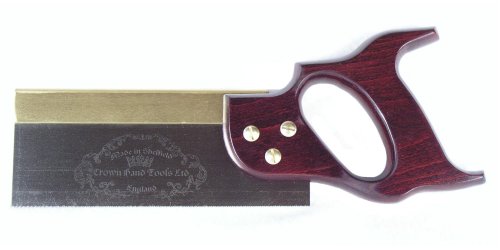
A back saw is a hand saw with a rigid spine of brass, steel or composite material folded or moulded along the top edge of a thin blade. That spine does two jobs: it stops the thin plate from flexing or buckling on the push stroke, and it adds weight so the teeth stay engaged with almost no downward pressure from your hand. The trade-off is depth of cut, because the back physically limits how deep the blade can pass through a board. Within those limits, a good back saw is the most accurate hand saw in the workshop, which is why dovetail, tenon and carcass saws are all built this way.
This guide covers five Western-style back saws that are current production models sold on Amazon US: three dovetail saws for fine joint work and two tenon saws for larger joinery. Each pick is listed with the manufacturer’s published specifications — blade length, teeth per inch, tooth filing, back material and handle — so you can match the saw to the joints you actually cut. If you mostly cut dovetails in drawer sides, start with the dovetail saws. If you cut tenons for frame and table work, the tenon saws at the end will suit you better.
What to look for in a back saw
The three main types
Dovetail saws are the smallest, usually with blades of 8 to 10 inches and fine teeth in the 14 to 20 TPI range, filed rip because dovetail tails and pins are cut along the grain. Tenon saws are larger, typically 10 to 14 inches, with deeper blades for cutting tenon cheeks and shoulders on frame parts. Carcass saws sit between the two at around 11 to 12 inches and are general-purpose joinery saws for the framework of a piece, offered in both rip and crosscut filings. A gent’s saw is a small variant with a straight turned handle, made for very light work such as model making and small boxes.
Back saw vs a regular hand saw
A standard panel or hand saw has no spine, so its blade is made thicker to resist bending, and the thicker plate cuts a wider kerf and needs more effort. A back saw can use a plate around 0.020 inches thick because the back supplies the stiffness. The thinner plate removes less wood, tracks a marked line more easily and leaves a cleaner surface on the joint. The penalty is the depth limit set by the distance from the tooth line to the underside of the back, which on most dovetail saws is only about 1-1/2 to 2 inches. For through-cuts in wide boards, you still need a regular hand saw.
Back saw vs a Japanese dozuki
A dozuki is also a backed saw, but it belongs to the Japanese pull-saw family. It cuts on the pull stroke, uses an even thinner blade with replaceable teeth, and usually has a straight rattan-wrapped handle rather than a closed or pistol-grip handle. Because the blade works in tension, a dozuki needs no heavy back and feels very different in use. Neither is better in absolute terms, but they are different tool families with different sharpening and handling, so this guide stays with Western push-stroke back saws and treats the dozuki as a separate category to consider on its own terms.
Blade length and depth of cut
Blade length controls how long a stroke you can take; depth of cut controls the thickest or widest joint part you can saw in one pass. Dovetail saws with roughly 1-1/2 inches under the back are fine for drawer sides and small boxes. Tenon cheeks on table aprons or bed rails need the 2-3/8 inches or more of usable depth that a tenon saw provides. Check both figures in the specifications rather than going by blade length alone.
TPI and tooth filing
Teeth per inch should match stock thickness. A common working rule is to keep at least three teeth in the cut: fine teeth of 18 to 20 TPI suit thin drawer sides, 14 to 16 TPI is a good middle ground for general joinery stock, and 12 to 14 TPI clears waste faster in thicker tenon cheeks. Filing matters just as much. Rip teeth, shaped like small chisels, cut along the grain and are used for dovetails and tenon cheeks. Crosscut teeth are bevelled like knives to sever fibres across the grain, which is what you want for tenon shoulders and trimming parts to length.
Back material, plate and handle
A folded brass back is the traditional choice: heavy, stiff, and it holds the blade under tension. Steel backs are lighter and common on workshop-grade saws. The moulded composite spine used by Veritas mixes stainless-steel powder for weight with glass fibre for stiffness, and cannot rust. Plate thickness around 0.020 to 0.022 inches with a small amount of set gives a narrow kerf and smooth cut. Finally, check whether the teeth are resharpenable or induction-hardened. Hardpoint teeth stay sharp longer but are effectively disposable; traditional teeth can be resharpened with a saw file for decades of service. Handles come as closed pistol grips, open grips, or straight gent’s handles, and the right choice is the one that keeps your wrist in line with the blade.
The best back saws compared
1. Veritas Dovetail Saw, 14 TPI
ASIN: B00BZD220M
The Veritas dovetail saw is the modern interpretation of the classic dovetail saw. Its 9-1/4 inch blade is high-carbon steel, 0.020 inches thick, with 14 rip-filed teeth per inch at a relaxed 14-degree rake, which makes it easy to start on a knife line without the saw jumping. The spine is not metal folded over the blade but an injection-moulded composite of stainless-steel powder, glass fibre and polymer resin, giving brass-like weight and stiffness in a back that will never rust or dent. Depth of cut is 1-9/16 inches, and the hardwood pistol-grip handle is patterned on antique saws and secured with a brass nut.
This is the saw to pick as a first Western dovetail saw, or for stock from about 1/2 inch to 3/4 inch thick, where the 14 TPI tooth line clears waste quickly while still leaving a clean shoulder. The main limitation is that same tooth count: on stock thinner than about 1/2 inch there may be too few teeth in the cut for the smoothest result, and Veritas answers that with a separate 20 TPI fine version rather than with this saw. The composite spine also has a modern look that traditionalists may not love, and the depth of cut rules it out for wide tenon cheeks.
- Blade: 9-1/4 in high-carbon steel, 0.020 in thick
- Teeth: 14 TPI, rip filed, 14-degree rake
- Back: moulded composite spine (stainless-steel powder, glass fibre, polymer)
- Handle: hardwood pistol grip
- Depth of cut: 1-9/16 in
2. Two Cherries 520-6020 Brass Back Dovetail Saw, 15 TPI
ASIN: B000JRBL48
Made in Germany by Kirschen and sold under the Two Cherries name, the 520-6020 is a traditional brass-backed dovetail saw with a 10-inch German steel blade. It is filed rip at 15 teeth per inch and arrives pre-sharpened, ready to cut. The solid brass back gives it the familiar heft of a classic joinery saw, and the closed wooden handle follows the traditional pattern. At 10 inches, the blade is a little longer than most dovetail saws, which lengthens the stroke and can help when cutting dovetails in wider drawer sides or small casework parts.
Choose this saw if you want traditional brass-back construction and German manufacture at the dovetail size, with a tooth count that splits the difference between the coarse and fine ends of the range. Its limitations follow from the specs: the 15 TPI rip filing is a dovetail and tenon-cheek pattern, so crosscutting shoulders will not be as clean as with a bevelled crosscut tooth, and like all dovetail saws the depth under the back limits it to small work. The factory edge is described as pre-sharpened, but traditional saws of this type can still benefit from a light touch-up with a file once you own a saw set and files.
- Blade: 10 in German steel
- Teeth: 15 TPI, rip filed, pre-sharpened
- Back: solid brass
- Handle: closed wooden handle
- Sold by: Robert Larson Co. (US distributor)
3. Crown 188 Dovetail Saw, 8 Inch
ASIN: B001V9KOE6
Crown Hand Tools of Sheffield, England makes the 188 as a compact, fine-tooth dovetail saw. The 8-inch blade is resharpenable high-carbon steel with 20 teeth per inch according to the manufacturer’s listing, under a solid brass back, with a full closed wooden handle. The fine tooth line and short blade are aimed at small, controlled work: dovetails in thin drawer sides, small boxes, and detail cuts where a longer saw would feel clumsy. Because the teeth are conventionally filed rather than hardened, the saw can be resharpened and maintained with a slim taper file.
This is the pick for fine work in thin stock and for smaller hands that find a 10-inch saw unwieldy. The limitations are the mirror image of its strengths. Twenty teeth per inch cut slowly in thick or hard stock, and the 8-inch blade with its shallow depth under the back is strictly for small joinery. Note also that secondary sources disagree slightly on the tooth count for this model, so it is worth confirming the TPI on the listing before ordering if that figure is critical to you.
- Blade: 8 in (203 mm) high-carbon steel, resharpenable
- Teeth: 20 TPI per manufacturer listing
- Back: solid brass
- Handle: full closed wooden handle
- Made in: Sheffield, England
4. Spear & Jackson 5410Y Traditional Tenon Saw, 10 Inch

ASIN: B0043YL80A
Spear & Jackson’s 5410Y is a traditional brass-back tenon saw from the long-running Sheffield maker. The 10-inch high-carbon steel blade carries 13 points per inch and is described by the maker as cutting both along and across the grain, which makes it a flexible single saw for tenon cheeks and shoulders on small to medium frame work. The solid brass back provides the rigidity and weight, and the wooden handle is fixed with brass screws rather than rivets, so it can be removed when the blade needs resharpening — a small detail that matters over the life of a saw.
Pick the 5410Y if you want one tenon saw for furniture-scale joinery and prefer a saw you can maintain rather than replace. Its limitations: at 10 inches it is the short end of the tenon saw class, so very wide tenon cheeks will need care to keep the stroke effective, and a universal tooth pattern is a compromise — a dedicated rip-filed tenon saw will outpace it on long cheeks, and a dedicated crosscut saw will leave cleaner shoulders.
- Blade: 10 in high-carbon steel
- Teeth: 13 PPI, universal pattern for rip and crosscut work
- Back: solid brass
- Handle: wooden, fixed with brass screws (removable for sharpening)
- Model: 5410Y
5. Spear & Jackson 9550B Traditional Tenon Saw, 12 Inch

ASIN: B0043YHJQ2
The 9550B stretches the same traditional formula to a 12-inch blade with a finer 15 points per inch. The longer blade and deeper plate under the brass back give more depth of cut for bigger tenons — table and bed frames, door stiles and similar work — while the finer tooth line leaves a smoother surface on shoulders and cheeks than a coarser saw. The blade is high-carbon steel with precision-ground teeth, and the riveted wooden handle follows the classic closed pattern.
This is the pick when the 10-inch tenon saw runs out of depth or stroke on larger frame joinery, and when surface finish matters enough to trade a little cutting speed for the finer teeth. The limitations are size and speed: a 12-inch saw is more than you need for small boxes and drawer work, where it will feel oversized, and 15 PPI clears waste more slowly in thick cheeks than a coarse rip-filed tenon saw would. The riveted handle, unlike the screwed handle on the 5410Y, is not meant to be removed for sharpening.
- Blade: 12 in high-carbon steel
- Teeth: 15 PPI, precision ground
- Back: brass
- Handle: wooden, riveted
- Model: 9550B
Comparison table
| Saw | Type | Blade length | Teeth | Filing | Back material | Handle |
|---|---|---|---|---|---|---|
| Veritas Dovetail Saw | Dovetail | 9-1/4 in | 14 TPI | Rip | Moulded composite | Hardwood pistol grip |
| Two Cherries 520-6020 | Dovetail | 10 in | 15 TPI | Rip | Solid brass | Closed wood |
| Crown 188 | Dovetail | 8 in | 20 TPI | Fine dovetail pattern | Solid brass | Full closed wood |
| Spear & Jackson 5410Y | Tenon | 10 in | 13 PPI | Universal | Solid brass | Wood, brass screws |
| Spear & Jackson 9550B | Tenon | 12 in | 15 PPI | Precision ground | Brass | Wood, riveted |
Frequently asked questions
What is the difference between a dovetail saw, a tenon saw and a carcass saw?
All three are back saws, separated mainly by size and tooth pattern. Dovetail saws are the smallest, with fine rip teeth for cutting dovetails along the grain. Tenon saws are longer and deeper for tenon cheeks and shoulders. Carcass saws fall between them as general joinery saws for the framework of a piece, and are made in both rip and crosscut versions.
How deep can a back saw cut?
Only as deep as the distance from the tooth line to the underside of the back. On the dovetail saws here that is roughly 1-1/2 to 2 inches; tenon saws allow more. For deeper cuts, start the joint with the back saw for accuracy, then finish with a hand saw that has no spine, or choose a larger tenon saw.
Is a back saw better than a Japanese dozuki for dovetails?
They are different families rather than better or worse. A Western back saw cuts on the push stroke, has a thicker resharpenable plate and a pistol or closed handle. A dozuki cuts on the pull stroke with a thinner, usually replaceable blade. If you already own saw files and sharpen your tools, the Western saw fits that habit; if you prefer to swap blades, the dozuki pattern suits you.
Can these saws be resharpened?
Yes. All five picks use conventionally filed teeth in high-carbon steel rather than induction-hardened disposable teeth, so they can be resharpened with a suitable saw file and retoothed if ever damaged. Hardpoint saws, by contrast, are usually replaced when dull.
Which TPI should I choose for dovetails?
Match the teeth to the stock. For drawer sides and box parts under about 1/2 inch thick, a fine saw of 18 to 20 TPI keeps enough teeth in the cut. For stock from 1/2 to 3/4 inch, 14 to 16 TPI is the versatile middle ground covered by the Veritas and Two Cherries saws above.
Conclusion
For most people buying one back saw, the Veritas 14 TPI dovetail saw is the sensible starting point: it is easy to start on a line, the composite spine will not rust, and the teeth can be resharpened for years. If you prefer traditional Sheffield or German construction with a brass back, the Two Cherries 520-6020 and the fine-tooth Crown 188 cover the dovetail role at two tooth counts. Step up to the Spear & Jackson tenon saws when your work moves from drawers and boxes to frames: the 5410Y for general furniture tenons, and the 12-inch 9550B when you need the extra depth and a finer finish. Whichever you choose, match the TPI and filing to the joints you cut most, and the saw will reward a light grip and a marked line.