Our Short List of 3
All 4 Picks at a Glance
| Product | Specs | Action |
|---|---|---|
 1. DEWALT DWS713 — Best Beginner Miter Saw for Most People | Check price on Amazon | |
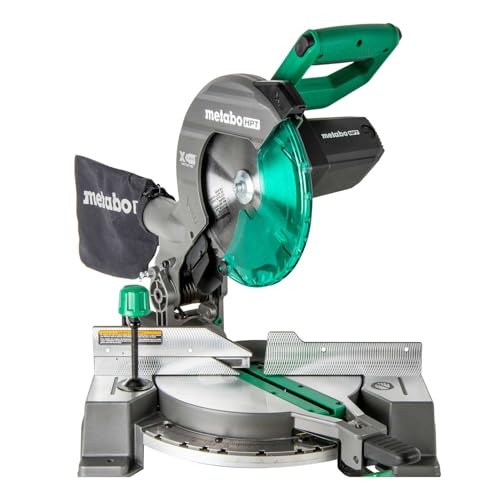 2. Metabo HPT C10FCG2 — Best Lightweight Beginner Miter Saw | Check price on Amazon | |
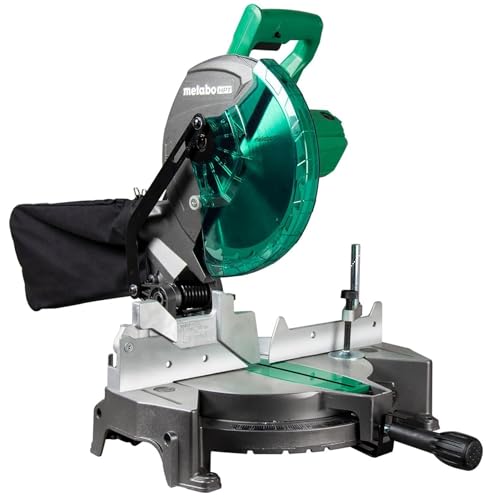 3. Metabo HPT C10FCGS — Best Budget Beginner Miter Saw | Check price on Amazon | |
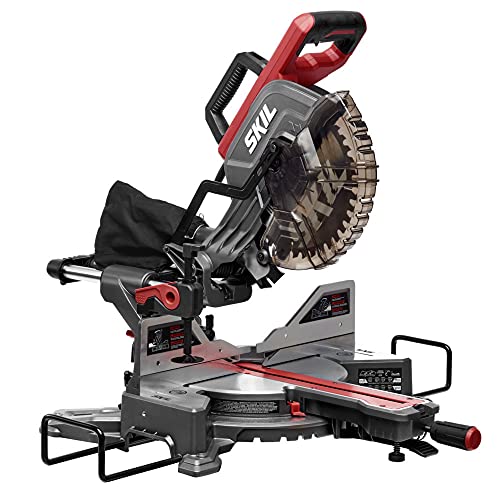 4. SKIL MS6305-00 — Best Beginner Sliding Miter Saw | Check price on Amazon |
Key takeaways
- Find the best beginner miter saws for clean, safe first cuts. Compare four easy 10-inch miter saws on size, weight, cutting capacity, and value.
A miter saw turns a pile of boards into square ends, matching angles, and trim that actually fits. For a beginner, the best beginner miter saws are not the biggest machines on the shelf. They are the saws that are easy to set up, easy to read, and forgiving when a first cut goes slightly wrong. This guide covers four 10-inch corded miter saws for the most common first projects: cutting deck boards and shelving, hanging trim, and building simple furniture.
A good first miter saw should do three things well. First, it should make a straight 90-degree crosscut without a long tuning session. Second, it should lock into common angles such as 45 degrees quickly and repeatably, so picture frames and corner joints come out the same every time. Third, it should feel safe and manageable in a small shop, with a clear blade guard, a solid fence, and a weight you can lift onto a bench without help.
This guide compares the four saws on blade size and motor power, miter and bevel range, cutting capacity, weight, included blade, and warranty.
Disclosure: As an Amazon Associate, we earn from qualifying purchases made through links on this page, at no extra cost to you.
Quick Picks
The DEWALT DWS713 is the best beginner miter saw for most people, thanks to its 14 positive miter stops, tall sliding fence, and 15-amp motor. The Metabo HPT C10FCG2 is the best lightweight beginner miter saw, at about 24 pounds, with a shadow cut-line guide that shows where the blade will land. The Metabo HPT C10FCGS is the best budget pick, with the same basic 10-inch, 15-amp layout at a lower typical price. The SKIL MS6305-00 is the best beginner sliding miter saw, because its sliding head crosscuts boards up to 2×12 wide, which a non-sliding 10-inch saw cannot do.
| Saw | Best For | Blade and Motor | Weight | Key Feature |
|---|---|---|---|---|
| DEWALT DWS713 | Most beginners | 10-inch, 15-amp, 5,000 RPM | 31 pounds | 14 positive miter stops |
| Metabo HPT C10FCG2 | Lightweight shops | 10-inch, 15-amp, 5,000 RPM | 24 pounds | Xact Cut shadow line |
| Metabo HPT C10FCGS | Tight budgets | 10-inch, 15-amp, 5,000 RPM | 24.2 pounds | 0 to 52 degree miter range |
| SKIL MS6305-00 | Wide boards | 10-inch sliding, 15-amp, 4,800 RPM | 39 pounds | Cuts 2×12 at 90 degrees |
1. DEWALT DWS713 — Best Beginner Miter Saw for Most People
The DEWALT DWS713 is a 10-inch single-bevel compound miter saw, and it is the most widely recommended first miter saw for a simple reason: it removes guesswork. Its stainless-steel miter detent plate has 14 positive stops, so the saw clicks firmly into the angles beginners use most, including 0, 15, 22.5, 30, and 45 degrees. Instead of squinting at a scale and hoping the angle is right, a new user can feel the stop engage and trust that the setting is repeatable from one cut to the next.
The published specifications list a 15-amp motor running at 5,000 RPM, a 10-inch blade, and an included 80-tooth carbide blade. An 80-tooth blade is a good match for trim and finish work, because more teeth generally leave a smoother cut face. The saw crosscuts 2×6 dimensional lumber at 90 degrees and 2×4 lumber at 45 degrees, according to the listing.
At a listed weight of 31 pounds, the DWS713 is heavier than the Metabo HPT saws in this guide, but it includes a built-in carry handle, and the extra weight helps the base stay put on a bench during a cut. The package listed on Amazon includes the saw, the 80-tooth blade, a blade wrench, a dust bag, and a vertical material clamp.
The main trade-off is that the DWS713 is a single-bevel, non-sliding saw. A dated price sighting was $299.00 as of November 21, 2026, in a published comparison of Amazon listings, with an earlier sighting of $277.00 on October 27, 2026. Check the current price on Amazon before buying.
Verification note: ASIN B07P7LX9DF — UNABLE TO VERIFY. A direct open of the Amazon product page on November 25, 2026 returned HTTP 403, access denied. The specifications above come from search-listing results for the Amazon listing, which is weaker evidence. Confirm the listing is still selling, and check the current price, in a live browser before publishing or buying. Check price on Amazon
2. Metabo HPT C10FCG2 — Best Lightweight Beginner Miter Saw
The Metabo HPT C10FCG2 is the saw to choose when weight and visibility matter most. Its listed weight is about 24 pounds, roughly 7 pounds lighter than the DEWALT DWS713, which makes a real difference when the saw must be lifted onto a workbench, carried out to a driveway, or stored on a shelf between projects.
The C10FCG2 is a 10-inch single-bevel compound miter saw with a 15-amp motor and a listed no-load speed of 5,000 RPM. Its miter range runs from 0 to 52 degrees to the left and right, wider than the DEWALT in this guide, and its bevel range is 0 to 45 degrees to the left. The headline feature for a beginner is the Xact Cut shadow line, a guide that casts a shadow of the blade onto the workpiece so the user can see where the cut will fall before the blade touches the wood.
The Amazon listing title describes an included 40-tooth TCT blade. One independent review flagged a discrepancy worth noting: the Amazon listing it checked described a 24-tooth supplied blade, while the manufacturer manual listed a 40-tooth standard accessory. A dated price sighting was $111.94 as of November 21, 2026, in a published comparison of Amazon listings. Check the current price on Amazon before buying.
Verification note: ASIN B0FBPB1MJ8 — UNABLE TO VERIFY. A direct open of the Amazon product page on November 25, 2026 returned HTTP 403, access denied. The specifications above come from search-listing results for the Amazon listing, which is weaker evidence. Confirm the listing is still selling, and check the current price, in a live browser before publishing or buying. Check price on Amazon
3. Metabo HPT C10FCGS — Best Budget Beginner Miter Saw
The Metabo HPT C10FCGS is the earlier version of the Metabo HPT 10-inch compound miter saw, and it remains a strong budget choice. It shares the core layout of the newer C10FCG2: a 10-inch blade, a 15-amp motor with a listed no-load speed of 5,000 RPM, a miter range of 0 to 52 degrees to the left and right, and a single bevel of 0 to 45 degrees to the left. Its listed weight is 24.2 pounds, essentially the same as the C10FCG2, so it is just as easy to carry and store.
The differences are in the details. The C10FCGS listing describes an included 10-inch 24-tooth TCT blade, rather than the 40-tooth blade named in the C10FCG2 listing title, and it does not carry the Xact Cut shadow line. A 24-tooth blade cuts fast through framing lumber and is fine for rough crosscuts, but it will generally leave a rougher cut face than a higher-tooth blade on trim and finished boards.
The package listed on Amazon includes the saw, the 24-tooth blade, a dust bag, a vise assembly, and a hex bar wrench. Deal coverage has listed this model at $119 in one sale report and $94 in an earlier sale report, which shows how much its price can move, so do not treat either figure as the current price.
Verification note: ASIN B07PX44JQM — UNABLE TO VERIFY. A direct open of the Amazon product page on November 25, 2026 returned HTTP 403, access denied. The specifications above come from search-listing results for the Amazon listing, which is weaker evidence. Confirm the listing is still selling, and check the current price, in a live browser before publishing or buying. Check price on Amazon
4. SKIL MS6305-00 — Best Beginner Sliding Miter Saw
The SKIL MS6305-00 is the only sliding miter saw in this guide, and it exists for one reason: width. A non-sliding 10-inch miter saw crosscuts a board about 6 inches wide at 90 degrees. The SKIL MS6305-00, with its sliding head, crosscuts a 2×12 board at 90 degrees and a 2×8 board at 45 degrees, according to the listing. That difference turns a saw that can cut trim and shelving into a saw that can also cut wide deck boards and fence pickets.
The published specifications list a 10-inch blade, a 15-amp motor running at 4,800 RPM, and dual-bevel capability, which means the blade tilts both left and right. The miter range is 50 degrees to the left and right, with 11 positive stops, and the saw includes an LED shadow line that shows where the blade will cut. The listed weight is 39 pounds, the heaviest in this guide, reflecting the sliding rails and larger base.
A dated price sighting was $229.00 as of November 21, 2026, in a published comparison of Amazon listings, against a list price of $279.99, with another deal listing showing $229.00 on November 23, 2026. Check the current price on Amazon before buying. Sliding saws need a little more care to use safely: the head must be pulled out, lowered, and pushed through the cut in a controlled motion, rather than chopped straight down. Practice that motion on scrap wood first.
Verification note: ASIN B08J7N3VYW — UNABLE TO VERIFY. A direct open of the Amazon product page on November 25, 2026 returned HTTP 403, access denied. The specifications above come from search-listing results for the Amazon listing, which is weaker evidence. Confirm the listing is still selling, and check the current price, in a live browser before publishing or buying. Check price on Amazon
How to Choose a Beginner Miter Saw
Start with what you will cut most often. If the answer is trim, baseboard, picture frames, and shelving from boards up to 6 inches wide, a non-sliding 10-inch saw is enough, and the DEWALT DWS713 or one of the Metabo HPT saws will do the job. If the answer includes deck boards or shelving wider than 6 inches, choose a sliding saw such as the SKIL MS6305-00, because a non-sliding saw will force awkward workarounds on every wide cut.
Next, weigh how much weight you are willing to move. A 24-pound saw is easy to lift onto a bench and carry to a driveway. A 31-pound saw is manageable for most adults but noticeably heavier. A 39-pound sliding saw is best left on a bench or a rolling stand. If the saw will be stored on a high shelf and lifted down for every project, weight should push the choice toward the Metabo HPT models.
Then consider bevel and cut-line guides. Single-bevel saws tilt in one direction only; for most beginner work that is fine, because the workpiece can be flipped for the matching cut. Dual bevel saves time on crown molding, because the board stays in place. A shadow line, as on the Metabo HPT C10FCG2 and the SKIL MS6305-00, helps a beginner see where the blade will land, but it never replaces measuring and marking the board.
Finally, budget for the setup, not just the saw. Safety glasses, hearing protection, and a dust mask are essential, because a miter saw is loud and throws fine dust.
Safety deserves a clear warning, because a miter saw is the most dangerous tool many beginners will own. Keep hands at least six inches from the blade path, and use the clamp or vise instead of holding a small offcut by hand. Wait for the blade to reach full speed before lowering it into the cut, and wait for the blade to stop before lifting it back up, because a spinning blade lifted out of a cut can catch the offcut and throw it.
Frequently Asked Questions
What size miter saw should a beginner buy?
A 10-inch miter saw is the best starting size for most beginners. It handles the 1x and 2x lumber used in most home projects, it is lighter and cheaper than a 12-inch saw, and blades are widely available.
Do beginners need a sliding miter saw?
No, most beginners do not need a sliding miter saw. A non-sliding 10-inch saw crosscuts boards up to about 6 inches wide, which covers trim, framing, shelving, and furniture. A sliding saw is worth buying when projects regularly include boards wider than 6 inches, such as deck boards or wide shelves.
What is the difference between single bevel and dual bevel?
A single-bevel miter saw tilts in one direction, usually to the left, while a dual-bevel saw tilts both left and right. For a matching pair of bevel cuts, a single-bevel user flips the workpiece over, while a dual-bevel user tilts the saw the other way and leaves the workpiece in place.
How do I make accurate cuts with my first miter saw?
Accuracy comes from three habits. First, measure twice and mark the board clearly, including which side of the line is the waste side. Second, set the miter angle using the positive stops for common angles, and check the angle with a test cut on scrap wood before cutting the real piece. Third, clamp the workpiece and support long boards on both sides so the board cannot move or tip during the cut.
Can a beginner miter saw cut metal or masonry?
No, not with the wood blade it ships with. The saws in this guide are designed for wood and wood-based materials, using the blades listed on their product pages.
Conclusion
The best beginner miter saw is the one that matches the boards you actually cut, the space you actually have, and the weight you are willing to lift. For most first-time buyers, that saw is the DEWALT DWS713, with its 14 positive stops, tall fence, and proven 10-inch, 15-amp layout. The Metabo HPT C10FCG2 is the lightest option, the C10FCGS is the cheapest way in, and the SKIL MS6305-00 is the pick for wide boards.
Whichever saw is chosen, the same advice applies: start with scrap wood, learn the positive stops, clamp every workpiece, and check the current price and stock on Amazon before ordering, because every price in this guide is a dated sighting rather than a live price.