Key takeaways
- Looking for the best air purifiers under 60? Compare compact HEPA picks for bedrooms, desks and dorms, plus room size, filter and noise tips before you buy.
Introduction
Finding the best air purifiers under 60 starts with an honest expectation: at this budget, you are shopping for a small-room purifier, not a whole-home machine. The good news is that a compact HEPA purifier can still make a real difference in a bedroom, a home office, a dorm room, or a nursery, as long as the room matches the unit.

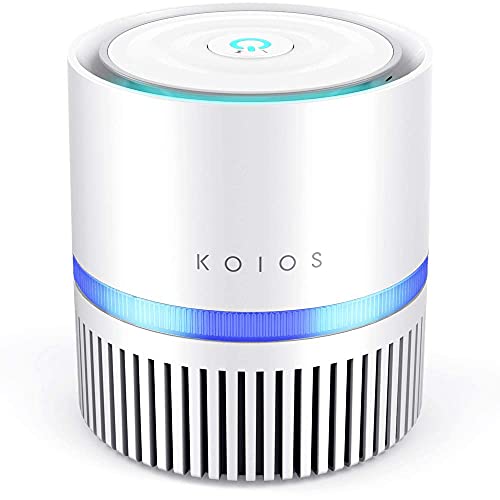
The quick answer is the LEVOIT Core Mini-P. It is compact, AHAM Verifide, and built around a 3-in-1 filter, which makes it the most balanced choice for a bedroom or a desk. If you want a night light and a slightly larger stated coverage area, the KOIOS H13 is the alternative to look at first. The LEVOIT LV-H126 suits buyers who want a simple dial-controlled desktop unit with an ozone-free design, while the Holmes Desktop HAP242B-U fits a small desk or bedside table where a basic HEPA-type unit is enough.
Every purifier below is a genuine air purifier with a replaceable filter, listed on Amazon US. None of them will clean a large open-plan living room on its own, and none of them replaces ventilation, dusting, or dealing with the source of an odor. What they can do is steadily pull dust, pollen, pet dander, smoke particles, and other airborne particles out of the air in a small room, hour after hour, while running quietly enough to sleep beside.
This guide explains how to match a purifier to your room, what the filter labels actually mean, and which of the four picks fits which situation, so you can choose once and choose well.
Quick Picks
Our Short List of 3
All 4 Picks at a Glance
| Product | Specs | Action |
|---|---|---|
| LEVOIT Core Mini-P (B09GTRVJQM) | Check price on Amazon | |
| KOIOS H13 (B07FLY8YD6) | Check price on Amazon | |
 LEVOIT LV-H126 (B07DFVYZCR) | Check price on Amazon | |
 Holmes Desktop HAP242B-U (B01MQLIJ14) | Check price on Amazon |
How to Choose
Match the Coverage to Your Room
Room size is the first filter for any budget purifier, and it matters more than brand. A purifier rated for 183 square feet will cycle the air in a 12 by 15 foot bedroom at a reasonable rate, but the same unit in a 400 square foot living room will barely move the air. Measure the room before you buy, and compare it with the coverage figure on the listing. Bedrooms, dorm rooms, nurseries, and home offices are the natural home for the models in this guide.
Understand True HEPA and HEPA-Type Filters
Filter wording is where budget listings get confusing. A True HEPA filter is built to capture particles as small as 0.3 microns, including fine dust, pollen, and pet dander. A HEPA-type filter uses similar pleated media but is not held to the same capture standard, so it generally catches less of the finest particles. Three of the four picks here use True HEPA or H13-grade filtration. The Holmes model uses a HEPA-type filter, which is a genuine limitation to know about before buying, not a reason to dismiss it outright, but it does mean allergy-prone buyers should lean toward the True HEPA options.
Check the Noise Level for Sleep
A purifier that lives in a bedroom has to be quiet on its lowest setting. Most compact units list a low-speed noise level in the low to mid 20s on the decibel scale, which most sleepers experience as a soft hum rather than a distraction. The LEVOIT LV-H126 lists 32 dB on its lowest mode, which is still quiet, while the KOIOS H13 lists a quiet mode under 25 dB. Keep in mind that the highest fan speed on any small purifier is noticeably louder, so if you plan to run it on high while you sleep, expect to hear it. The practical approach is to run a higher speed during the day and drop to the lowest speed at night.
Look at Filter Replacement Costs and Intervals
The purchase cost is only part of owning a purifier. Filters need replacing, typically every six to eight months depending on use and air quality, and the replacement filter is a recurring cost for as long as you own the unit. Before buying, check that the genuine replacement filter is easy to find and note how often the maker recommends changing it. The LEVOIT LV-H126 ships with two extra pre-filters, and its main HEPA filter is sold under the LV-H126-RF designation. The Holmes unit uses the widely available aer1 HAPF30 filter family.
Decide Whether You Want an Ionizer or UV Light
Some purifiers add an ionizer or a UV light to the filtration stages. An ionizer releases charged particles intended to help airborne particles settle, and some buyers prefer to avoid that feature entirely. The LEVOIT LV-H126 is listed as ozone-free and uses no UV light or ionizer, which makes it the straightforward choice if you want filtration only. The Holmes Desktop includes an optional ionizer that can be left switched off. The KOIOS H13 is also listed as ozone-free with no ions or UV. If this matters to you, check the listing carefully and choose a model where the extra feature is either absent or optional, not always on.
Consider Size, Placement, and Controls
A desktop purifier needs to fit where it will actually sit. The LEVOIT LV-H126 measures about 10.5 by 6.8 by 7.9 inches, so it fits on a nightstand or a desk without crowding out a lamp or a book. Cylindrical models like the Core Mini-P have a small footprint and can tuck into a corner. Place the unit where air can flow freely around it, not pressed against a wall or buried behind curtains, and keep the intake clear of bedding and clutter. Simple controls are a plus at this budget: a dial or a single button is easier to use in the dark than a touchscreen.
The Best Air Purifiers Under 60 Reviewed
LEVOIT Core Mini-P (B09GTRVJQM)
The LEVOIT Core Mini-P is the most balanced pick in this group, and it earns the top spot for a simple reason: it combines AHAM verification with a genuinely compact design. AHAM Verifide means the unit’s performance figures have been checked against an independent testing program, which is rare at this budget and worth more than a long list of marketing claims. The 3-in-1 filter handles dust, smoke, allergens, pet dander, odor, and pollen, and the built-in fragrance sponge lets you add a drop of essential oil if you want a light scent in the room.
Coverage is listed at 183 square feet, which fits a standard bedroom, a dorm room, or a home office. The cylindrical body takes up very little desk or floor space, and the unit is designed to run quietly enough for sleep. It suits buyers who want a proven small-room purifier from a well-established brand, with a filter that is easy to find and a design that does not demand any setup beyond removing the filter from its packaging and plugging the unit in.
Who should skip it: anyone with a room larger than about 180 square feet, or anyone who wants app control, an air quality display, or automatic fan adjustment. The Core Mini-P is a straightforward purifier, and its strength is doing one job well rather than offering extra features.
KOIOS H13 (B07FLY8YD6)
The KOIOS H13 is a small, round desktop purifier built around a 3-stage filter: a pre-filter, a True HEPA filter, and an activated carbon layer. The HEPA stage is rated to capture particles as small as 0.3 microns, and the carbon layer helps with odors from cooking, pets, and smoke. It uses 360-degree air intake, so it pulls air in from all sides rather than from a single vent, which helps when the unit sits in the middle of a desk or a bedside table.
Its stated coverage is about 215 square feet, the largest of the four picks here, though that figure is a best case for a small fan and a closed room. The quiet mode is listed at under 25 dB, and the built-in night light makes it a natural fit for a bedroom or a nursery. It runs on about 8 watts, uses two fan speeds, and comes with a 3-year warranty. The filter should be replaced about every six months, and buyers should take care to order the purifier itself rather than the separate replacement filter listing, which is sold under a different ASIN.
Who it suits: bedroom and office buyers who want the largest stated coverage in this group, a night light, and very quiet low-speed operation. Who should skip it: anyone who wants a published CADR figure to compare against other models, since KOIOS does not publish one for this unit, and anyone who wants more than two fan speeds or an air quality sensor. It is also worth noting that the night light cannot be switched off, so light-sensitive sleepers should keep that in mind.
LEVOIT LV-H126 (B07DFVYZCR)
The LEVOIT LV-H126 is the oldest design in this roundup, and its age is part of its appeal: it is a simple, proven desktop purifier with a dial on the front and three fan speeds. The 3-stage filtration system combines a pre-filter, a HEPA filter, and an activated carbon filter, and it is listed as ozone-free, using no UV light or ions. That makes it the cleanest choice for buyers who want filtration and nothing else.
Coverage is listed at 161 square feet, and the maker states that the unit can refresh the air in a small room within about 30 minutes on its highest speed. Noise is listed at 32 dB on the lowest mode, which is quiet enough for most bedrooms. The unit weighs about 5 pounds and measures roughly 10.5 by 6.8 by 7.9 inches, so it sits comfortably on a desk, a kitchen counter, or a bedside table. It also has a night light and a container for essential oil, and it ships with two extra pre-filters.
Who it suits: buyers who prefer a physical dial to touch controls, who want an ozone-free design, and who have a room of about 160 square feet or less. Who should skip it: anyone who needs coverage beyond a small bedroom, and anyone who wants a modern feature set such as app control or an air quality monitor. The LV-H126 is a basic machine done well, and it is best judged on that basis.
Holmes Desktop HAP242B-U (B01MQLIJ14)
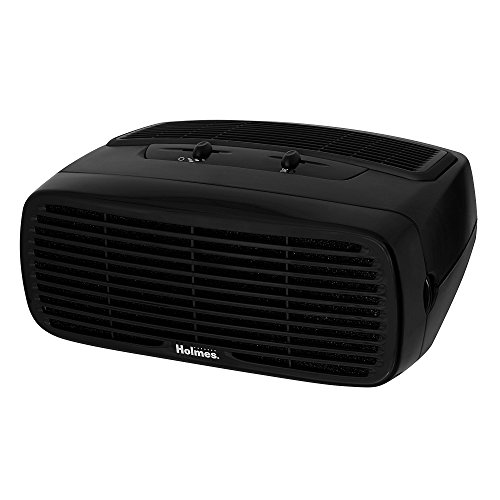
The Holmes Desktop HAP242B-U is the most basic unit in this guide, and it is included because it does the core job at a desk-friendly size with a long track record. It uses a HEPA-type filter rather than a True HEPA filter, which is the key difference from the other three picks. The aer1 filter family it uses, including the HAPF30, is widely available, and the unit offers three fan speeds plus an optional ionizer that can be left off.
Coverage is listed at up to 109 square feet, the smallest in this group, and the unit is rated at 70 CADR for air flow. That makes it a personal-space purifier: a desk, a bedside table, or a small study nook, rather than a whole bedroom. It runs at 45 watts and is a simple, upright desktop design with no app, no sensor, and no display to learn.
Who it suits: buyers who want a simple, inexpensive desktop purifier for a very small space, and who are comfortable with HEPA-type filtration. Who should skip it: allergy-prone buyers who need True HEPA capture, and anyone with a room larger than about 110 square feet. For those buyers, one of the three True HEPA models above is the better fit. The Holmes is honest about what it is, and its value depends entirely on matching it to a small enough space.
What to Check Before You Buy
Before ordering, run through a short checklist. First, measure the room and compare it with the coverage figure; a purifier that is too small for the room is the most common disappointment at this budget. Second, confirm the filter type on the listing itself, and check whether it says True HEPA, H13, or HEPA-type, since those labels describe different levels of fine-particle capture. Third, look up the replacement filter and its recommended change interval, and make sure it is in stock and easy to order.
Fourth, think about noise. If the unit will run in a bedroom, the lowest fan speed is the one that matters, so check the listed low-speed noise level rather than the maximum. Fifth, decide whether you want an ionizer or a UV light, and choose a model where that feature is absent or optional if you would rather not use it. Sixth, check the warranty and the return window, and read the listing to confirm the model number and color you are ordering, since several of these purifiers are sold in multiple colors and bundles under different listings.
Finally, set the unit up properly on arrival. Remove the filter from its plastic packaging before the first run, place the purifier where air can circulate freely around it, and give it a few hours on a higher speed when you first use it in a room that has been closed up. Replace the filter on schedule rather than waiting until airflow drops. A small purifier that is set up well and maintained on time will do far more than a larger one that is tucked behind furniture with a clogged filter.
FAQ
Can an air purifier under 60 clean a large living room?
No, not on its own. The models in this guide are rated for rooms of roughly 100 to 215 square feet. In a large open-plan living room, a small purifier will only improve the air near where it sits. For a large space, you need a larger unit with a higher air delivery rate, or more than one purifier placed in different parts of the room.
What is the difference between True HEPA and HEPA-type filters?
A True HEPA filter is built to capture particles as small as 0.3 microns, including fine dust, pollen, and pet dander. A HEPA-type filter uses similar pleated material but is not held to the same capture standard, so it generally catches less of the finest particles. If allergies are your main concern, choose a True HEPA model.
How often should I replace the filter?
Most compact purifiers need a new main filter every six to eight months, depending on how much you run the unit and how dusty or smoky the air is. Pre-filters usually need cleaning or replacing more often. Check the maker’s recommendation for your model and set a reminder, since a clogged filter reduces airflow and cleaning performance.
Do these purifiers remove odors?
The activated carbon layer in a 3-stage filter helps reduce common household odors from cooking, pets, and smoke. It will not eliminate a strong or continuous odor at its source, and the carbon layer becomes less effective as it fills up, which is another reason to replace filters on schedule.
Is an ionizer or UV light necessary?
No. Filtration alone handles dust, pollen, pet dander, and smoke particles. An ionizer or UV light is an optional extra, and some buyers prefer to avoid ionizers entirely. The LEVOIT LV-H126 and the KOIOS H13 are both listed as ozone-free designs without an ionizer in use, and the Holmes ionizer can be switched off.
Bottom Line
The best air purifiers under 60 are small-room specialists, and the right one depends on your room and your priorities. The LEVOIT Core Mini-P is the best overall pick, with AHAM verification, a 3-in-1 filter, and coverage for a standard bedroom. The KOIOS H13 offers the largest stated coverage in this group plus a night light and very quiet low-speed operation. The LEVOIT LV-H126 is the simplest choice, with a dial control and an ozone-free design for rooms up to about 161 square feet. The Holmes Desktop HAP242B-U is the basic option for a desk or a very small space, with the caveat that it uses a HEPA-type filter rather than True HEPA.
Measure the room first, pick a True HEPA model if allergies are the priority, and check the replacement filter before you buy. Do those three things and any of the four picks here will serve a small room well.
Disclosure: As an Amazon Associate, we may earn from qualifying purchases.