Key takeaways
- Compare the best concrete cutting saws for slabs, pavers and walls, with blade size, cutting depth and power source explained for each job type.
Cutting concrete is rarely just about getting through the material. The real decision is whether the saw can reach the full depth you need in one pass, stay controllable along a marked line, and keep working when the slab contains dense aggregate or reinforcement near the surface. Choosing too shallow a saw leaves an unfinished cut, while choosing an oversized fuel powered machine for small indoor work creates fumes, noise, and handling problems you never needed.

This guide is for homeowners opening a patio, contractors trimming slabs and pavers, and crews cutting walls or floors on varied sites. Each pick was chosen from the name and specifications shown on its Amazon product page, with blade diameter, stated cutting depth, and power source checked against the concrete work described there, so comparisons rest on listed facts rather than guesswork.
Quick Picks
As an Amazon Associate we earn from qualifying purchases
| Product | Best for | Key spec from title |
|---|---|---|
| XtremepowerUS 3200W Electric 16″ Concrete Cut Off Saw | Deep cuts in slabs and floors | 16 inch blade |
| Evolution R14DCT 14 Inch Electric Concrete Saw | Long straight cuts in reinforced concrete | 14 inch blade with 5-1/8 inch cut depth |
| Evolution R300DCT 12 Inch Concrete Saw | Everyday paving and block work without fuel | 12 inch blade with 4-1/2 inch cut |
| DDYOOK 52CC Concrete Cutter Saw | Outdoor cuts away from mains power | 13 inch blade |
| GrfceVue 2-Stroke Gas Powered Concrete Cutter | Remote demolition and road work | 12 inch cutting blade |
How to Choose
Blade Diameter and Cutting Depth
Blade diameter sets the deepest cut you can finish without flipping the workpiece or making a second pass from the other side. A 12 inch blade suits pavers, blocks, and thinner slabs, while a 14 inch or 16 inch blade reaches deeper into floors and thicker pours. Always compare the stated cutting depth, not the blade size alone, because guard shape and arbor position reduce usable depth. For example, a saw listed with a 4-1/2 inch cut cannot finish a thicker slab in one pass, however strong its motor feels.
Power Source and Site Conditions
Corded electric saws deliver steady power for workshops, garages, and sites with a reliable supply, and they avoid fuel mixing and exhaust fumes indoors. Gas powered cutters work on roads, demolition sites, and plots where no outlet is nearby, but they need correct fuel mixture, pull starting, and ventilation. Think about where most of your cutting happens before choosing. A powerful corded model is of little use on a remote foundation, just as a gas cutter is a poor fit for enclosed renovation work.
Wet Cutting and Dust Control
Concrete dust is a serious problem on any job, so look closely at how a saw manages it. Models with a built-in water line or water feed wet the blade during the cut, which suppresses airborne dust and helps the blade run cooler. Some designs add a dust extraction port for dry work with suitable collection equipment. Decide in advance whether your site allows water, whether drainage is available, and whether you will cut mainly indoors or outdoors, because that choice shapes which dust system actually helps you.
Weight, Control, and Included Blade
A concrete saw is guided by hand along a line, so weight and balance matter as much as raw output. Guide rollers, clear guards, and well placed handles help the saw track straight on long floor cuts and reduce wandering on vertical work. Check whether a diamond blade is included or whether the saw is supplied on its own, and confirm the arbor size matches the blade you plan to fit. Buying a saw without the correct blade in the box delays the job before it starts.
The 5 Best Options
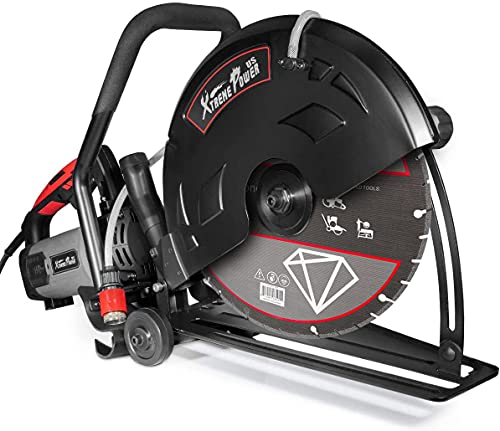
XtremepowerUS 3200W Electric 16″ Concrete Cut Off Saw
This is the pick for buyers whose work centres on floors, slabs, and other flat concrete where depth is the limiting factor. The 16 inch blade and the deep stated cut suit long runs across a pour, and the guide roller helps keep the saw tracking along a chalk line. The built-in water line supports wet cutting on dusty sites, while corded electric power avoids fuel handling during extended indoor or yard work where an outlet is within reach.
Specs
- Power source: Corded Electric
- Power: 3200W
- Blade diameter: 16 inches
- Maximum cutting depth: 6 inches
- No load speed: 4,300 r/min
- Water line attachment: Yes
- Guide roller: Yes
- Dust port: Yes
Best for: Deep, straight cuts through slabs and floors on powered sites.
Watch out for: Confirm your supply circuit and extension lead can handle a 20 amp corded tool before the saw arrives.
Evolution R14DCT 14 Inch Electric Concrete Saw
Choose this model when you want a 14 inch electric cutter for reinforced concrete, stone, and paving without moving to a fuel powered machine. The listing highlights a high-torque 20A motor and auto on and off dust suppression, which suits long ground level cuts where control and dust management both matter. A premium diamond blade is included, so the saw arrives ready for masonry work, and the stated cut depth covers most slabs, kerbs, and lintels encountered in general building and landscaping jobs.
Specs
- Power source: Corded Electric
- Motor: 20A
- Blade diameter: 14 inches
- Cutting depth: 5-1/8 inches
- Blade included: 14 inch diamond blade
- Dust suppression: Auto ON/OFF
Best for: Long cuts in reinforced concrete and paving where dust suppression matters.
Watch out for: Check the plug type and circuit rating, because a 20A tool needs a suitable outlet rather than a standard light duty lead.
Evolution R300DCT 12 Inch Concrete Saw

This smaller Evolution suits users who cut block paving, bricks, stone, and standard concrete more often than deep structural sections. Its 12 inch format is easier to handle on shorter cuts and tidy up work, and the listing states it cuts reinforced concrete and other masonry materials with the included general purpose diamond blade. The 15 Amp electric motor removes fuel mixing from the routine, and a wheeled skid plate supports ground level work, helping the saw glide instead of dragging across rough surfaces.
Specs
- Power source: Corded Electric
- Motor: 15 Amp
- Blade size: 12 inches
- Cut depth: 4-1/2 inches
- Blade included: General purpose diamond blade
- Speed: 4500 RPM
Best for: Paving, block, and general masonry cutting without fuel or exhaust.
Watch out for: Measure your thickest workpiece first, since the 4-1/2 inch cut depth is shallower than the 14 inch and 16 inch options here.
DDYOOK 52CC Concrete Cutter Saw

Pick this gas powered cutter when the work sits away from mains electricity, such as field repairs, boundary walls, and roadside masonry. The listing describes a 2-stroke disc cutter for dry and wet concrete cutting on stone and masonry projects, supplied with a hose and water valve for wet work. Its 13 inch blade sits between the compact 12 inch tools and the larger floor saws, giving a useful balance of portability and depth for mixed outdoor jobs where a cord would restrict movement.
Specs
- Power source: Gas
- Engine: 52cc, 2-stroke, single cylinder, air cooled
- Blade length: 13 inches
- Maximum cutting depth: 120mm
- Power and speed: 1.4KW at 6500 RPM
- Fuel: Oil mixture, gasoline to oil at 25:1
- Included: Blade, hose and water valve, tool bag, funnel, manual
Best for: Outdoor concrete and masonry cuts on sites without mains power.
Watch out for: Buy the correct 2-stroke oil in advance and confirm the 25:1 mixture, because running this engine on straight fuel damages it.
GrfceVue 2-Stroke Gas Powered Concrete Cutter
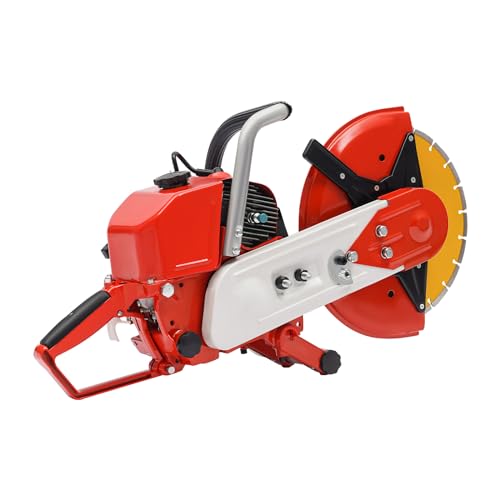
This gas cutter fits demolition, construction, and repair work where the saw must travel to the material rather than the other way round. The listing presents it as a portable concrete saw for cement and masonry cutting, with a diamond blade included for steel bar, stone, and concrete work. Hand pull starting and an air cooled single cylinder engine keep the machine self contained on site, and the stated maximum depth handles curbs, slabs, and block sections commonly cut during demolition and landscaping.
Specs
- Power source: Gasoline Powered
- Engine: 78.5cc, single cylinder, air cooled, 2-stroke
- Power: 2.9KW
- Speed: 6500 RPM
- Blade length: 12 inches
- Maximum cutting depth: 3.94 inches
- Ignition: Hand pull start
- Oil mixture: 25:1 gasoline to oil
- Included: Saw blade, tool bag, funnel, fuel oil mixing bottle
Best for: Portable cutting for demolition, road, and construction work far from outlets.
Watch out for: Note the shallower stated depth compared with the other gas option here, and check it still covers the sections you plan to cut.
Which One Fits Your Situation
Cutting a Thick Floor Slab at Home
Reach for the XtremepowerUS 3200W Electric 16 inch saw. Its blade size and stated depth give the most single pass capacity in this group, and the guide roller plus water line help on long floor runs. You will need a suitable power supply nearby, so plan cable routing before you start marking lines.
Trimming Pavers and Blocks in a Garden
The Evolution R300DCT 12 inch saw matches this work well. It is sized for paving and block rather than structural sections, includes a diamond blade, and runs on corded electric power, which keeps a domestic project simple and tidy. Its wheeled skid plate also helps when cuts run along the ground outdoors.
Working on a Site With No Power Supply
Choose one of the gas cutters. The DDYOOK 52CC offers the deeper stated cut and a wet cutting hose setup, while the GrfceVue 78.5cc machine brings higher listed power in a 12 inch format. Decide by the thickness you cut most often, then stock the correct fuel mixture before travelling.
Cutting Reinforced Concrete Indoors
The Evolution R14DCT is the sensible indoor choice here. It is an electric 14 inch saw listed for reinforced concrete, with dust suppression described in its title and a diamond blade included in the box. Ventilation and dust control still need careful planning, but avoiding engine exhaust makes enclosed work far more manageable overall.
Common Mistakes
- Choosing by blade diameter alone and ignoring the stated cutting depth, then discovering the saw cannot finish the slab in one pass.
- Fitting a blade with the wrong arbor size or a blade not rated for concrete, instead of checking the listing details before ordering.
- Cutting dry without any dust control plan, even though several saws here offer water feed or extraction options for a reason.
- Running a 2-stroke gas saw on unmixed fuel or the wrong ratio, which can ruin the engine on its first serious job.
- Forgetting circuit limits with high draw corded saws, then tripping breakers mid cut and losing the line on a long slab.
Frequently Asked Questions
Can these saws cut reinforced concrete?
Some can, within limits. The Evolution models in this guide are listed for reinforced concrete and masonry, while the other cutters are described for concrete, cement, and stone work. Rebar slows any blade and increases wear, so expect to cut steadily, keep the blade wet where the design allows it, and replace worn diamond blades promptly.
Do I need to cut wet or can I cut dry?
Both approaches appear across these listings. Wet cutting with a water line reduces airborne dust and helps the blade stay cooler, which suits most slab and floor work. Dry cutting avoids slurry and drainage issues but demands proper extraction and respiratory protection. Match the method to your site conditions and to the dust system the saw actually provides.
How deep can a 12 inch concrete saw cut?
Less than the blade diameter suggests. The 12 inch Evolution R300DCT lists a 4-1/2 inch cut, and the GrfceVue gas cutter lists 3.94 inches as its maximum. Guard design and arbor position always reduce usable depth, so read the stated figure for the exact model instead of estimating from blade size alone.
What should I check before the first cut?
Confirm the blade is a diamond type suited to concrete, that its arbor matches the saw, and that the guard is secure. Check fuel mixture on gas models or circuit capacity on corded models, set up water or extraction if fitted, and mark the line clearly. A short practice cut on waste material settles depth settings safely.