Key takeaways
- Budget-oriented reciprocating saws for demolition, pruning and plumbing cuts: corded workhorses from SKIL and WEN plus a compact BLACK+DECKER cordless option.
Nobody buys a first reciprocating saw for finish work. You buy it because a deck has to come apart, a cast-iron pipe is in the way, or a stump root refuses to move — and you need rough cutting power without stepping up to professional-grade tool money. The decision that actually matters at the entry level is simpler than the spec sheets suggest: corded or cordless, how much vibration your hands must absorb, and whether blade changes will slow you down mid-job.
The saws gathered here suit homeowners, first-time renovators and DIYers who cut occasionally but hard. Each one was selected from the name and specifications published on its own Amazon listing, concentrating on the budget-oriented end of the category: proven corded designs from SKIL and WEN, plus one compact cordless model for people already holding compatible batteries.
Quick Picks
As an Amazon Associate we earn from qualifying purchases.
| Product | Best for | Key spec from title |
|---|---|---|
| SKIL 9206-02 Reciprocating Saw | All-day corded demolition on a starter budget | 7.5-amp variable speed reciprocating saw |
| WEN 3630 Reciprocating Saw | Awkward angles in remodels and tight framing bays | 10-amp 8-position variable speed reciprocating saw |
| SKIL 9216-01 Reciprocating Saw | Heavier cuts where a stronger corded motor helps | 9 amp reciprocating saw |
| BLACK+DECKER BDCR20B Reciprocating Saw | Quick cuts away from outlets, pruning and PVC | 20V MAX POWERCONNECT 7/8 in. cordless reciprocating saw |
How to Choose
Corded or cordless at the entry level
Corded saws dominate the budget-oriented end for a plain reason: the motor is the whole purchase, with no battery platform quietly doubling what you spend. Plug one in and it delivers the same power in hour three as in minute three, which suits demolition days. Cordless earns its place differently — grab-and-go cuts in the yard, on a ladder, or in a room where the power is already off. If you own no batteries yet, a corded saw is the honest starting point; if a drill kit already lives in your garage, check whether its batteries fit a bare cordless saw.
Amps, strokes and what they predict
On a corded saw, the amp rating is the quickest guide to how hard the motor can work before it bogs down in wet lumber or thick metal. Speed is quoted in strokes per minute, and a variable control — trigger or dial — matters more than the top number, because slow starts keep a blade from skating across pipe or tearing the surface of a pruning cut. Stroke length is the quiet third figure: longer strokes clear chips faster in wood, while shorter strokes feel calmer in sheet material and tight spaces where the blade has little room to travel.
Vibration control and blade changes
Reciprocating saws shake; the only question is how much of that shake reaches your arms. Listings that name a counterbalance mechanism or vibration-reduction technology are describing a real design feature, not decoration, and it decides whether a long demo session ends with tired hands or numb ones. Blade changes deserve the same attention. A tool-less or twist-lock clamp lets you swap a hot, dull blade in seconds with gloves on, while older designs that need a separate key slow every change and invite you to keep cutting with a blade that should have been retired.
Weight, shoe design and the cuts you actually make
Most entry-level saws get used overhead, between studs and out in the yard, so weight and balance shape the experience as much as power does. A pivoting or adjustable shoe presses the tool into the work, steadies the cut and lets you use fresh sections of the blade as teeth wear. Rotating or multi-position heads solve a different problem: cutting flush or angled in corners where a straight saw body will not fit. Start from your two or three most likely jobs, then let those, rather than headline power, rank the features.
The 4 Best Options
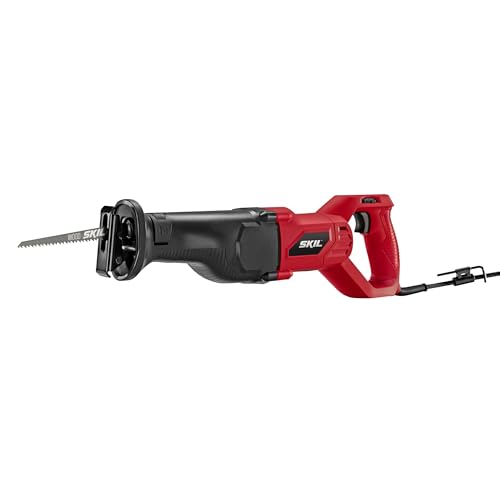
SKIL 9206-02 7.5-Amp Variable Speed Reciprocating Saw
For a first demolition saw, this corded SKIL covers the fundamentals without asking you to fund a battery platform. Its listing highlights a counterbalance mechanism for reduced vibration and a metal gear housing, two details that separate a saw built for repeated work from one built for a single project. The variable speed range lets you start cuts gently in metal and open the tool up in framing lumber, and the tool-less blade change keeps momentum during tear-outs. A pivoting foot helps the shoe stay planted as cuts deepen. It is the straightforward recommendation for garage-based renovation work.
Specs
- Power source: corded electric
- Motor: 7.5 amp
- Speed: variable, 800 to 2,700 strokes per minute per the listing copy
- Vibration control: counterbalance mechanism
- Gear housing: metal
- Blade change: tool-less
- Model number: 9206-02
Best for: Homeowners who want one corded saw for demolition, remodel tear-outs and yard cleanup.
Watch out for: The cord limits reach in big yards, so pruning far from the house still means an extension cord.
ASIN: B008J1GNEO
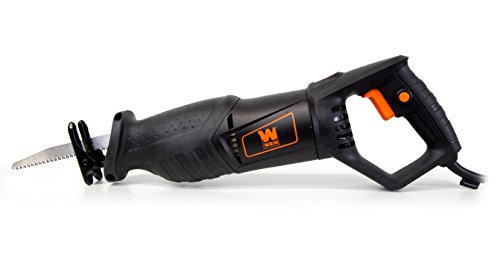
WEN 3630 10-Amp 8-Position Variable Speed Reciprocating Saw
Remodels rarely offer a straight approach, and this WEN is built around that problem. The listing describes an 8-position pivoting head that locks at intervals around the body, letting the blade attack from angles a fixed saw cannot reach, while the pressure-sensitive trigger varies speed from a standstill up to 2,800 strokes per minute. Its stated cutting capacities cover the lumber and metal sizes that dominate household demolition, and the twist-lock clamp releases blades without tools. Buyers whose work involves plumbing runs, subfloor openings and other contorted cuts will use the pivoting head constantly.
Specs
- Power source: corded electric
- Motor: 10 amp
- Speed: 0 to 2,800 strokes per minute, variable via pressure-sensitive trigger
- Head: 8-position pivoting head
- Cutting capacity: up to 4-1/2 inches in wood and 3/5 inch in metal, per the listing
- Blade change: twist-lock quick release
- Model number: 3630
Best for: Remodelers cutting in corners, joist bays and other spots where the approach angle is the problem.
Watch out for: The pivoting head adds bulk at the front, which can feel nose-heavy during long overhead cuts.
ASIN: B072FR2BXM
SKIL 9216-01 9 Amp Reciprocating Saw

Sitting a step above the smaller SKIL in motor strength, this 9-amp corded model suits buyers whose cutting list leans heavy: thicker framing, stubborn nail-embedded wood, longer sessions in pipe and demolition timber. The listing points to a variable speed dial, which sets a working pace before the cut begins rather than relying on trigger pressure alone — a calmer way to work through mixed materials. Tool-less blade change keeps swaps quick when a blade dulls mid-wall. For someone who expects regular, demanding use but still wants to stay in the entry-level corded class, it is the natural upgrade within this group.
Specs
- Power source: corded electric
- Motor: 9 amp
- Speed control: variable speed dial
- Blade change: tool-less
- Surface recommendation on listing: wood
- Model number: 9216-01
Best for: Frequent DIYers whose demolition and renovation cuts regularly involve thick or nail-filled lumber.
Watch out for: The listing gives less detail on vibration control than its smaller sibling, so plan on gloves and breaks during long sessions.
ASIN: B004W5ZAFO
BLACK+DECKER BDCR20B 20V MAX POWERCONNECT Reciprocating Saw
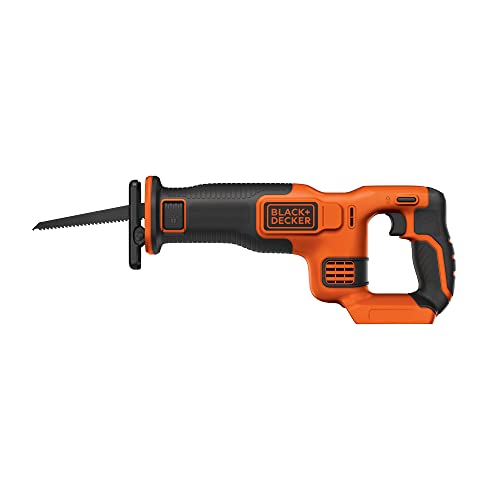
Cordless convenience enters this price class through the battery you may already own. This compact saw runs on the BLACK+DECKER 20V MAX POWERCONNECT system, so households with a matching drill or trimmer can add reciprocating capability without buying into a second platform. The 7/8-inch stroke suits the lighter end of the saw’s world: pruning branches, cutting PVC and plastic pipe, trimming back shrubs and handling small demolition tasks where hauling a cord is the biggest obstacle. It trades the sustained muscle of the corded models for freedom of movement, which is exactly the right exchange for quick, scattered jobs.
Specs
- Power source: cordless, battery
- Battery system: 20V MAX POWERCONNECT
- Stroke length: 7/8 inch
- Model number: BDCR20B
- Type: cordless reciprocating saw
Best for: POWERCONNECT owners who want a light cordless saw for pruning, pipe and quick cuts anywhere on the property.
Watch out for: The shorter stroke cuts thick demolition lumber more slowly than the full-size corded saws above.
ASIN: B00IP27DFA
Which One Fits Your Situation
You are gutting a bathroom or kitchen
Start with the SKIL 9206-02. Demolition days reward steady corded power, vibration control and fast blade swaps more than any other traits, and this saw pairs all three. It will run from the first stud bay to the last subfloor cut without a battery break, and your hands will notice the counterbalance by mid-afternoon.
Your cuts happen in corners and joist bays
Take the WEN 3630. When the blade must enter at an angle because the saw body cannot, the 8-position pivoting head stops being a novelty and becomes the reason the cut is possible at all. The stronger 10-amp motor is a welcome companion when those awkward cuts also turn out to be thick ones.
Your projects are occasional but heavy
The SKIL 9216-01 fits the pattern of a saw that sits in a cabinet for months, then gets asked to remove a fence, open a wall or break down a deck in a single weekend. Its 9-amp motor and dial-set speed handle demanding material calmly, and corded power means it is always ready regardless of how long it has been stored.
You already own the batteries
If POWERCONNECT packs from a drill or garden tool are already in your charger, the BLACK+DECKER BDCR20B is the simplest addition. It will not replace a corded saw for a full remodel, but for pruning, pipe repairs and the dozen small cuts that appear around a house each season, nothing else here is as easy to grab and use.
Common Mistakes
- Buying a bare cordless saw without owning its battery platform: the saw alone cannot cut anything, and adding batteries and a charger afterwards erases the saving that made it look affordable.
- Judging only by top speed: a high stroke rate with no variable control makes blades skate on metal and tear through pipe; control matters more than the headline number.
- Forcing dull blades to keep working: a worn blade bends, overheats and wanders, turning a rough-cutting tool into a frustrating one; swaps are cheap insurance for straight cuts.
- Ignoring the cord in corded value: an undersized or damaged extension cord starves a corded saw of power and can overheat, so match the cord to the tool and the distance.
- Using one blade type for everything: wood, metal and pruning blades differ in tooth pattern and length, and the wrong blade is the most common reason a capable saw feels weak.
Frequently Asked Questions
Is a corded reciprocating saw better than cordless for a first purchase?
For most first-time buyers, yes. A corded saw delivers full power for as long as the job lasts, needs no batteries or charger, and concentrates the whole purchase on the motor and build. Cordless makes more sense as a second saw, or when you already own batteries in the same system and value mobility over sustained demolition power.
How many amps does a homeowner reciprocating saw need?
The saws in this entry-level group run from 7.5 to 10 amps, and that span covers household demolition, pruning and pipe work comfortably. Lower ratings feel adequate in softwood and plastic but slow down in wet or nail-filled lumber. If your projects regularly involve thick framing or metal, choosing the upper part of that range avoids a saw that strains at every cut.
What blades should a beginner buy first?
Start with a small assortment rather than a single type: a coarse wood and pruning blade for lumber and branches, a fine-tooth metal blade for pipe and conduit, and a general demolition blade for nail-embedded wood. Match blade length to the material so the blade clears the cut on every stroke, and replace blades as soon as cutting slows noticeably.
Can a reciprocating saw replace a chainsaw for yard work?
For branches, roots and small limbs, a cordless or corded reciprocating saw with a pruning blade handles the work with less maintenance and easier storage than a chainsaw. It is not the tool for felling trees or cutting firewood rounds all day. Think of it as the right choice for cleanup and trimming, not for serious timber work.