Our Short List of 3

- Published EN/ISO comfort and limit ratings
- 900-fill hydrophobic goose down at 19 ounces claimed
- Excellent draft sealing with collar, baffles, and pad straps
- Packs very small at 5.5 by 8 inches
- 850-fill DownTek down with a lab-rated comfort figure
- Draft collar, pad straps, and convertible footbox
- Wide size option suits side sleepers
- Strong value against premium cottage quilts

- 850-fill down at a budget cost
- 30°F comfort rating covers three-season hiking
- Simple, packable top-quilt design
- Good entry point for first-time quilt campers
All 3 Picks at a Glance
| Product | Specs | Action |
|---|---|---|
| Therm-a-Rest Vesper 20F/-6C Backpacking Quilt |
| Check price on Amazon |
| Featherstone Moondance 25 |
| Check price on Amazon |
| SENSORY4U 850 Down Top Quilt |
| Check price on Amazon |
Key takeaways
- Best thru hiking sleeping quilts compared: ultralight down and synthetic quilts for long trails, ranked by weight, warmth, footbox design and pack size.
Introduction
On a thru-hike, your sleep system is the heaviest single item you carry every day, and the one you notice most at the end of a long day. The best thru hiking sleeping quilts solve that problem by cutting away the parts of a sleeping bag you never use: the insulation underneath you, which your body weight compresses flat, and the hood, which many hikers replace with a warm hat and a jacket. What is left is a blanket with a footbox, pad straps, and a draft collar, and the weight saving over a comparable sleeping bag can be several ounces on every single day of a months-long trail.
Quilts are not for everyone. They demand a good sleeping pad, because the pad supplies the insulation underneath you, and they ask more of the sleeper: you have to learn to seal the edges, manage drafts, and pair the quilt with the right clothing on cold nights. Hikers who make that adjustment rarely go back. Surveys of long-distance hikers consistently show a majority choosing quilts over traditional mummy bags, and the most popular models on long trails are quilts, not bags.
This guide compares three quilts that thru-hikers can actually buy on Amazon US: a premium down quilt with published lab ratings, a value down quilt that brings cottage-style design to a ready-to-ship listing, and a budget down top quilt that keeps the cost of going ultralight within reach. Each one is a true quilt, not a sleeping bag, and each one suits a different kind of hiker and a different budget.
At a Glance
| Quilt | Best For | Key Spec |
|---|---|---|
| Therm-a-Rest Vesper 20F/-6C | Premium ultralight warmth | 900-fill down, 19 oz, EN comfort 32°F, limit 20°F |
| Featherstone Moondance 25 | Best value down quilt | 850-fill down, 23.7 oz claimed, comfort 36°F, limit 26°F |
| SENSORY4U 850 Down Top Quilt | Budget down warmth | 850 down, 1.9 lbs, comfort 30°F, survival 20°F |
How to Choose a Thru Hiking Sleeping Quilt
1. Start with the temperature rating, and read it carefully
Quilt ratings are the easiest numbers to misread. Some makers quote a comfort rating, some quote a lower limit, and some quote a single number with no method attached. Therm-a-Rest publishes both figures for the Vesper 20: a comfort rating of 32°F and a lower limit of 20°F, measured to the EN/ISO standard. The 20 in the name is the limit, not the temperature at which most sleepers will feel comfortable. For a thru-hike, plan around the comfort figure, and add a warm sleeping pad and appropriate sleep clothing for nights near the limit. A quilt rated for conditions colder than you expect is worth its weight; a quilt rated for conditions warmer than you meet is a miserable night.
2. Compare weight, but weigh it against warmth
A quilt that saves four ounces but leaves you cold is not a bargain. The meaningful comparison is warmth per ounce, and that depends on fill power, fill weight, and shell fabric. Higher fill-power down lofts more per ounce, so a 900-fill quilt can match the warmth of an 850-fill quilt with less down inside. Shell fabric matters too: ultralight 10D nylon saves weight but needs more care around thorns and rough ground than a 20D shell. On a thru-hike, where you carry the quilt for thousands of miles, a few ounces matter, but only when the warmth is equal.
3. Choose the insulation for your climate
Down insulates better per ounce than synthetic fill, packs smaller, and lasts longer when cared for. Modern hydrophobic down treatments help it resist moisture, but down still loses loft when it gets truly wet, and it dries slowly. Synthetic fill keeps working when damp and dries faster, which makes it the safer choice for humid trails, frequent rain, and hikers who sleep in shelters where condensation is a nightly fact. If your trail is mostly dry and you protect your quilt in a dry bag, down is the lighter choice. If your trail is wet, or you are new to quilt camping, synthetic deserves serious consideration, even at a weight penalty.
4. Check the footbox and draft control
A quilt lives or dies on its edges. A sewn footbox is warmer and simpler, because there is no zipper or drawcord to fail, but it cannot open flat on warm nights. A zippered or drawstring footbox vents better and doubles as a blanket, at the cost of a little weight and a potential cold spot. Pad attachment straps or a pad connector system hold the quilt to your sleeping pad and stop drafts when you roll over, which matters more than most first-time quilt buyers expect. A draft collar at the neck seals the last gap. When two quilts have similar warmth ratings, the one with the better draft control usually sleeps warmer in practice.
5. Get the size right
Quilts come in regular and long lengths, and some in regular and wide widths. A quilt that is too short leaves your shoulders or feet exposed, and a quilt that is too narrow lets cold air in every time you move. Taller hikers and side sleepers should size up: a long length for anyone near six feet, and a wide cut for side sleepers who curl up or sleep with their knees bent. Check the maker’s sizing chart against your height and your sleeping pad width, and remember that a quilt drapes over the pad, so its flat width needs to cover both you and the pad edges.
6. Think about pack size and durability
A quilt that packs to the size of a small stuff sack leaves room in your pack for food, which is the real weight on a thru-hike. Down quilts generally pack smaller than synthetic quilts of equal warmth. Durability is the trade: the lightest shells are thin, and a thru-hike is thousands of miles of abrasion, stuffing, and restuffing. A 10D shell needs a stuff sack and a little care; a 20D shell forgives more. Either way, store the quilt loosely at home and compressed only on the trail, and keep it dry in a waterproof stuff sack or pack liner.
Product Reviews
Therm-a-Rest Vesper 20F/-6C Backpacking Quilt
- Published EN/ISO comfort and limit ratings
- 900-fill hydrophobic goose down at 19 ounces claimed
- Excellent draft sealing with collar, baffles, and pad straps
- Packs very small at 5.5 by 8 inches
The Therm-a-Rest Vesper 20 is the premium pick in this guide, and the only quilt here with published EN/ISO comfort and limit figures: comfortable to 32°F, with a lower limit of 20°F. That honesty is worth noting, because it tells you exactly how to plan. Treat it as a 32°F quilt with reserve warmth for colder nights, not as a 20°F quilt, and pair it with a warm pad and a hat on nights near the limit.
The build is what justifies the premium position. The Regular carries 12.5 ounces of 900-fill PFAS-free hydrophobic goose down inside a 10D recycled nylon ripstop shell, for a claimed total weight of 19 ounces, with independent measurement putting it closer to 20 ounces. Box baffles and a mesh wall baffle design reduce cold spots, a draft collar with a snap and drawcord seals the neck, side baffles and SynergyLink pad straps hold the quilt to the pad, and the footbox is sewn closed for maximum warmth. The Regular is 75 inches long and 58 inches wide at the shoulder, fits sleepers up to six feet tall, and packs to 5.5 by 8 inches. A limited lifetime warranty backs the build.
This is the quilt for the thru-hiker who counts every ounce and wants lab-rated warmth from a mainstream brand with normal retail availability, rather than waiting weeks for a made-to-order cottage quilt. Its weaknesses are the ones that come with the territory: the 10D shell is delicate and needs care, the tapered cut can feel drafty for restless side sleepers, and it is the most expensive quilt in this guide by a clear margin. Check the current Amazon listing before ordering, as availability for this model has varied.
Pros
Cons
Featherstone Moondance 25
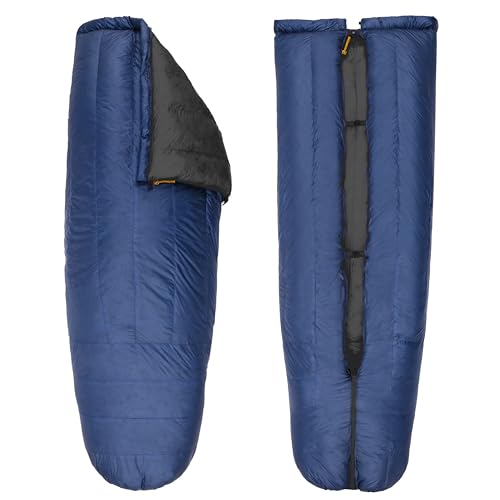
- 850-fill DownTek down with a lab-rated comfort figure
- Draft collar, pad straps, and convertible footbox
- Wide size option suits side sleepers
- Strong value against premium cottage quilts
The Featherstone Moondance 25 is the value pick that brings cottage-style design to a ready-to-ship Amazon listing. It is an off-the-shelf 850-fill-power down quilt with a zippered and drawstring footbox, a draft collar, and a pad attachment system, built for backpackers who want premium materials without a premium wait or a custom order. Independent reviews describe it as a genuine alternative to far more expensive quilts, and it has become a common recommendation for hikers buying their first serious down quilt.
The numbers explain the appeal. The Moondance 25 uses 850-fill DownTek down, with a lab-rated comfort figure of 36°F and a limit of 26°F. Claimed weight is 23.7 ounces, though one independent measurement put it at 25.5 ounces on the scale, so budget a little extra in your base weight. The Regular is 75.6 inches long and 53.9 inches wide, with a Long/Wide size at 57.9 inches across for side sleepers and broader hikers. The two-inch draft collar, pad straps, and zip-and-drawstring footbox give it the draft control that separates a real thru-hiking quilt from a simple camp blanket, and a limited lifetime warranty covers the build.
Where it gives ground to the Vesper is weight and fill power: it is roughly five ounces heavier and uses 850-fill down rather than 900-fill. In return it costs far less and ships ready to buy, with no custom lead time. Availability on Amazon has varied, so check the current listing before ordering. For a thru-hiker who wants a warm, well-built down quilt without paying flagship money, the Moondance 25 is the most balanced choice in this guide.
Pros
Cons
SENSORY4U 850 Down Top Quilt
- 850-fill down at a budget cost
- 30°F comfort rating covers three-season hiking
- Simple, packable top-quilt design
- Good entry point for first-time quilt campers
The SENSORY4U 850 Down Top Quilt is the budget entry in this guide, and the one that makes ultralight quilt camping accessible to hikers who cannot justify a premium down quilt. It is a straightforward top quilt: 850-fill down insulation, a listed weight of 1.9 pounds, a comfort rating of 30°F with a survival figure of 20°F, and a water-resistant shell. The design is simple, with a footbox and pad straps, and it packs down small enough for a thru-hike pack.
What it offers is honest value. The 850-fill down gives it a warmth-to-weight ratio that synthetic budget quilts cannot match, and the 30°F comfort figure covers three-season conditions on most long trails. At 1.9 pounds it is the heaviest quilt in this guide, and it lacks the refined draft collar, baffle design, and pad attachment system of the two quilts above, so restless sleepers may notice drafts on cold nights, and cold sleepers should treat the comfort figure as optimistic and carry an extra layer. The brand is also less established than Therm-a-Rest or Featherstone, so long-term durability and warranty support are less proven.
For a first thru-hike, a summer trail, or a hiker who wants to try quilt camping before committing to a premium purchase, the SENSORY4U is a sensible way in. It delivers real down warmth at a fraction of the cost of the premium options, and the money saved can go toward the sleeping pad and shelter that matter just as much to a good night on the trail.
Pros
Cons
Comparison: Which Quilt Fits You
The three quilts in this guide form a clear ladder. The Therm-a-Rest Vesper 20 is the lightest and the best built, with published lab ratings and the most careful draft sealing, and it suits the hiker who has already committed to quilt camping and wants the best warmth per ounce available from a mainstream brand. The Featherstone Moondance 25 gives up a few ounces and a little fill power to deliver most of the same experience at a far lower cost, and it is the pick for most thru-hikers: warm enough for three seasons, wide enough for side sleepers in the Long/Wide size, and available without a custom order. The SENSORY4U is the budget way in, with real 850-fill down warmth for hikers who want to try quilt camping or who need to keep costs down, accepting extra weight and simpler draft control in return.
If you sleep cold, choose by the comfort rating and size up, whichever quilt you pick. If you sleep warm, the lighter quilt will serve you better than a warmer one you end up venting every night. And whichever quilt you choose, spend as much thought on your sleeping pad as on the quilt itself, because the pad is half of the system: a quilt with a cold pad is a cold night, no matter how good the down is.
Frequently Asked Questions
Are sleeping quilts warm enough for a thru-hike?
Yes, when they are matched to the conditions. A quilt with a comfort rating suited to the coldest nights you expect, paired with an insulated sleeping pad and appropriate sleep clothing, keeps most hikers warm through three seasons. The key is planning around the comfort rating rather than the lower limit, and carrying a pad with enough insulation for the ground temperatures you will meet.
What is the difference between a sleeping quilt and a sleeping bag?
A quilt has no insulation underneath you and usually no hood. It drapes over you and attaches to your sleeping pad with straps, which saves the weight of insulation your body compresses flat anyway. A sleeping bag wraps fully around you with a hood. Quilts are lighter and roomier; bags are simpler and more forgiving for beginners.
Do I need a special sleeping pad for a quilt?
You need an insulated pad with enough warmth for the conditions, because the pad replaces the insulation a sleeping bag would put underneath you. Most thru-hikers use an insulated air pad. Pad straps or a connector system, included with the quilts in this guide, hold the quilt to the pad and stop drafts.
Can a side sleeper use a sleeping quilt?
Yes, and many side sleepers prefer quilts to mummy bags because there is no hood or zipper to fight. The important detail is width: choose a regular/wide or wide size, or a quilt with generous flat width, so the edges stay tucked when you roll over. The Featherstone Moondance 25 in Long/Wide is the roomiest option in this guide.
Is down or synthetic better for a thru-hiking quilt?
Down is lighter, packs smaller, and lasts longer, which is why it dominates long-distance hiking. Synthetic keeps working when wet and dries faster, which suits humid trails and hikers who expect frequent rain. Most thru-hikers choose down and protect it in a dry bag; hikers on wet trails or with a history of damp gear may prefer synthetic.
How do I keep a down quilt dry on the trail?
Store it in a waterproof stuff sack or a pack liner, keep it out of rain when you set up camp, and air it out whenever you get sun and a breeze. If it does get damp, loft it and dry it at the next opportunity. Never store a down quilt compressed at home; hang it or keep it in a large breathable storage sack between trips.
Conclusion
The best thru hiking sleeping quilts are the ones that match your trail, your sleep style, and your budget without adding weight you do not need. The Therm-a-Rest Vesper 20 leads on weight and build quality, the Featherstone Moondance 25 leads on value and versatility, and the SENSORY4U 850 Down Top Quilt leads on cost for hikers trying quilt camping for the first time. All three are true quilts, all three are available on Amazon US, and any of them, paired with a warm pad and a little practice sealing out drafts, will carry you comfortably through a long trail. Choose by comfort rating first, size second, and weight third, and the nights will take care of themselves.
Disclosure: As an Amazon Associate, we earn from qualifying purchases.