Key takeaways
- What is the best bike ever in the world? An editorial guide to the most iconic road, mountain, hybrid and city bicycles by category, and how to judge greatness for your own riding.
As an Amazon Associate we earn from qualifying purchases.
Affiliate Disclosure: This article is an editorial guide. Some links on this site may be affiliate links, and we may earn a commission if you buy through them, at no extra cost to you. This article does not claim detailed research of the historic models discussed.
How to read this guide
There is no single answer to the question of the best bike ever in the world, and any guide that pretends otherwise is selling you something. A bicycle that wins a mountain stage in the Alps, a bicycle that survives a winter of city commuting, and a bicycle that carries a child to school are solving three different problems. Greatness in cycling is always greatness for a job, in a place, for a rider.
So this article takes a different approach from a normal shopping list. It is an informational, editorial guide. It explains how experienced riders judge the most celebrated bicycles in history, category by category, and it names the iconic models that come up again and again in those conversations. Because many of those models are historic, discontinued, sold through specialist dealers, or built to order, products in this article are listed as ASIN: N/A. We are not forcing a buying list onto a question that is really about design, influence, and fit for purpose. Where a modern equivalent exists through normal retail channels, we describe what to look for instead of inventing a link.
Use this guide in two ways. First, enjoy it as a short history of what made certain bicycles legendary. Second, use the judging criteria at the end to decide what the best bike in the world would look like for you, given your roads, your body, your budget in qualitative terms, and the riding you actually do week after week.
What makes a bicycle a candidate for best ever?
Before naming any model, it helps to be clear about the criteria. Riders and frame builders tend to return to the same six tests.
First, influence. Did the bicycle change what other builders did next? A design that is copied for twenty years has a stronger claim than a design that was merely expensive for one season.
Second, performance in its intended job. For a racing road bike that means stiffness where power is applied, low weight on climbs, stable handling at speed, and braking a rider can trust on a descent. For a mountain bike it means traction, control, and durability on rough ground. For a city bike it means reliability, easy maintenance, and comfort in ordinary clothes.
Third, fit and ride quality. The best frames feel alive rather than harsh. They return energy without punishing the rider over long distances, and they come in sizes and geometries that suit real bodies, not only professionals.
Fourth, durability and serviceability. A legendary bicycle can be repaired. Bearings, spokes, cables, and drivetrain parts follow standards that local shops understand. A frame that cannot be serviced far from its factory ages badly, however advanced it looked at launch.
Fifth, versatility over time. Many iconic bicycles stayed useful as tastes changed. They accepted wider tires, racks, different handlebars, or newer components, so owners kept riding them instead of replacing them.
Sixth, cultural reach. Some bicycles became symbols: of a race victory, of a city, of childhood freedom, or of a new way to travel. That reach is not a technical spec, but it is part of why certain names never leave the conversation.
No bicycle scores perfectly on all six. The models below are remembered because they scored unusually well on several at once.
Road racing: the pursuit of speed with control
Road racing is where the phrase best bike ever is argued most loudly, partly because professional racing gives the public a shared scoreboard. Winning alone does not settle the argument, since the rider matters more than the machine, but certain frames became linked to eras.
The steel racing frames of the mid twentieth century set the template: double-diamond frames, narrow tubing, and geometry tuned for long stages. Builders in Italy and France refined lugged steel until it was light, springy, and repairable by any competent frame shop. Their influence is still visible in every modern road frame silhouette.
The shift to aluminium and then carbon fibre changed the test. Carbon allowed builders to shape tubes for aerodynamics and to place stiffness exactly where sprinting and climbing demanded it, while keeping comfort in the seat stays and fork. Modern aero road bikes from the major racing brands, with integrated cockpits, disc brakes, and electronic shifting in their flagship forms, represent the current peak of that line of development. They are extraordinary machines for racing and fast group rides. They are also specialised: aggressive positions, narrow tire clearances on older aero models, and dealer-based servicing make them poor answers for a rider who mainly commutes or tours.
A more balanced road icon is the endurance road bike that emerged in the two thousands. By relaxing the head angle slightly, lengthening the wheelbase a touch, raising the front end, and designing in compliance and wider tire clearance, builders made road bikes that ordinary riders could use for five hours without regret. Many experienced riders, asked privately what the best road bike ever is for a non-racer, name an endurance model rather than a pure race model. That is a useful lesson: the best bike in the world for most people is rarely the one on the podium photograph.
When you judge a modern road bike for yourself, check tire clearance first, because wider tires at sensible pressures are the single biggest comfort and grip improvement of the last decade. Then check fit range, then gearing that suits your hills, then brake type. Disc brakes now dominate for consistent wet-weather control, while well set up rim brakes remain light and simple on older designs.
Mountain bikes: control when the surface stops helping
Mountain biking began with riders adapting sturdy cruiser frames for dirt descents, and the early production mountain bikes of the nineteen eighties turned that experiment into a category. Their greatness was conceptual: fat knobby tires, wide flat handlebars, low gearing, and strong brakes made off-road riding accessible to anyone, not only to daredevils with custom machines.
Full suspension was the next leap. Early designs fought pedal bob and weight, but linkage systems matured until a trail bike could climb efficiently and descend with genuine control. Modern trail and enduro bikes, with slack head angles, dropper seatposts, single-chainring drivetrains, and hydraulic disc brakes, are astonishingly capable. A competent modern trail bike can ride terrain that would have stopped a professional thirty years ago.
Yet the mountain bike many riders remember most fondly is often a simple hardtail: a rigid or front-suspension frame, wide tires, and parts that survive mud and neglect. Hardtails teach technique, cost less to maintain in qualitative terms, and work as gravel and city bikes with a tire change. If your trails are smooth and your rides are exploratory rather than timed, a hardtail may be your personal best ever, and there is no shame in that conclusion.
Judging a mountain bike starts with intended terrain. Cross-country bikes prize low weight and pedalling efficiency. Trail bikes balance climbing and descending. Enduro and downhill bikes trade climbing ease for stability and travel on steep ground. Wheel size, suspension travel, and geometry must match that job; more travel is not automatically better, because it adds weight and dulls response on gentle trails.
Hybrid and fitness bikes: the quiet all-rounders
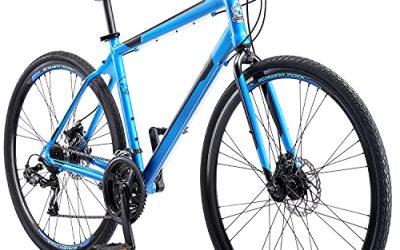
Hybrids rarely win beauty contests in cycling media, and yet for a huge share of real-world riding they are the most sensible bicycles ever made. A hybrid borrows the large, fast-rolling 700c wheels and efficient gearing of a road bike, then adds a flat handlebar, a more upright position, wider tires, and often mounts for racks and mudguards.
That formula explains why flat-bar fitness bikes became the default recommendation for new commuters, fitness riders, and returning cyclists. The rider can see traffic, brake and shift from one relaxed position, wear ordinary shoes on flat pedals, and still cover distance at a respectable pace. No special clothing, no clipped-in learning curve, no fragile parts.
The best hybrids in history are not famous for a single innovation. They are famous for balance: aluminium frames that resist corrosion, drivetrains with enough range for hills, brakes that work in rain, and geometry stable with a loaded rack. When a hybrid is well chosen and well maintained, it disappears under the rider, which is the highest compliment a utility machine can earn.
If you are choosing in this category, prioritise tire width for your surfaces, a gear range that includes a genuinely low gear, and contact points that fit you: saddle, grips, and bar width. Those details decide whether the bike is ridden daily or left in a garage.
City, cruiser and utility bikes: greatness measured in errands
In the great cycling cities of northern Europe, the best bike in the world has looked the same for generations: an upright city bicycle with a step-through or sturdy diamond frame, full mudguards, a chain case, dynamo lighting, a rear rack, and hub gearing or a simple derailleur kept under cover from the weather. It is not light and it is not fast, and by the only metric that matters for its job, trips completed without thought or special preparation, it may be the most successful bicycle design ever built.
Cruisers tell a related story in North America. Balloon tires, swept-back bars, and a relaxed saddle position made cycling feel like leisure rather than sport, and that feeling brought people back to bikes. Modern cruisers and comfort bikes keep that spirit while adding multiple gears and better brakes.
Cargo bikes extend the utility argument furthest. Long-tail and front-loading designs carry children, groceries, and tools that would otherwise require a car trip. Their claim to greatness is substitution: every journey they replace changes the economics and the feel of a neighbourhood. They are heavy and need storage space, so they are not universal answers, but for families in flatter areas they can be genuinely life-changing.
Folding and small-wheel bikes: the best bike is the one you can take with you
A folding bicycle answers a problem no full-size frame can solve: mixed journeys. Ride to the station, fold the bike, carry it onto a train, unfold it, and ride the last part. The classic small-wheel folders refined over decades in Britain became icons because their fold was fast, their ride was surprisingly composed, and their owners could store them in a hallway or office.
Small wheels accelerate quickly and turn sharply, which suits city traffic. The trade-offs are a firmer ride over potholes and, on some designs, proprietary parts. For apartment dwellers and multimodal commuters, those trade-offs are often worth it. Again, context decides greatness.
Gravel and adventure bikes: the modern compromise that works
Gravel bikes are the newest serious claimant in the best ever debate, and their popularity is not a fashion accident. They combine drop handlebars and efficient pedalling with wide, treaded tires, stable geometry, low gearing, and mounts for bags and bottles. One bike can ride tarmac to the trailhead, continue on dirt, and carry enough for an overnight trip.
For a rider who can own only one bicycle and rides mixed surfaces, a good gravel bike is currently the strongest single answer. Its weakness is specialisation at the extremes: it will not match a pure road bike in a criterium or a full-suspension bike on a bike-park descent. But as an expression of versatility, the fifth criterion above, gravel design is hard to beat.
Adventure riders also revived interest in steel and titanium frames for their durability and ride feel, and in mechanical simplicity: cable shifting, external routing, and parts a small-town shop can fix. In an era of integrated everything, that serviceability is itself an innovation worth celebrating.
Children’s and balance bikes: where every best bike story starts
Ask adults about the best bike they ever owned and many will describe a childhood machine: the first two-wheeler, the bike that meant independent trips to a friend’s house. Balance bikes, which teach steering and balance without pedals, changed how children learn, letting many skip stabilisers entirely. A well sized children’s bike, light enough for the child to handle and with brakes the child’s hands can reach, matters more than brand heritage.
Sizing is the whole game here. A bike that is too large is frightening and unsafe, however good its parts are. Choose by the child’s inseam and confidence, keep the saddle low enough for control at first, and expect to pass the bike on: good children’s bikes hold their usefulness across siblings and neighbours.
How to choose your own best bike in the world
Start with honesty about your riding. Write down where you will ride in the next year, on what surfaces, for how long, carrying what, and in what weather. That short list eliminates most categories immediately and prevents the classic mistake of buying for an imagined life.
Next, set fit before brand. A bicycle that fits your reach, saddle height, and preferred position will feel fast and comfortable; a famous name in the wrong size will not. If you are between sizes, most recreational riders do better with the option that gives the more relaxed position.
Then judge the contact points and the consumables. Tires, saddle, handlebar, and pedals shape every ride, and all four can be changed. Budget attention for them qualitatively rather than spending everything on the frame badge.
Consider maintenance where you live. Disc brakes, hub gears, electronic shifting, and suspension all perform well, and all need specific care. If your nearest shop is far away, simpler systems you can service at home may make a bike greater in practice.
Finally, think about longevity. Standards change, but a frame with generous tire clearance, common fittings, and replaceable parts will stay useful longer. The bicycles history remembers best were not only advanced; they stayed rideable. Choose the bike that you will still be riding, happily, in five years, and you will have found the only version of the best bike ever in the world that truly counts: yours.
Frequently asked questions
Is there one bicycle everyone agrees is the best ever?
No. There is broad agreement on influential designs in each category, but riders disagree across categories because they value different things. A racing cyclist, a courier, and a parent doing school runs will never crown the same machine, and each can be right.
Are older iconic bikes still good to ride?
Many are, provided they are inspected for frame damage, fitted with fresh brake pads, tires, and cables, and matched to modern safety expectations. Their gearing and braking may feel dated, but good steel and aluminium frames age gracefully when stored dry and serviced regularly.
Should a beginner buy a famous flagship model?
Usually not. Beginners benefit more from correct fit, forgiving geometry, reliable mid-level components, and money left for a helmet, lock, lights, and maintenance. Skill and habit make a rider fast and happy far sooner than a flagship frame does.
Does an electric motor change the answer?
Electric assistance changes who can ride and how far, especially for hills, cargo, and commuting without arriving exhausted. The judging criteria stay the same: fit, reliability, serviceability, and suitability for the job. Assistance is a feature, not a shortcut around those tests.