Key takeaways
- Compare the best meat grinders for burgers, sausage and game, from heavy-duty electric models to a compact KitchenAid attachment for smaller batches.
Grinding meat at home changes what you can cook. You choose the cut, control the fat blend, and season the mixture before it forms a patty or fills a casing. A chuck and brisket blend tastes different from a single supermarket pack, pork shoulder ground coarse makes better sausage than a fine pre-ground mix, and venison trim that might otherwise be wasted becomes burgers, chili meat, and breakfast sausage.
The catch is that grinders vary far more than their motor numbers suggest. Head size, plate selection, feed throat width, and how easily the parts wash shape whether grinding feels satisfying or messy. This guide compares five grinders sold on Amazon.com: large electric models for heavy batches, a mid-size model for family use, a value-focused model with a generous kit, a heavy stainless option for game processing, and one stand mixer attachment. Matching the machine to your batch size and storage matters more than chasing the biggest number on the box.
As an Amazon Associate, we earn from qualifying purchases.
Quick Answer
For frequent large batches, the LEM Products BigBite #12 and the STX International Turboforce 3000 offer the most grinding capacity and plate choice. The Weston #8 suits regular family grinding, the CHEFFANO suits value-focused home use with a full kit included, and the KitchenAid Metal Food Grinder Attachment suits mixer owners grinding smaller amounts without buying a separate machine.
How to Choose
Start with batch size. If you grind a few pounds for burgers monthly, a compact electric grinder or mixer attachment will handle the work and store easily. If you process a deer, buy whole muscles in bulk, or make sausage several times a season, a larger head and stronger motor save real time. Undersizing is the most common mistake: a small grinder forced through large, warm batches slows down, smears fat, and produces a pasty texture.
Head size is the clearest guide. Numbers such as #8 and #12 refer to the size of the grinding head and plates. A larger head accepts bigger pieces, moves meat faster, and usually pairs with a wider feed throat. Smaller heads are lighter and easier to store, but they reward patience and well-trimmed, partly chilled meat.
Motor claims need careful reading. Some listings emphasize maximum or locked power, which is not the same as power during steady grinding. Rated power, torque, and metal gearing matter more for dense meat. Reverse helps clear a jam without full disassembly, and a circuit breaker protects the motor when a tough piece stalls the auger.
Plates and blades decide texture. A coarse plate suits chili meat and the first pass for sausage, a medium plate suits most burgers, and a fine plate suits smoother blends. Many cooks grind twice, first coarse and then medium, keeping meat cold between passes. Stainless plates and blades resist rust and are easier to maintain than carbon steel. Check that replacement plates for your head size are easy to find.
Attachments expand the value. Sausage tubes, a kubbe maker, a large tray, and a sturdy pusher turn a grinder into a complete station. If you only grind, a big bundle adds washing and storage without benefit.
Finally, consider cleaning and weight. Parts should be washed promptly, dried fully, and stored dry. A heavy stainless grinder is stable but needs shelf space, while a lighter model is easier to lift from a cabinet. Keep meat cold, work in batches, and follow maker instructions for run time and for foods the machine is not designed to process, especially bones and frozen blocks.
STX International Turboforce 3000 Series 5-in-1 Electric Meat Grinder

The STX International Turboforce 3000 is built around a size #12 head, placing it in the larger home category. The listing describes three speeds, five grinding plates, three stainless steel blades, sausage stuffing tools, and a kubbe maker, giving it one of the broader kits in this guide. That breadth suits cooks who move between coarse game blends, medium burger grinds, and stuffed sausage without buying accessories later.
In practice, the larger head and wide tray help with a bulk pack or seasonal batch. You can stage more meat, feed steadily, and swap plates for a second pass. Multiple blades are useful too, because a sharp blade paired with a plate supports a cleaner cut, provided the meat is cold and well trimmed.
The compromises are size and care. A #12 machine takes storage space, and the full kit means more pieces to wash. It is a home machine, not a continuous commercial unit, so work in batches and follow the manual. For households that grind often enough to justify the footprint, head size, plate range, and tools are the main appeal.
Specs
| Item | Detail |
|---|---|
| Type | Standalone electric grinder |
| Head size | Size #12 |
| Speeds | Three speeds listed |
| Plates | Five grinding plates listed |
| Included tools | Sausage stuffer and kubbe maker listed |
Weston Electric Meat Grinder & Sausage Stuffer, #8 650 Watt

The Weston Electric Meat Grinder & Sausage Stuffer uses a #8 head and a motor listed at 650 watts, positioning it between compact occasional-use grinders and larger #12 models: capable enough for regular family grinding, while still being a machine many kitchens can store without rearranging everything else.
Weston lists stainless steel grinding plates and sausage stuffing functions, covering the two jobs most home users ask for. The #8 format has an advantage after purchase too, because plates in common head sizes tend to be easier to replace than proprietary fittings.
Choose this model if your pattern is steady rather than extreme: burgers for the week, meatloaf mix, ground pork for dumplings, or a modest sausage session. It asks less of your storage than a #12 grinder, but it will not move through very large game batches as quickly. For many households, that balance of capacity and footprint is the sensible middle.
Specs
| Item | Detail |
|---|---|
| Type | Standalone electric grinder and sausage stuffer |
| Head size | Size #8 |
| Motor | 650 watts listed |
| Plates | Stainless steel grinding plates listed |
| Model reference | 33-0801-W |
LEM Products BigBite #12 Meat Grinder

The LEM Products BigBite #12 is the heavy-duty stainless option in this guide, listed with a 0.75 horsepower motor and aimed at frequent use. LEM is closely associated with hunting and home processing, and the BigBite design is presented around a larger bite at the auger, intended to pull meat through efficiently when pieces are prepared correctly and kept cold.
This is the pick when grinding is a recurring project rather than an occasional experiment. The #12 head supports faster work on larger batches, the stainless build suits a dedicated processing setup, and the brand ecosystem matters because regular users eventually need plates, knives, and stuffing tubes that match the machine. Sausage making, bulk burger blends, and game trim are the natural use cases.
The trade-offs are weight and footprint. A stainless #12 grinder is not light to move for one small batch, and it makes most sense with a place to set it up and volume that rewards it. It still requires good technique: partly chilled meat, sensible piece size, and prompt cleaning. If you process often, examine this one first.
Specs
| Item | Detail |
|---|---|
| Type | Standalone electric grinder |
| Head size | Size #12 |
| Motor | 0.75 HP listed |
| Build | Stainless steel |
| Intended use | Frequent use listed |
CHEFFANO Meat Grinder, 2600W Max Stainless Steel Meat Grinder Electric
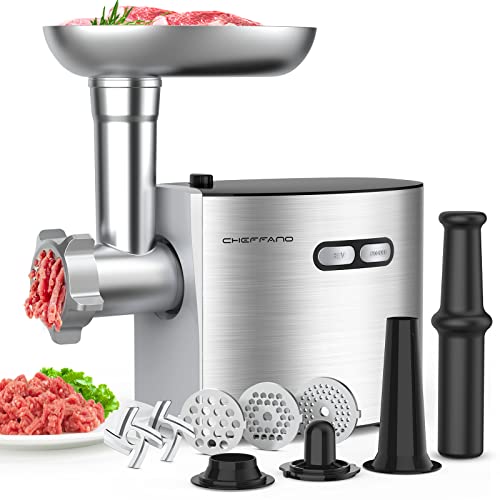
The CHEFFANO Meat Grinder is the value-focused electric option, described as ETL approved, with a maximum power figure in its name, two blades, three plates, a sausage stuffer tube, and a kubbe kit included. That complete bundle is the story: a household that wants to try burgers, sausage, and kubbe with one purchase gets the core tools in the box without building a kit piece by piece.
For home use, the CHEFFANO is a practical starting point for small and medium batches. Three plates cover the coarse, medium, and fine range most recipes need, and a second blade helps you keep one paired and ready. Check the product page for which parts require hand washing.
Be realistic about power language. A maximum figure is a peak claim, not a promise for continuous heavy processing, so this model fits home batches better than long game-processing days. Feed trimmed, chilled meat steadily, and do not treat it as a bone grinder. As a bundled home machine, it offers an accessible route into grinding.
Specs
| Item | Detail |
|---|---|
| Type | Standalone electric grinder |
| Power claim | 2600W max in listing title |
| Plates | Three plates listed |
| Blades | Two blades listed |
| Included tools | Sausage stuffer tube and kubbe kit listed |
KitchenAid Stand Mixer Attachment, Food Grinder KSMMGA, Metal Food Grinder
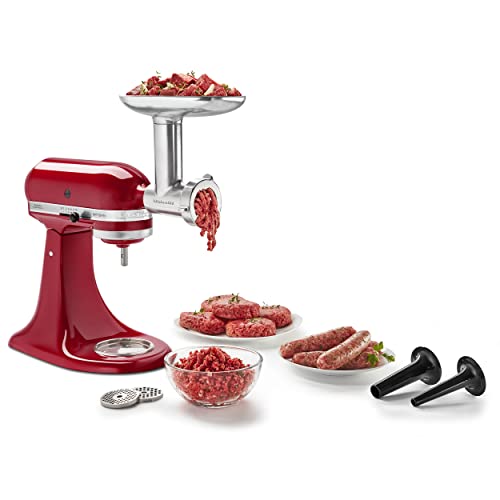
The KitchenAid Metal Food Grinder Attachment, model KSMMGA, is the one attachment pick in this guide, and it only makes sense if you already own a compatible KitchenAid stand mixer. Instead of adding another motor and base, it uses the mixer hub to drive a metal grinding attachment, a real storage advantage for cooks who grind in modest amounts.
The metal construction is the reason to choose this version for small-batch use, because the grinding body benefits from weight, stability, and the ability to chill before grinding. It suits burgers from a single muscle, small sausage recipes, and learning your preferred blends without committing counter space. Your mixer motor and capacity set the limits, so follow KitchenAid guidance for batch size and run time.
It is not a substitute for a #12 standalone grinder. Throughput depends on the mixer, the feed is sized for smaller work, and using it ties up the mixer. If you later process bulk meat often, a dedicated grinder will be faster. If you already have the mixer and grind a few pounds at a time, this is the most space-efficient pick here.
Specs
| Item | Detail |
|---|---|
| Type | Stand mixer grinder attachment |
| Model | KSMMGA |
| Construction | Metal food grinder attachment |
| Power source | KitchenAid stand mixer, sold separately |
| Best fit | Smaller batches by mixer owners |
Who Should Skip It
Skip meat grinders altogether if you only buy ground meat occasionally and have a butcher you trust to grind to order. A grinder earns its space only when control over cut, fat, and seasoning is something you will actually use, and cleaning is a poor trade for one small batch every few months.
Skip the large #12 models if storage is tight, if you cannot lift a heavier machine, or if your batches are only a pound or two. Skip the KitchenAid attachment if you do not already own a compatible stand mixer, because buying a mixer just to grind changes the value calculation completely.
Skip value-focused and compact models if your main goal is processing large amounts of game in long sessions. That work rewards a larger head and a setup designed for frequent use. Also skip any grinder if you expect it to handle bones, frozen solid meat, or heavy sinew unless the specific listing and manual expressly allow that use.
FAQ
How cold should meat be before grinding?
Meat should be thoroughly chilled and firm at the edges, and many cooks also chill the head, plate, blade, and tray before a batch. Cold fat cuts cleanly instead of smearing. Work in smaller batches, return meat to the refrigerator between passes, and re-chill if the mixture feels warm.
Which plate size is best for burgers?
A medium plate is the common starting point for burgers, while a coarse first pass followed by a medium second pass gives a loose, defined texture. Fine plates produce a tighter result that can suit some sausages. The best choice depends on the cut, fat content, and whether you like a coarse steakhouse style or a smoother diner style.
Can a home meat grinder handle bones?
Assume no unless the exact manual expressly says it can handle a specific type of bone. Most home grinders here are for trimmed meat, and hard bones or frozen blocks can stall or damage the machine. For bone, choose equipment rated for that task.
How should grinder parts be cleaned?
Disassemble promptly, remove residue, wash parts as the manual directs, and dry them completely before storage. Pay attention to plate holes, blade edges, auger, and ring, where residue hides. Do not leave parts soaking, and store blades and plates dry so edges stay sharp and surfaces stay free of rust.
Final Verdict
The best meat grinder is the one that matches your real batch size. Choose the LEM Products BigBite #12 for frequent, heavy home processing, or the STX International Turboforce 3000 for a #12 machine with a broad plate and accessory set. Choose the Weston #8 for a balanced family routine, the CHEFFANO for a complete value-focused starter kit, and the KitchenAid KSMMGA only if you already own the mixer and grind smaller amounts. Cold meat, trimmed pieces, and prompt cleaning matter as much as the machine.
Product and ASIN Reference
| Product | ASIN |
|---|---|
| STX International Turboforce 3000 Series 5-in-1 Electric Meat Grinder | B0012KJBR0 |
| Weston Electric Meat Grinder & Sausage Stuffer, #8 650 Watt | B09NYLX2MP |
| LEM Products BigBite #12 Meat Grinder | B074FBH56N |
| CHEFFANO Meat Grinder, 2600W Max Stainless Steel Meat Grinder Electric | B08LLF8QLT |
| KitchenAid Stand Mixer Attachment, Food Grinder KSMMGA, Metal Food Grinder | B07GK7XKJK |