Key takeaways
- Compare the best madeleine pans by material, well count, and release, from a 16-well aluminized steel pan to classic tin-plated and carbon steel trays.
A madeleine looks simple, but the pan does much of the work. Deep, sharply defined shell ridges give the little sponge cakes their familiar shape, while even heat helps the center rise into the characteristic hump. A pan that browns unevenly, warps, or holds onto the batter can turn a short bake into scraping, broken edges, and pale shells.
The five pans below cover the main choices a home baker actually faces. There is a larger aluminized steel pan for bigger batches, two straightforward carbon steel options in different formats, a two-pack for bakers who want a second tray ready while the first is in the oven, and a tin-plated steel pan for a more traditional approach without a nonstick coating. All are shell-mold pans sold for madeleines, not general muffin tins adapted for the job.
Read the well count, material, and care rules before choosing. Those three details matter more than decorative finishes, because they decide batch size, browning, release, and how the pan should be washed after baking.
As an Amazon Associate, we earn from qualifying purchases.
Quick Answer
For most bakers, the USA Pan 16-well aluminized steel pan is the strongest all-around choice, with more wells per batch and a silicone nonstick coating. Choose the Chicago Metallic or Fox Run carbon steel pans for a standard 12-cup format, the Bellemain two-pack for back-to-back batches, and the Fox Run tin-plated pan for traditional, well-buttered baking.
How to Choose
Start with material. Aluminized steel combines steel strength with aluminum heat conduction, which suits a batter that needs a quick, even rise and clear browning around thin edges. Carbon steel is also sturdy and responsive, and it is the most common material in standard 12-cup madeleine pans. Tin-plated steel is the older style. It conducts heat well and can produce fine definition, but it relies on thorough buttering and flouring rather than a modern nonstick surface, and it needs careful drying to protect the finish.
Next, count the wells against how you bake. A 16-well pan makes a larger single batch, which helps for tea trays, gifts, and freezing. A 12-cup pan matches many recipes more closely and is easier to fit, store, and rotate. A two-pack of 12-well pans gives the largest workflow advantage when batter is already mixed, because one tray can bake while the next is filled, although oven space and timing still need planning.
Look closely at the shell definition. Madeleines need distinct ridges, not shallow oval cups. Deeper, well-formed wells print the shell pattern onto the cake and help the finished sponge look right without decoration. Very shallow molds can bake a pleasant cake, but the result reads as a small oval sponge rather than a madeleine.
Consider the coating and its care. Nonstick surfaces make release easier, especially for beginners and for batters with less fat on the pan surface, but they still benefit from a light greasing and from avoiding sharp tools. Hand washing is the safer habit for coated pans, even when a listing allows other cleaning, because abrasive pads and harsh detergents wear the surface over time. Uncoated tin needs the opposite routine: grease carefully before baking, wash gently, and dry promptly and completely.
Check size before ordering. Madeleine pans are wider than their well count suggests, and a large pan should sit flat with room for air to circulate. Measure the oven rack, think about storage in a cabinet or drawer, and note whether the pan has a rim that makes it easy to grip with oven mitts. A pan that is awkward to move when hot is a poor match for a bake that is often removed promptly.
Finally, match the pan to your recipe habits. Lemon, brown butter, chocolate, and honey madeleines all bake in the same shell mold, but sticky additions and glazes make release and cleanup more important. If you bake plain sponges for immediate serving, definition and browning lead. If you bake often and in quantity, well count, durability, and having a second pan lead.
USA Pan Bakeware Nonstick Madeleine Pan, 16 Well
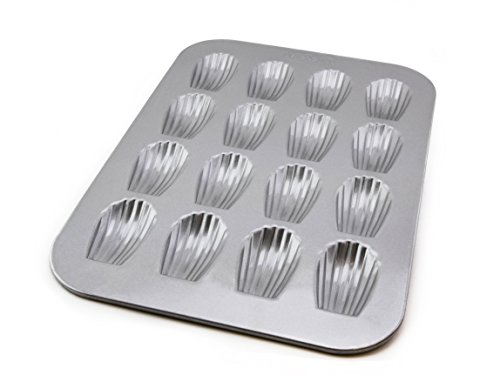
This is the pick for bakers who regularly want more than a dozen madeleines at once. Its 16 wells add four cakes to each batch compared with a standard 12-cup tray, without requiring a second pan or a second round of filling. That extra capacity is useful for gatherings and for bakers who freeze madeleines for later.
The construction is heavy gauge aluminized steel, a material chosen for strength and even heat. The listing describes a proprietary silicone nonstick coating, called Americoat, intended for easy release and quick cleanup. For a delicate sponge, that combination addresses the two main risks: uneven browning at the edges and sticking in the ridges.
Care is the main trade-off. A coated pan of this type is best washed by hand, dried well, and stored without sharp bakeware resting in the wells. It is also the largest format here, so confirm rack space before choosing it for a compact oven. Bakers who usually make a small recipe may find a 12-cup pan simpler to fill evenly.
Specs
| Item | Detail |
|---|---|
| Material | Aluminized steel |
| Wells | 16 |
| Coating | Silicone nonstick |
| Oven limit | 450 degrees Fahrenheit |
| Model | 1297MD |
Chicago Metallic Professional 12-Cup Non-Stick Madeleine Pan

Chicago Metallic offers the classic format many recipes assume: 12 shell-shaped cups in a single rectangular carbon steel pan. The stated size, 15.75 inches by 7.75 inches, gives the tray a long, narrow footprint that can be easier to store than a wider pan and straightforward to place on a standard rack.
Carbon steel gives the pan a firm feel and supports even browning when the oven is properly preheated. The non-stick surface is intended to release the cakes cleanly and make cleanup easier, which matters in narrow shell ridges where crumbs can lodge. As with other coated pans, wooden or silicone tools are the sensible choice, and sharp utensils should stay away from the wells.
This pan suits bakers who want a recognizable professional bakeware name, a standard batch size, and no second tray to store. Its limitation is simply capacity. If you often double a recipe, you will either wait between batches or need another pan. For a single dozen served fresh, that limitation may never matter.
Specs
| Item | Detail |
|---|---|
| Material | Carbon steel |
| Wells | 12 |
| Coating | Non-stick |
| Oven limit | 450 degrees Fahrenheit |
| Model | 26631 |
Bellemain Madeleine Pan, 12-Well, 2-Pack
The Bellemain listing is built around workflow. It provides two 12-well pans, so a baker can fill the second tray while the first batch bakes, chill filled trays in rotation, or bake a double recipe without washing a pan in the middle of the process. For madeleines, where batter is often rested and then baked in quick rounds, that second pan is genuinely practical.
Each pan is carbon steel with a nonstick surface, and the listing emphasizes warp resistance. A flat, stable tray matters because a warped pan rocks on the rack, bakes unevenly, and can pool batter in the wells. Two matching pans also make timing more predictable from batch to batch than mixing two different materials or thicknesses.
The trade-off is storage and care for two trays instead of one. They should be dried thoroughly, stacked with protection for the coating, and kept where the rims will not bend. Choose this set if you bake for a group, prepare madeleines ahead, or dislike waiting between rounds. If you bake a single small batch only occasionally, the second pan may sit unused.
Specs
| Item | Detail |
|---|---|
| Material | Carbon steel |
| Wells | 12 per pan |
| Pack count | 2 pans |
| Coating | Nonstick |
| Model | 91179 |
Fox Run Non-Stick Madeleine Pan, Carbon Steel, 12-Cup

Fox Run’s non-stick pan is a simple, standard option: 12 cups, carbon steel, and a grey finish. It does not try to add capacity or a second tray. That simplicity is its appeal for a first madeleine pan or for a baker who wants the traditional dozen without extra equipment to store.
The carbon steel body should be preheated with the oven in normal use and allowed to do its work without overfilling the wells. Madeleine batter expands as it bakes, and filling each shell about three-quarters full helps preserve the ridge definition. The non-stick coating assists release, but a light preparation of the wells remains a good habit for delicate sponges.
This is a sensible choice when counter and cabinet space are tight and baking is occasional to regular, rather than high volume. Its limits are the familiar ones for the format: one dozen at a time, hand care to protect the coating, and no special feature beyond the standard shell shape done in a widely used size.
Specs
| Item | Detail |
|---|---|
| Material | Carbon steel |
| Wells | 12 |
| Coating | Non-stick |
| Finish | Grey |
| Model | 44925 |
Fox Run Madeleine Pan, Tin-Plated Steel, 12-Molds

This Fox Run pan is the traditional entry in the group. It has 12 molds in tin-plated steel and no modern nonstick coating is claimed in its name. Bakers who prefer to control release themselves, with butter and a light dusting of flour in each ridge, may prefer this approach. It also avoids choosing a coating type altogether.
Tin-plated steel rewards careful habits. Grease every ridge, avoid soaking the pan, wash it gently, and dry it completely right away, because retained moisture is unkind to tin finishes. Do not use sharp tools to free a stuck cake. A properly prepared sponge should release with a tap and a gentle nudge once the edges set.
Choose this pan for classic method and clear shell definition in a standard dozen. Skip it if easy release with minimal preparation is your priority, or if you know a pan in your kitchen tends to be left wet in the sink. Its success depends more on preparation and drying discipline than any other pick here.
Specs
| Item | Detail |
|---|---|
| Material | Tin-plated steel |
| Wells | 12 |
| Coating | None stated |
| Finish | Tin-plated |
| Model | 4729 |
Who Should Skip It
Skip a madeleine pan altogether if you do not actually want shell-shaped sponge cakes. A mini muffin tin can bake the same batter into a different shape, and buying a specialty pan for one experiment may not be worthwhile. Also skip the larger and two-pack options if storage is very tight, your oven is compact, or you only bake small batches.
Skip nonstick models if you prefer to avoid coated bakeware and are willing to grease and flour carefully; the tin-plated pan is the better fit. Skip the tin-plated model if you want the easiest release and low-effort cleanup. Anyone unwilling to check pan dimensions against the oven rack should pause as well, because a pan that touches the oven walls will not bake as evenly.
FAQ
How full should each madeleine well be?
Fill each well about three-quarters full. The batter needs room to rise and form a hump without spilling over the ridges. Overfilled wells lose shell definition and bake together at the edges, while underfilled wells produce thin cakes that brown too quickly and look flat.
Should a nonstick madeleine pan still be greased?
Yes, a light greasing is still sensible. Nonstick coatings help release, but madeleine ridges are detailed and sponge batter can cling in the grooves. A thin, even layer in each well protects the shape and makes turning the cakes out easier, especially with leaner or stickier batters.
Why did my madeleines not form a hump?
The usual causes are warm batter, an oven that was not fully hot, or a recipe without enough leavening for the method used. Many recipes rest or chill the batter and then bake it in a hot oven, creating the temperature contrast that encourages the center to rise.
Can silicone molds replace a metal madeleine pan?
They can bake madeleines, but the result often differs. Flexible silicone is easy to store and release, yet it usually gives softer edges and less browning than a metal pan that holds its shape and transfers heat directly. Choose metal when crisp definition and golden shells are the goal.
Final Verdict
Choose the USA Pan 16-well pan for the best combination of capacity, aluminized steel construction, and nonstick release. Choose Chicago Metallic for a standard professional-style dozen, Bellemain when two pans will genuinely speed up your baking, and either Fox Run pan according to your preference: non-stick carbon steel for convenience, or tin-plated steel for a traditional, carefully buttered method. Any of the five will shape a proper madeleine; the right one is the one whose size, material, and care routine fit how you bake.
Product and ASIN Reference
| Product | ASIN |
|---|---|
| USA Pan Bakeware Nonstick Madeleine Pan, 16 Well | B06XWBXWY8 |
| Chicago Metallic Professional 12-Cup Non-Stick Madeleine Pan, 15.75-Inch-by-7.75-Inch | B00134LXEY |
| Bellemain Madeleine Pan | 12-Well Madeleine Mold Makes 12 Madeleine Cookies | Nonstick Tea Cake Pan for Madeleines, Cakelet Pan | Warp-Resistant Carbon Steel Madeline Pans (2-Pack) | B00L5HCVSG |
| Fox Run Non-Stick Madeleine Pan, Carbon Steel, 12-Cup,Grey | B0083RTULM |
| Fox Run Madeleine Pan, Tin-Plated Steel, 12-Molds | B001ET5ZME |