Key takeaways
- Three jobsite table saws compared on rip capacity, weight and stand style, from a rolling 10-inch saw to a compact 8-1/4-inch carry-in model.
Buying a jobsite table saw is a decision about movement as much as cutting. The saw has to ride in a truck or van, come out at a driveway, garage or half-finished room, make accurate rips in sheet goods and framing lumber, then fold away so the space can be used for something else. Rip capacity, total weight and the stand design decide whether that daily routine feels easy or feels like a fight, and those three numbers matter more here than they ever would on a stationary shop saw.
This guide is for remodelers, trim carpenters, serious home renovators and anyone whose workshop is wherever the work is this week. Every saw below is a jobsite table saw chosen from the name and specifications on its own Amazon product page, and the three picks split cleanly by size: one wide rolling saw, one lighter folding saw and one compact carry-in saw.
Quick Picks
As an Amazon Associate we earn from qualifying purchases.
| Product | Best for | Key spec from title |
|---|---|---|
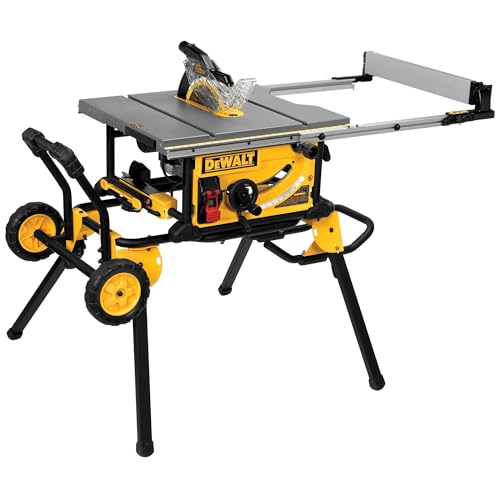
| DEWALT Table Saw 10 Inch with Foldable Rolling Stand (DWE7491RS) | Ripping full sheets on site with the widest fence here | 32-1/2-Inch Rip Capacity, 15 Amp, 4800 RPM |
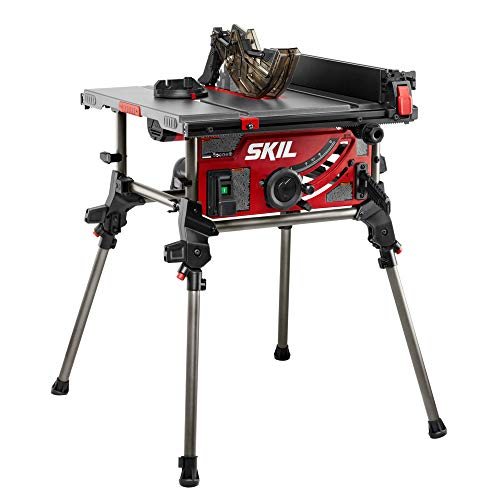
| SKIL 15 Amp 10 Inch Portable Jobsite Table Saw with Folding Stand (TS6307-00) | One-person crews who fold the saw flat after every job | 10 Inch, 15 Amp, Folding Stand |
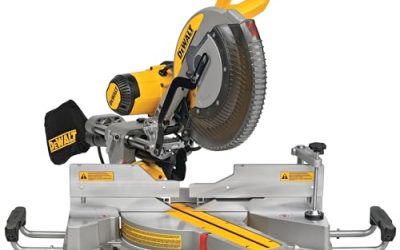
| DEWALT Table Saw for Jobsite, Compact, 8-1/4-Inch (DWE7485) | Carrying a saw up stairs and into finished rooms | 8-1/4-Inch, Compact, 15 Amp |
How to Choose
Decide How the Saw Will Travel
Portability comes in three forms in this category, and each suits a different routine. A rolling stand lets one person wheel a heavier saw from the truck to the cutting area without lifting it. Folding legs turn the saw into a flatter package that slides against a van wall or into a truck bed. A compact saw with no stand is the one you carry by hand into a finished house or up a flight of stairs. Be honest about which trip you make most often, because the stand style you choose is the feature you will feel on every single job.
Match Rip Capacity to Your Sheet Goods
Rip capacity tells you the widest cut you can make with the fence in one setup. Around 24 to 26 inches of capacity splits a standard sheet down the middle, which covers most plywood and panel work. A capacity above 30 inches lets you take a narrower strip off a full sheet without repositioning the fence to a second setup or flipping the sheet around. If your work is mostly solid lumber, trim and flooring, the smaller capacities are rarely a limit. If you break down cabinets’ worth of sheet stock weekly, width becomes the deciding number.
Weigh Blade Size Against Depth of Cut
A 10-inch blade is the jobsite standard and gives the depth to cut thick framing stock and 4×4 material where the listing states that capacity. An 8-1/4-inch blade makes the whole saw smaller and lighter, but the trade is a shallower maximum cut, so thick stock may need two passes or a different tool. Check the depth figures on the listing against the thickest material in your normal week, not the thickest board you might meet once a year. Renting or borrowing for the rare oversize job beats carrying extra weight every day.
Check the Fence System and the Small Parts
On a jobsite, accuracy lives or dies with the fence. Rack and pinion fence rails, named on two of the listings below, move both ends of the fence together so it stays parallel to the blade as you adjust it, which is what you want when the saw gets bumped between setups. Also look at what the listing includes: a miter gauge, push stick, riving knife and blade guard in the box mean the saw is ready to work on day one, and onboard storage for those parts means they actually arrive at the next job with the saw.
The 3 Best Options
DEWALT Table Saw 10 Inch with Foldable Rolling Stand (DWE7491RS)
This is the jobsite saw for crews whose work starts with sheet goods. Its title specification of 32-1/2 inches of rip capacity is the widest in this guide, enough to rip a full sheet well past its midpoint in one fence setting, and the foldable rolling stand means one person can move it from the vehicle to the work area without a dead lift. The 15 amp motor and 4800 RPM speed in the title put it in the full-size jobsite class, so it doubles as the main saw for a small garage shop between site jobs.
Specs
- Brand: DEWALT
- Model number: DWE7491RS
- Blade size: 10 Inch, from the product title
- Motor: 15 Amp, from the product title
- Speed: 4800 RPM, from the product title
- Rip capacity: 32-1/2-Inch, from the product title
- Stand: Foldable Rolling Table Saw Stand, from the product title
Best for: Ripping full sheets and wide panels on site, and doubling as a small shop’s main saw.
Watch out for: Opened up for its widest rips it takes the most floor and storage room of the three, so measure your vehicle and your cutting area before choosing it.
ASIN: B00F2CGXGG
SKIL 15 Amp 10 Inch Portable Jobsite Table Saw with Folding Stand (TS6307-00)
The SKIL suits a one-person operation that sets up and packs down constantly. Its integrated folding legs form the stand, so there is no separate stand to forget, carry or assemble, and at 51.2 pounds on the listing it is the lightest 10-inch option here. The listing names rack and pinion fence rails for fence adjustments that stay parallel to the blade, a dust port elbow that redirects dust to a container, and a 4×4 cutting capacity at 90 degrees, which covers the framing lumber a remodeler cuts most. The included components list is complete, from the blade guard and riving knife to the 24-tooth blade itself.
Specs
- Brand: SKIL
- Model number: TS6307-00
- Motor: 15 Amp
- Blade: 10 Inch, 24-tooth carbide blade included, per the listing
- Rip capacity: 25-1/2 inches to the right of the blade, per the listing
- Maximum cutting depth: 3-1/2 inches at 0 degrees, per the listing comparison data
- Bevel capacity: 0-45 degrees with positive stops at 0 and 45 degrees, per the listing
- Fence: Rack and pinion fence rails
- Stand: Integrated folding legs
- Item weight: 51.2 Pounds
- Voltage: 120 Volts
- Included components: Table saw with integrated folding stand, blade guard, push stick, miter gauge, anti-kickback pawl, dust port elbow, wrenches, riving knife, rip fence, 24T blade
Best for: Solo remodelers and renovators who fold the saw flat and move it after every job.
Watch out for: Its 25-1/2-inch rip capacity splits a sheet down the middle but cannot take a narrow strip off a full sheet in one fence setting the way the wider DEWALT can.
ASIN: B08F9RFJ2K
DEWALT Table Saw for Jobsite, Compact, 8-1/4-Inch (DWE7485)

Pick the DWE7485 when the saw has to go where stands cannot: up stairs, through finished rooms, or into a vehicle full of other tools. The listing describes a compact corded saw with a 15 amp motor and a listed speed of 5800 RPM, and its 24.5-inch rip capacity is the surprise in a body this small, since it still splits a standard sheet in half. It is sold as the saw alone rather than a saw and stand package, so it works from a bench, a tailgate or sawhorses. Listing-derived details put it at 54 pounds and 22.75 by 22.75 by 13 inches.
Specs
- Brand: DEWALT
- Model number: DWE7485
- Blade size: 8-1/4-Inch, from the product title
- Motor: 15 Amp, from the product title
- Speed: 5800 RPM, per listing-derived product details
- Rip capacity: 24.5 inches, per listing-derived product details
- Item weight: 54 pounds, per listing-derived product details
- Dimensions: 22.75 x 22.75 x 13 inches, per listing-derived product details
- Included, per listing-derived details: 24-tooth 8-1/4-inch blade, fence, miter gauge, blade-change wrenches, modular guard system, push stick, anti-kickback pawls, riving knife
Best for: Finish work and punch-list jobs where the saw is carried in by hand and set on a bench.
Watch out for: The 8-1/4-inch blade cuts shallower than the 10-inch saws here, and there is no stand in the package, so plan a stable surface to set it on at every job.
ASIN: B0842QDW95
Which One Fits Your Situation
You Break Down Sheet Goods at Every Job
Choose the DEWALT DWE7491RS. Cabinet sides, shelving and subfloor patches all start as wide panels, and its 32-1/2-inch rip capacity handles them in a single fence setting instead of forcing a flip or a second setup. The rolling stand also matters on this work, because the saw moves between the driveway cutting area and the garage more often than it sits still, and wheeling beats lifting at the end of a long day.
You Work Alone and Pack Up Every Night
Choose the SKIL TS6307-00. Integrated folding legs mean setup is unfolding the saw and checking the fence, and pack-down is the reverse, with no separate stand to load. At 51.2 pounds it is a realistic one-person lift into a truck bed, and its 25-1/2-inch rip capacity still covers the half-sheet cuts and lumber rips that fill a typical remodeling week. The dust port elbow also helps when the cutting happens in a garage the client still parks in.
Your Jobs Are Inside Finished Homes
Choose the DEWALT DWE7485. Trim, flooring transitions and built-in adjustments happen in rooms where a rolling stand is more obstacle than help, and this compact saw carries in by hand and works from a bench or a protected floor. Its 24.5-inch rip capacity covers the panel work finish carpentry actually needs, and when the job is done it stores on a shelf instead of claiming floor space in the van.
The Saw Will Live in Your Garage Between Jobs
Choose the DWE7491RS if the garage is also the workshop, because its capacity and rolling stand make it the closest thing here to a permanent shop saw that still travels. Choose the SKIL instead if the garage is tight and the saw must fold flat against a wall between uses. Either way, decide by where the saw sleeps, not just where it works, because storage is the constraint that shows up every day.
Common Mistakes
- Buying the widest rip capacity and then discovering the opened saw and stand do not fit the vehicle or the room where the cutting happens.
- Choosing a compact 8-1/4-inch saw for work that regularly cuts thick stock, then losing time to second passes and flipped boards.
- Forgetting that the DWE7485 package is the saw alone, arriving at a job with no stand and no planned surface to set it on.
- Ignoring fence type and fighting a fence that will not stay parallel after the saw has been bumped around in transit.
- Leaving the miter gauge, push stick or guard parts behind because the saw has no onboard storage routine, then cutting without the right accessory at the next job.
Frequently Asked Questions
What makes a saw a jobsite saw instead of a shop saw?
Movement is the definition. A jobsite saw is built to be transported, set up and packed away repeatedly, with a folding or rolling stand, a carry-friendly weight and a fence that can be checked quickly after transit. The three saws here weigh far less than a cabinet saw and fold or roll for storage. A shop saw trades all of that away for mass and stability at one permanent station.
Is an 8-1/4-inch blade enough for jobsite work?
For trim, flooring, cabinet parts and sheet goods, yes, and the DWE7485 still offers 24.5 inches of rip capacity for splitting sheets. The limit is depth: an 8-1/4-inch blade cuts shallower than a 10-inch blade, so thick framing stock is slower work. If your week regularly includes thick lumber in a single pass, choose one of the 10-inch saws instead of working around the smaller blade.
Do I need a rolling stand or are folding legs enough?
It depends on the lift, not the cut. A rolling stand shines when one person moves a heavier saw over driveways, thresholds and unfinished floors several times a week. Folding legs are enough when the saw is lighter, the carry is short and flat storage in the vehicle matters more. Match the stand to the heaviest, longest carry in your routine and the choice usually makes itself.
Can a jobsite saw be the only saw in a small shop?
For many home workshops, yes. A 10-inch jobsite saw with a rack and pinion fence handles sheet goods, furniture parts and renovation lumber, then folds away so the garage can park a car again. What you give up versus a cabinet saw is table mass and the widest fence setups. If your projects fit inside the rip capacities listed here, a jobsite saw is a sensible only saw.