Key takeaways
- Compare square, divided, and all-edge brownie pans by size, material, and release, with five verified Amazon picks for fudgy centers and crisp corners.
A brownie pan shapes the bake as much as the recipe does. A shallow square pan gives you a classic slab you slice yourself, with soft middles and firmer corners. A divided pan bakes portion lines right into the batch, so serving is cleaner and every piece holds its shape. An all-edge pan goes further, threading extra walls through the batter so no piece is only soft center. Material matters too: light aluminum tends to bake gently, darker nonstick finishes brown more assertively, and heavy cast pans hold heat once they come out of the oven.
The five pans below cover those main styles. Each one is sold on Amazon.com as a brownie pan or as a square pan listed for brownies, and each suits a different household, from a small weekly batch to a bake sale tray.
As an Amazon Associate, we earn from qualifying purchases.
Quick Answer
For most bakers, the USA Pan eight-inch square pan is the safest starting point, with aluminized steel, a nonstick finish, and classic slab results. Edge lovers should choose the Baker’s Edge pan, divided-pan fans should choose the Chicago Metallic Slice Solutions pan, bar bakers should choose the Wilton twelve-cavity pan, and large batches suit the Calphalon nine-by-thirteen pan.
How to Choose
Start with batch size, because pan size and recipe size need to match. Most boxed mixes and standard homemade recipes are written for an eight-inch or nine-inch square pan. Spread that same batter into a nine-by-thirteen pan and the layer turns thin, baking faster and leaning cakey and crisp rather than dense. Double the recipe for the larger pan, or accept thinner bars and shorten the bake. A twelve-cavity bar pan and a divided nine-by-thirteen pan solve a different problem: they portion the batch as it bakes, which helps with bake sales, lunchboxes, and freezing individual pieces.
Next, decide how much edge you actually want. In a plain square pan, only the corner and side pieces get chewy edges, while the center stays soft. An all-edge design adds interior walls, so heat reaches more of the batter and every piece picks up a firm, chewy border. That is wonderful for edge fans and less ideal for anyone who prizes a gooey middle above all else. Divided pans sit between the two: the insert creates defined portions and extra contact with hot metal, but the pieces remain larger and softer than all-edge pieces.
Material and finish shape browning and cleanup. Bare or light-colored aluminum conducts heat evenly and is forgiving with delicate batters, though brownies can cling without greasing or a parchment sling. Nonstick coatings release bars cleanly and wash up quickly, but they ask for silicone, wood, or nylon tools and gentler sponges so the surface lasts. Silicone-coated aluminized steel, like the finish used by USA Pan, aims for easy release without a traditional dark coating. Heavy cast aluminum, used in the Baker’s Edge pan, heats thoroughly and keeps baking briefly after removal, so pulling the batch a touch early protects the texture.
Finally, think about storage and handling. One-piece square pans nest easily and double for cakes, cornbread, and small casseroles. Divided and cavity pans are single-purpose and bulkier, and their inserts and corners take a little more washing. Check the outer dimensions, not just the baking surface, if your oven is compact or your storage shelf is shallow.
Baker’s Edge Brownie Pan
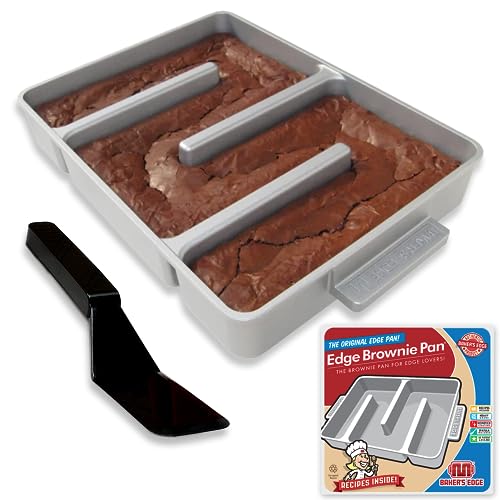
This is the pan for households where the corner pieces disappear first. The Baker’s Edge design routes the batter through a maze-like interior with added walls, so every piece touches hot metal on multiple sides. The result is a batch built around chew: firm borders, set edges, and centers that stay moist rather than raw. Because the interior walls conduct heat deep into the pan, this style can bake a standard mix efficiently, and the manufacturer positions it for regular boxed brownie mixes without major recipe changes.
The pan is made from heavy gauge cast aluminum with a double nonstick coating, which helps the intricate shape release cleanly. That shape is also the trade-off. Filling the channels evenly takes a little patience, thick add-ins can catch on the walls, and washing has more corners than a plain square pan. Bakers who love gooey, underbaked centers may find the texture firmer than they prefer. For committed edge fans, though, no standard pan reproduces this result, and the sturdy cast build suits frequent use.
Specs
| Item | Detail |
|---|---|
| Size | 9 x 12 inches |
| Material | Heavy gauge cast aluminum |
| Finish | Double nonstick coating |
| Format | All-edge rectangular pan |
Chicago Metallic Professional Slice Solutions Brownie Pan
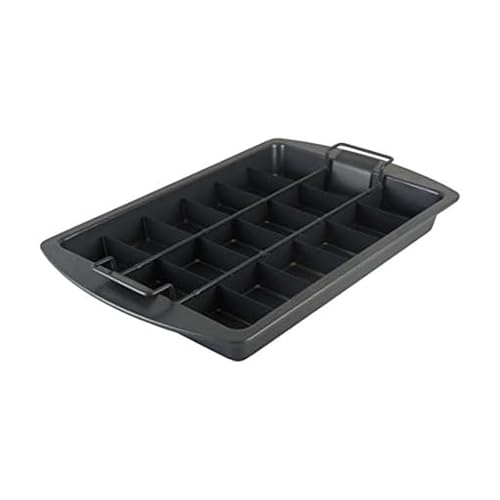
The Slice Solutions pan tackles portioning. It is a nine-by-thirteen-inch rectangular pan supplied with a divider insert that marks the batter into uniform pieces as it bakes. Instead of cutting a slab afterward and hoping the rows stay even, you lift the divider out and serve pieces that are already separated, with defined sides on each bar. That makes it a practical choice for bake sales, office trays, and any setting where neat presentation matters and a knife-cut slab tends to crumble.
Chicago Metallic builds this line for regular home baking, with a nonstick surface intended to help the divider release without tearing the pieces. The larger footprint needs a doubled or large-format recipe, because a single standard mix spread across this pan bakes thin. The insert also adds washing and storage: it needs to be cleaned around its grid and stored flat so it stays true. If you usually bake one modest batch for the family, a square pan is simpler. If you regularly serve a crowd and want identical portions, this design earns its shelf space.
Specs
| Item | Detail |
|---|---|
| Size | 9 x 13 inches |
| Model | 26740 |
| Format | Rectangular pan with divider insert |
| Finish | Nonstick coating |
Wilton Brownie Bar Pan, 12-Cavity

Wilton’s bar pan bakes twelve individual brownie bars at once, each in its own cavity. Individual cavities mean every bar gets edges on all sides, portions are built in, and serving needs no cutting at all. Bars cool and lift out as separate pieces, which suits lunchboxes, party platters, and freezing single servings for later. The format also handles other batters well, from blondies and cereal bars to small snack cakes, as long as the recipe volume matches the combined cavities.
The pan is steel with a nonstick finish, in Wilton’s Perfect Results style of everyday bakeware. Cavity pans do ask for even filling: a small scoop helps keep the bars uniform so they finish at the same time. Very chunky batters can be awkward to spread into each section, and bakers who want one big fudgy center piece will not find it here. Oven space is used efficiently, since one pan replaces a slab and a cutting session. For households that bake bars often and share them widely, this is the most convenient format on the list.
Specs
| Item | Detail |
|---|---|
| Cavities | 12 brownie bars |
| Material | Steel |
| Model | 2105-0454 |
| Finish | Nonstick coating |
USA Pan Bakeware Nonstick Square Cake Pan, 8 Inch
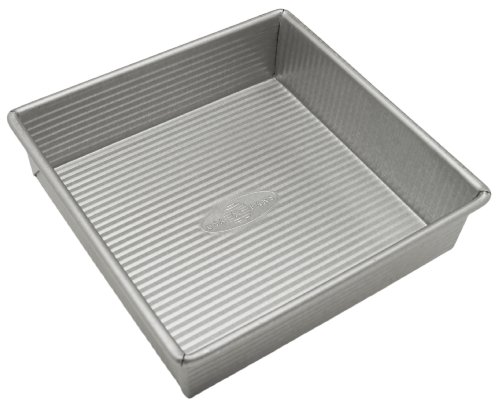
This eight-inch square pan is the traditionalist’s pick, and the most versatile pan here. USA Pan makes it from aluminized steel, a material valued in commercial bakeware for strength and even heating, and finishes it with a silicone nonstick coating designed for quick release. The listing specifically names brownies among its uses, and the size matches the pan called for in most standard recipes and boxed mixes, so bake times in your recipe should translate without adjustment.
A plain square pan gives you full control over portion size: cut four large bakery-style squares, nine generous pieces, or a grid of small bites. The center stays soft, the corners turn chewy, and the same pan handles cakes, cornbread, and casseroles between brownie batches. Release is easy for a one-piece pan, though a parchment sling remains a reliable trick for lifting a whole slab out neatly. There are no inserts to wash and nothing bulky to store. If you own only one brownie pan, this straightforward square is the one that fits the widest range of recipes and kitchens.
Specs
| Item | Detail |
|---|---|
| Size | 8 x 8 inches |
| Material | Aluminized steel |
| Model | 1120BW |
| Finish | Silicone nonstick coating |
Calphalon Signature Nonstick Bakeware Brownie Pan, 9 x 13 Inch
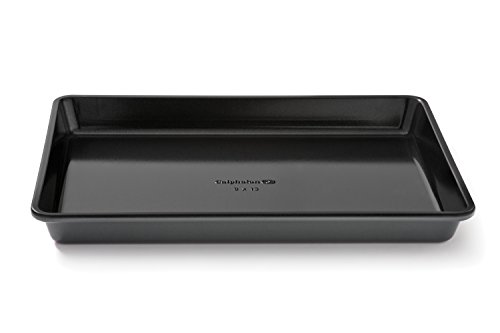
Calphalon’s Signature brownie pan scales the classic slab up to nine by thirteen inches, the size for doubled recipes, sheet-style bakes, and feeding a crowd from one batch. It comes from Calphalon’s Signature nonstick bakeware line, built around a durable nonstick interior intended to release dense, sticky batters cleanly and to resist scratching from normal serving. The rectangular format keeps the familiar slab experience, just bigger: soft centers in the middle, chewier pieces around the border, and free choice over how large to cut each serving.
A pan this size suits households that bake for gatherings, fundraisers, or weekly meal prep, and it doubles for bar cookies and sheet cakes. The trade-offs are appetite and storage. A single standard mix bakes too thin here, so plan on doubling, and the footprint needs a full oven rack and a generous cupboard. Cleanup is straightforward for a one-piece nonstick pan, with no inserts or cavities to scrub. If your brownie baking usually means one small batch, the eight-inch USA Pan is the better fit; if you routinely bake big, this Calphalon pan matches that habit.
Specs
| Item | Detail |
|---|---|
| Size | 9 x 13 inches |
| Model | 2000604 |
| Line | Calphalon Signature Nonstick Bakeware |
| Format | Rectangular slab pan |
Who Should Skip It
Skip specialty brownie pans if you bake brownies only a few times a year. A basic square cake pan you already own, lined with a parchment sling, will handle occasional batches well, and a divided or all-edge pan will mostly occupy cupboard space. Edge-focused designs are also a poor match for bakers who want uniformly gooey centers, since the extra interior walls deliberately firm up every piece.
You can also skip the large nine-by-thirteen pans if your recipes are written for a single square pan and you dislike doubling recipes, because thin, overbaked bars are the usual result of spreading a small batch too far. Finally, anyone avoiding nonstick coatings entirely should look at uncoated aluminum square pans instead, since most pans on this list rely on a nonstick or silicone-based finish for release.
FAQ
What size pan do most brownie recipes need?
Most standard recipes and boxed mixes are written for an eight-inch or nine-inch square pan. That size gives a thick enough layer for a fudgy center with set edges. Larger pans need a doubled recipe, while smaller pans need a reduced batch and a longer, carefully watched bake.
Do divided brownie pans change the texture?
Yes, somewhat. Dividers and interior walls put more batter in contact with hot metal, so pieces bake with firmer, chewier borders and more defined sides. Centers stay moist when the bake is timed well, but the overall result is less gooey than a plain slab cut after baking.
How do you stop brownies sticking to the pan?
Grease the pan lightly even when it has a nonstick finish, and consider a parchment sling with overhanging sides for lifting the slab out whole. Let the brownies cool before cutting or removing dividers, and use nylon, wood, or silicone tools on coated surfaces to protect the finish.
Can these pans bake things besides brownies?
The plain square and rectangular pans can, handling cakes, cornbread, bar cookies, and small casseroles. Cavity, divided, and all-edge pans are more specialized, though they also suit blondies, cereal bars, and snack cakes. Always match the batter volume to the pan so the layer thickness stays sensible.
Final Verdict
Choose the USA Pan eight-inch square for the most flexible, recipe-friendly brownie pan. Choose the Baker’s Edge pan when chewy edges on every piece are the whole point, the Chicago Metallic Slice Solutions pan when neat, even portions matter, the Wilton twelve-cavity pan for ready-made individual bars, and the Calphalon nine-by-thirteen pan for doubled batches and crowds. Match the pan to your batch size and your texture preference, and any of these five will serve you well.
Product and ASIN Reference
| Product | ASIN |
|---|---|
| Baker’s Edge Brownie Pan | B000MMK448 |
| Chicago Metallic Professional Slice Solutions Brownie Pan | B00YF3AE1S |
| Wilton Brownie Bar Pan, 12-Cavity | B008KE7L2S |
| USA Pan Bakeware Nonstick Square Cake Pan, 8 Inch | B0029JMMRE |
| Calphalon Signature Nonstick Bakeware Brownie Pan, 9 x 13 Inch | B06XGB76M3 |