Key takeaways
- Compare the best water filter pitchers for lead, chlorine taste, and daily use, with capacity, filter life, and fit tips to help you choose well.
A water filter pitcher is the simplest way to improve tap water without plumbing, installation, or a permanent place on the counter. You fill it, let gravity do the work, and keep cold filtered water ready in the fridge. The differences that matter are capacity, filter life, what the filter is certified to reduce, how fast it pours, and whether the shape actually fits your refrigerator door and shelves.
As an Amazon Associate, we earn from qualifying purchases.
Quick Answer
For most households, the Brita Large 10-Cup Elite is the balanced choice, with long filter life and a fridge-friendly shape. Choose the PUR Plus 7-Cup for lead reduction in a smaller home, the LifeStraw Home glass pitcher for broader protection, the ZeroWater 10-Cup for dissolved solids reduction, or the compact Brita Metro for one or two people.
How to Choose
Start with capacity, because it decides how often you refill. A 6-cup or 7-cup pitcher suits one or two people, a dorm room, or a small fridge where shelf height is tight. A 10-cup or larger pitcher suits families, shared kitchens, and anyone who fills bottles, kettles, and cooking pots through the day. Remember that cup ratings describe total pitcher volume, not always the amount ready to pour at one moment, since the upper reservoir takes up space while filtering.
Next, match the filter to your water concern. Most standard filters focus on chlorine taste and odor, the most common complaint with municipal water. Lead-reducing filters add certified reduction of lead and other metals, which matters more in older buildings. A multi-stage system targeting total dissolved solids goes further for hard or mineral-heavy water. A membrane plus carbon system, like the LifeStraw design below, adds protection against bacteria and parasites, a different goal from taste alone. Check the certification named for each filter, and confirm replacements are easy to find before you commit.
Filter life shapes running effort. Some filters change every two months, others last much longer, and dissolved-solids filters can wear out quickly in hard water. A longer interval means fewer replacements to stock, but each type is specific to its brand and often its line, so note the exact filter name.
Then think about handling. Look for a lid that stays on while pouring, a spout that does not dribble, and a handle that feels secure when full. Glass resists staining but is heavier and needs more care. Plastic is lighter and safer around children. A change indicator removes guesswork, though it tracks time rather than measuring quality directly.
Finally, measure fridge shelf height with the lid on and allow room to lift the pitcher out at an angle. The best choice is the one your household will refill without thinking, because an awkward pitcher soon sits empty.
Also consider the first weeks of ownership. Rinse and prepare a new filter exactly as its instructions describe, discard the first fills if directed, and keep a spare filter in the cupboard so a change never waits on a delivery. That small stock habit keeps taste consistent and makes the pitcher feel effortless rather than like another appliance demanding attention.
Brita Large 10-Cup Elite Water Filter Pitcher
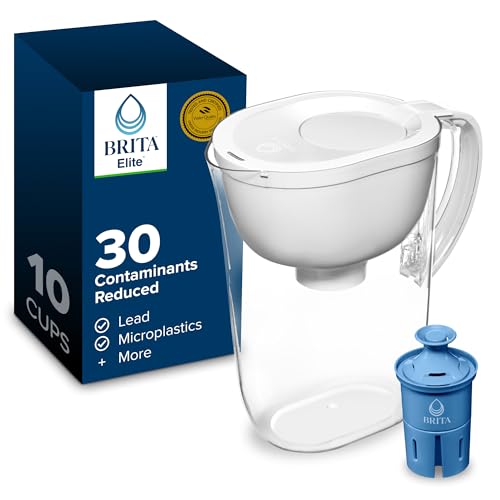
Shortlist this pitcher first for a large, straightforward family option. It uses the Brita Elite filter, the longer-life option in the Brita range, so you change it far less often than a standard two-month filter. That makes ownership simpler for busy households, where changes are easy to forget until taste slips.
The 10-cup size holds enough for morning drinks, bottles, and cooking without constant refilling, yet keeps a familiar profile that fits many shelves. The BPA-free plastic is light enough to lift when full and easy to clean. It suits people whose goals are better taste, less chlorine odor, and certified reduction that includes lead. If your water tastes strongly mineral, consider the ZeroWater option below instead.
Specs
| Feature | Detail |
|---|---|
| Capacity | 10 cups |
| Filter type | Brita Elite filter |
| Filter life | Up to 6 months |
| Material | BPA-free plastic |
| Included | Pitcher and 1 Elite filter |
| Focus | Lead, chlorine taste and odor |
PUR Plus 7-Cup Water Filter Pitcher

The PUR Plus 7-Cup is built around lead reduction in a compact body. Its filter is certified to reduce lead and other substances affecting taste and quality, making it a thoughtful pick for older homes. The smaller footprint helps in apartments, smaller fridges, and households of one or two.
A filter change light takes the memory work out of maintenance, giving a visual prompt when a change is due. The LockFit cap keeps the lid secure while pouring, a detail that matters over a narrow glass or bottle. The pitcher is dishwasher safe, simplifying a deeper clean, though follow the care notes for the lid and indicator. Choose it for certified lead reduction and tidy size over maximum volume. Heavy-drinking families may refill it often, and will prefer a larger model.
Specs
| Feature | Detail |
|---|---|
| Capacity | 7 cups |
| Filter type | PUR Plus pitcher filter |
| Certification | WQA certified to reduce lead |
| Indicator | Filter change light |
| Lid | LockFit cap design |
| Care | Dishwasher safe pitcher |
LifeStraw Home Water Filter Pitcher, 7-Cup Glass

The LifeStraw Home stands apart in material and filtration. It pairs a membrane microfilter with activated carbon and ion exchange filtration, designed to protect against bacteria, parasites, and microplastics while also reducing lead, mercury, PFAS, and other chemicals. That broader scope makes it the pick for shoppers who want more than taste improvement.
The glass body with a silicone base looks at home on a table and resists clouding and staining. It is also the heaviest, most delicate option here, suiting careful adult households more than a crowded family fridge. The 7-cup size keeps weight manageable for a couple or small household. Membrane filtration tends to be slower, so it rewards a fill-and-wait routine. Its two filter parts run on different schedules, worth noting before you buy.
Specs
| Feature | Detail |
|---|---|
| Capacity | 7 cups |
| Filter type | Membrane microfilter plus carbon |
| Material | Glass with silicone base |
| Targets | Bacteria, parasites, microplastics |
| Also reduces | Lead, mercury, PFAS, chemicals |
| Included | Pitcher and filter set |
ZeroWater 10-Cup Ready-Pour 5-Stage Water Filter Pitcher
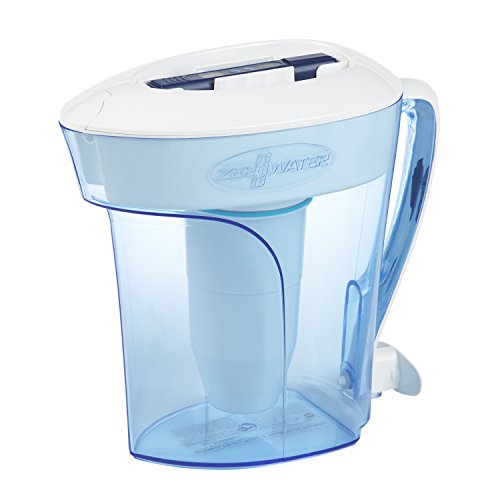
ZeroWater takes a different route. Its five-stage filter uses ion exchange technology to reduce total dissolved solids, framing the result around a zero reading on a dissolved solids meter. For water that tastes heavy, salty, or strongly mineral, that can make a clearer difference than taste-only filtration.
The 10-cup Ready-Pour design suits family use, with a spout and handle intended to let you pour while water is still filtering above. The main consideration is filter life. A filter removing more dissolved material works harder, and in high-solids water it can become exhausted sooner, with a noticeable taste change when spent. This system is most rewarding where dissolved solids are the actual problem, and less necessary where water already tastes fairly clean.
Specs
| Feature | Detail |
|---|---|
| Capacity | 10 cups |
| Filter type | 5-stage filter with ion exchange |
| Goal | Reduce total dissolved solids |
| Certification | IAPMO certified reductions |
| Targets | Lead, chromium, PFOA and PFOS |
| Design | Ready-Pour pitcher |
Brita Metro Water Filter Pitcher, 6-Cup
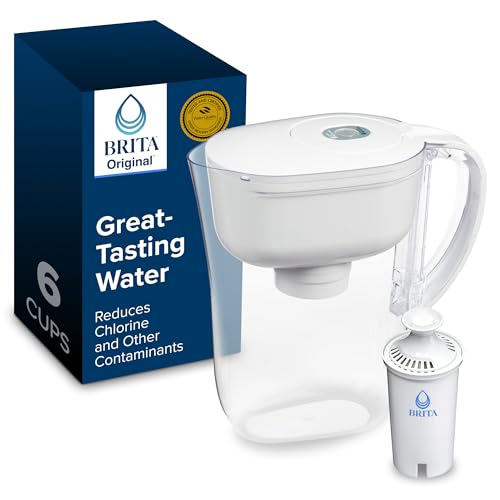
The Brita Metro is the compact option for small households and small fridges. Its 6-cup capacity suits one person or a couple drinking a few glasses a day, and the slimmer profile tucks into a door shelf or crowded refrigerator more easily than a family pitcher.
It uses a standard Brita filter focused on chlorine taste and odor, with a SmartLight indicator to signal when the filter needs attention. It also works well as a second pitcher for an office fridge or student kitchen. The trade-off is refill frequency: a busy household will empty it quickly. It also follows the shorter standard filter rhythm rather than the long Elite interval. Choose it when space decides and daily volume is modest.
Specs
| Feature | Detail |
|---|---|
| Capacity | 6 cups |
| Filter type | Brita standard filter |
| Indicator | SmartLight change indicator |
| Material | BPA-free plastic |
| Best for | Small fridges, 1 to 2 people |
| Focus | Chlorine taste and odor |
Who Should Skip It
Skip pitcher filtration if your household drinks a very large volume daily and constant refilling would become a chore. A faucet-mounted filter, under-sink system, or large countertop dispenser will serve that pattern better.
Also skip these pitchers if you need a specific contaminant removed and no certification above names it clearly. A pitcher is not a substitute for water testing. If your water comes from a private well or has a known safety notice, get it tested first and choose treatment based on the result. Glass is also wrong for young children pouring their own drinks, and a compact pitcher is wrong for a large family.
FAQ
How often do water filter pitcher filters need changing?
It depends on the system. Standard pitcher filters are commonly changed about every two months, long-life filters can last up to six months, and dissolved-solids filters vary widely with your local water. Always follow the schedule for your exact filter, use any built-in indicator as a prompt, and change sooner if taste slips noticeably.
Do water filter pitchers remove lead?
Some do, but not all. Look for a filter that is specifically certified to reduce lead, such as the Elite, PUR Plus, LifeStraw, and ZeroWater options described above. A basic taste filter should not be assumed to reduce lead unless its certification says so. If lead is a known concern in your building, confirm the claim for the exact replacement filter you will buy.
Should I choose plastic or glass?
Plastic is lighter, more forgiving if dropped, and usually better for family fridges and children. Glass feels more premium, resists staining and lingering odors, and suits table service, but it is heavier and can break. Both can work well, so decide based on who will lift and pour the pitcher every day.
Why does filtration slow down over time?
A slowing pour usually means the filter is loading up with the material it has captured, or that fine particles in the water are restricting flow. It can also happen with membrane systems, which filter more slowly by design. If speed drops well before the change date, check that the filter is seated correctly and consider whether your water needs a replacement sooner.
Final Verdict
The best water filter pitchers solve different problems, so the right pick follows your water and your fridge. The Brita Large 10-Cup Elite is the easiest all-round recommendation for families who want long filter life and better taste. The PUR Plus 7-Cup is the compact lead-focused choice, the LifeStraw Home glass pitcher offers the broadest protection and a premium build, the ZeroWater 10-Cup targets dissolved solids most directly, and the Brita Metro fits small spaces and small households. Choose by capacity and certified reduction first, then enjoy the simple habit of cold, cleaner-tasting water ready when you want it.
Product and ASIN Reference
| Product | ASIN |
|---|---|
| Brita Large 10-Cup Elite Water Filter Pitcher | B0B3GK9RW6 |
| PUR Plus 7-Cup Water Filter Pitcher | B09LKYM487 |
| LifeStraw Home Water Filter Pitcher, 7-Cup Glass | B09R6211QP |
| ZeroWater 10-Cup Ready-Pour 5-Stage Water Filter Pitcher | B0073PZ6O0 |
| Brita Metro Water Filter Pitcher, 6-Cup | B09W4PLVQP |