Key takeaways
- Compare the best flour sifters, including hand crank, squeeze handle, and battery electric models, with capacities, mesh styles, and care details.
Sifting looks like an old-fashioned step until you compare a cake made with aerated flour against one made with flour scooped straight from the bag. Clumps break up, cocoa and leavening blend evenly, and the crumb comes out lighter. The sifter itself is a simple tool, but the mechanism you choose, crank, squeeze, or electric, decides how pleasant that step feels when you are working through several cups.
This guide covers five real Amazon listings across those mechanisms: two classic crank sifters in different sizes, a fine-mesh crank model with a double loop agitator, a one-hand squeeze sifter for small jobs, and a battery-powered electric sifter for anyone whose hands object to cranking. Capacity and care details come straight from the listings.
As an Amazon Associate, we earn from qualifying purchases.
Quick Answer
The Norpro 3-Cup Stainless Steel Rotary Hand Crank Sifter is the classic pick for everyday baking, with a two-wire agitator that moves flour through quickly. Bigger households should look at the Mrs. Anderson’s 5-Cup crank sifter, the Omesata squeeze model suits small batches and one-handed use, and the TriTree electric sifter removes the cranking entirely.
How to Choose
Capacity is the first decision. A 3-cup sifter handles a standard cake or batch of muffins without refilling, and it is light enough to hold over a bowl comfortably. A 5-cup sifter earns its size when you bake in volume, sift for bread, or work through a holiday cookie list, because stopping to refill mid-recipe is where flour ends up on the counter. Keep in mind that a sifter should not be filled to the brim; an inch of headroom lets the agitator move freely.
The mechanism comes next. Hand crank sifters use a rotating agitator, one or two wires or a loop, that sweeps flour across a mesh screen as you turn. They are the fastest manual option and the rhythm is easy to keep up for several cups. Squeeze-handle sifters rake the flour across the screen each time you squeeze the handle, which keeps one hand free but works through flour more slowly and can tire a hand during a big batch. Battery electric sifters vibrate or rotate the mesh at the press of a button, which is the kindest option for arthritic hands.
Mesh and materials matter for results and upkeep. Fine mesh produces the lightest, most even sift and is the right choice for cake flour and powdered sugar; a slightly coarser screen moves all-purpose flour faster. Stainless steel bodies resist rust and dents, and the listings here are stainless, which is what you want in a tool that meets flour dust and sink water regularly.
Finally, think about cleaning honestly. Sifters should be tapped clean and stored dry; soaking a crank sifter invites rust around the mechanism even on stainless models, and flour paste in a mesh screen is miserable to remove. If easy washing is a priority, the electric pick in this guide has a removable, washable bowl design, which is a genuine point in its favor.
Norpro 3-Cup Stainless Steel Rotary Hand Crank Flour Sifter
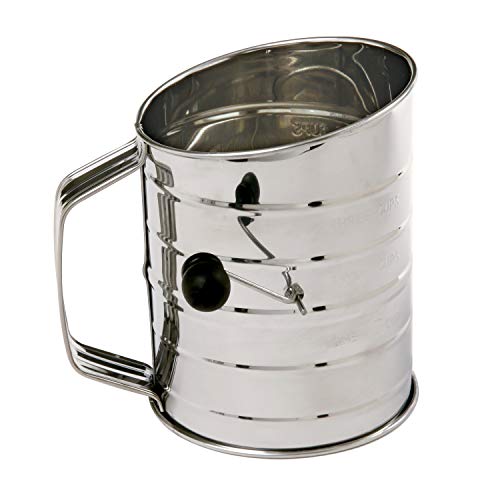
The Norpro 3-cup is the sifter most baking drawers end up with, and the listing shows why: stainless steel construction, a rotary hand crank, and a two-wire agitator that sweeps the mesh from both sides. That second wire is the meaningful detail, because it keeps flour moving instead of letting it ride in a circle, so a full load sifts in fewer turns.
Three cups is the sweet spot for home baking. It covers the flour for a layer cake, a tray of scones, or a batch of pancakes in one fill, and the body stays light enough to hold over a mixing bowl without bracing your wrist. The crank handle turns smoothly and the whole tool stores in a standard drawer or hangs from a hook.
As with any crank sifter, the care rule is dry storage: tap it out over the bin, wipe the exterior, and put it away. Norpro also sells a larger sibling for bakers who outgrow the size, but for week-in, week-out use this 3-cup model is the balanced choice, and it is the sifter this guide would hand to a new baker first.
Specs
| Feature | Detail |
|---|---|
| Material | Stainless steel |
| Capacity | 3 cups |
| Mechanism | Rotary hand crank, two-wire agitator |
| Mesh | Fine mesh screen |
| ASIN | B000HJ99UG |
Bellemain 3 Cup Flour Sifter

The Bellemain 3-cup sifter is built around its mesh and agitator. The listing describes a fine mesh rotary design with a loop agitator, and the brand’s current version uses a double loop that presses flour through the screen on each pass, which helps with the fine, even texture that cake flour and powdered sugar need.
Stainless steel construction keeps the body rigid, so the crank action stays consistent instead of flexing as you turn, and it resists the rust that ends cheaper sifters. The 3-cup capacity matches the Norpro class, making this a direct alternative for bakers who sift finer ingredients often and want the mesh to do more of the work.
Bellemain is a baking-focused brand, and the sifter is made by Epica Products, a detail from the listing that matches its positioning as a baking staple rather than a novelty gadget. Choose this one if your sifting skews toward delicate work, dusting, cake flour, cocoa, and powdered sugar, where a fine screen and a thorough agitator show their value.
Specs
| Feature | Detail |
|---|---|
| Material | Stainless steel |
| Capacity | 3 cups |
| Mechanism | Rotary hand crank, double loop agitator |
| Mesh | Fine mesh |
| ASIN | B00XIIHKFO |
Mrs. Anderson’s Baking Hand Crank Flour Sifter, 5-Cup

Mrs. Anderson’s 5-cup sifter is the volume pick. The stainless steel body holds five cups, which means a double batch of cookies or a large cake goes through in a single fill, and the hand crank format keeps the pace up in a way squeeze sifters cannot match at this size.
The brand is a baking specialist, and the listing frames the tool around the two jobs a sifter actually does: breaking up clumps and aerating flour and powdered sugar before they meet wet ingredients. That second job is easy to underestimate; aerated flour folds into batter with fewer strokes, and fewer strokes means less gluten development and a more tender crumb.
The honest cost of capacity is bulk. A 5-cup sifter takes more cupboard room and is heavier when full, so it is not the right choice for a tiny kitchen that bakes twice a year. For regular bakers with the shelf space, though, it removes the refill pause from every big recipe, and that convenience compounds over years of use.
Specs
| Feature | Detail |
|---|---|
| Material | Stainless steel |
| Capacity | 5 cups |
| Mechanism | Hand crank |
| Use | Sifting flour and powdered sugar |
| ASIN | B0017K99KO |
Omesata 3 Cup Flour Sifter with One-Hand Press

The Omesata sifter swaps the crank for a press handle: squeeze, and the agitator rakes flour across the fine mesh screen; release, and it resets. The listing describes it as a one-hand design, which is the entire point. Your other hand stays free to hold the bowl steady, turn a recipe page, or keep a toddler away from the counter.
Squeeze sifters process flour more slowly than cranks, and this 3-cup model is honest about its lane: small to medium batches, quick dusting jobs, and bakers who find a crank awkward to grip. The stainless steel body and fine mesh match the crank models in this guide, so the sifted result is comparable; only the effort pattern differs.
Hand fatigue is the consideration to weigh. Squeezing through three full cups takes repeated grips, and anyone with limited hand strength who bakes often will be better served by the electric model below. For occasional baking and one-handed convenience, though, the Omesata design is practical and compact.
Specs
| Feature | Detail |
|---|---|
| Material | Stainless steel |
| Capacity | 3 cups |
| Mechanism | One-hand squeeze press |
| Mesh | Professional fine mesh |
| ASIN | B0DWLTQPYF |
TriTree Battery Operated Electric Flour Sifter
The TriTree sifter removes manual effort from the equation entirely. It runs on batteries, holds four cups, and sifts through a fine stainless steel mesh sieve at the press of a button. The listing calls out arthritis and joint pain directly, and that is exactly the audience: if cranking or squeezing hurts, this is the sifter that keeps baking comfortable.
A second detail separates it from the manual models: the listing describes a washable bowl that is easy to clean. Manual sifters are tap-clean-only tools, so a design that tolerates proper washing is a real convenience, especially after sifting cocoa or spice blends that cling to mesh.
The trade-offs are the usual electric ones. It needs batteries, it has a motor to keep dry apart from the washable bowl, and it costs more than a crank sifter that will last decades. None of that matters if the alternative is skipping sifting altogether because your hands say no. For accessibility, this is the strongest pick in the guide.
Specs
| Feature | Detail |
|---|---|
| Capacity | 4 cups |
| Mechanism | Battery operated electric |
| Mesh | Fine stainless steel mesh sieve |
| Care | Washable bowl |
| ASIN | B08GQTG5M1 |
Who Should Skip It
Skip sifters if your baking is mostly bread and pizza dough, where sifting adds little and a whisk through the flour does the aerating. Skip the 5-cup models if you bake small and store tools in drawers, because capacity you never use is just bulk. And skip crank and squeeze models if grip strength is a concern; the electric sifter exists precisely for that situation, and forcing a manual mechanism turns a pleasant task into a painful one.
FAQ
Is sifting flour still necessary with modern flour?
Often, yes. Bagged flour compacts in storage, and recipes that assume sifted or spooned-and-leveled flour can go heavy if you scoop dense flour instead. Sifting also blends flour with cocoa, baking powder, and salt far more evenly than stirring, which prevents bitter pockets in cakes.
What is the difference between a crank and a squeeze sifter?
A crank sifter rotates an agitator continuously, so it moves flour quickly and suits larger batches. A squeeze sifter rakes the flour with each squeeze of the handle, keeping one hand free but working more slowly. Results are similar; speed and hand effort are the real differences.
Can you wash a flour sifter with water?
Manual crank and squeeze sifters are best tapped clean and stored dry, because water plus flour residue forms paste in the mesh and moisture can attack the mechanism. The electric TriTree in this guide is the exception, with a washable bowl design stated in its listing.
Which capacity should a home baker choose?
Three cups covers most cakes, muffins, and cookie batches in one fill and stores easily. Move to a 5-cup sifter if you regularly double recipes or bake for crowds. Four-cup electric models sit in between and suit bakers who sift often but want to avoid hand effort.
Final Verdict
Buy the Norpro 3-cup crank sifter for the classic, do-everything option, or the Bellemain if fine mesh work dominates your baking. The Mrs. Anderson’s 5-cup is the volume answer, the Omesata keeps one hand free for small batches, and the TriTree electric sifter is the clear choice when hands need a break. Match the mechanism to your hands and the capacity to your recipes, and sifting becomes a quick habit instead of a skipped step.