Key takeaways
- Compare the best egg separators, from rim-hook and sieve styles to silicone suction and ceramic designs, with materials, care, and bowl fit explained.
Separating eggs with the shell-to-shell shuffle works until a shard drops in or a yolk breaks at the worst possible moment, usually when a meringue or custard is riding on clean whites. A dedicated egg separator gives the yolk a stable place to land while the white drains away, and the best ones do it without demanding a third hand or a special bowl.
The five tools below cover the main designs on the market: a rim-hook separator that parks on your mixing bowl, a stainless sieve style, a silicone suction lifter, a ceramic pour-off design, and a stainless model that pairs separating with egg opening. The right choice mostly comes down to how many eggs you separate at once and how much drawer space the tool has to earn.
As an Amazon Associate, we earn from qualifying purchases.
Quick Answer
For most home bakers, the OXO Good Grips 3-in-1 Egg Separator is the easiest recommendation: it hooks onto a bowl rim, cracks the egg on its raised edge, and leaves both hands free. Stainless fans should look at the Ytuomzi sieve separator, novelty seekers at the LuoCoCo ceramic chicken, and anyone who hates yolk residue should consider the Peleg Design silicone suction frog.
How to Choose
Start with the separating style, because it decides how the tool behaves mid-recipe. Rim-hook separators clip or rest on the edge of a bowl, so the white falls straight into the bowl and the yolk stays cradled above it. They are the fastest option for a string of eggs and the easiest to clean. Sieve-style separators work like a small slotted cup on a handle: you crack the egg into the cup and hold it over a bowl while the white drains through the slots. They suit cooks who separate over different bowls or directly over a pan.
Suction separators take a different approach. You crack the whole egg into a bowl, then squeeze the tool, place it over the yolk, and release so the yolk lifts out cleanly. This style shines when a recipe needs the whites left undisturbed in the bowl, and it is forgiving for beginners because a broken yolk is less likely. Ceramic pour-off separators hold the cracked egg in a small cup and let the white slip out through openings as you tip it; they are charming and sturdy but slower for big batches.
Material matters for care and longevity. Stainless steel tolerates dishwashers, hot water, and years of drawer abuse without staining or holding odors. Silicone is gentle, quiet, and usually dishwasher safe, though it can pick up smells over time. Ceramic feels substantial and wipes clean easily, but it chips if it meets a tile floor. Plastic rim-hook models are light and inexpensive, and the better ones are also dishwasher safe.
Finally, check bowl fit and volume. A rim-hook tool needs a bowl edge it can grip, and very thick stoneware rims can defeat some hooks. If you regularly separate a dozen eggs for angel food cake, a wide cradle saves real time. If you separate one egg for a weeknight sauce, the smallest tool that rinses clean in seconds is the smarter buy.
OXO Good Grips 3-in-1 Egg Separator

The OXO separator is the benchmark for the rim-hook style. Its base rests on the rim of a bowl and stays put while you work, so the white drains directly into the bowl and the yolk sits in the raised cradle. A raised edge on the tool doubles as an egg cracker, giving you a clean break against a purpose-built lip instead of the side of the bowl, which is where shell fragments usually sneak in.
OXO lists the tool as dishwasher safe, and the smooth plastic body rinses clean even if it sits for a few minutes after use. The two-piece-free design means there is nothing to disassemble and no hinge to trap residue. Because it parks on the bowl, your other hand is free to hold the next egg, which makes a run of six or eight eggs noticeably faster than the shell method.
The trade-offs are modest. The hook fits most standard mixing bowls, but very thick or heavily rolled rims can make it sit at an angle, and the cradle is sized for large eggs, so a jumbo yolk occasionally needs a steady hand. For everyday baking, though, this is the separator that disappears into the routine.
Specs
| Feature | Detail |
|---|---|
| Material | Plastic |
| Style | Rim-hook separator with raised cracking edge |
| Bowl fit | Rests on most standard bowl rims |
| Care | Dishwasher safe |
| ASIN | B00A2KD8NY |
Ytuomzi Stainless Steel Egg Separator

The Ytuomzi separator takes the classic sieve approach: a stainless steel cup with drainage slots and a long handle that rests across a bowl or mug. Crack the egg into the cup, give it a gentle tilt or shake, and the white slips through while the yolk remains in the cup, ready to tip into a second bowl.
Stainless steel is the draw here. It does not stain from yolk, does not absorb odors, and can go straight into the dishwasher or a sink of hot soapy water. The metal cup also handles the occasional knock against a bowl edge without complaint, which matters for a tool that lives in a crowded utensil drawer.
Sieve separators reward a patient technique. Drainage takes a few seconds per egg, and very fresh eggs with thick, tight whites need a small rocking motion to let go. The slots are sized for standard eggs, so the tool works best one egg at a time. If you want a buy-it-once metal tool with no plastic anywhere, this is the straightforward pick.
Specs
| Feature | Detail |
|---|---|
| Material | Stainless steel |
| Style | Sieve cup separator with long handle |
| Model | FDQ01 |
| Care | Dishwasher safe |
| ASIN | B076JFT2X4 |
Peleg Design YolkFrog Silicone Egg Separator

Peleg Design built its reputation on kitchen tools that make people smile, and the YolkFrog is a suction separator shaped like a frog. The method differs from everything else in this guide: crack the whole egg into a bowl, squeeze the frog, set it over the yolk, and release. The yolk lifts up inside the frog, and a second squeeze drops it wherever you want it.
Silicone is the right material for this job. It is soft enough to seal against the yolk without breaking it, flexible enough to squeeze comfortably, and it rinses or goes in the dishwasher afterward. The suction approach also keeps the white in its original bowl untouched, which is exactly what you want when whites are headed for a mixer and yolks for a sauce.
The limits are about volume and eggs, not quality. Suction works one yolk at a time, and very large yolks can challenge the seal. As a first separator for a hesitant cook, though, the frog is genuinely practical and forgiving, because the yolk never has to balance on an edge or drain through a slot.
Specs
| Feature | Detail |
|---|---|
| Material | Silicone |
| Style | Squeeze-and-suction yolk lifter |
| Design | Frog shape |
| Care | Rinse or dishwasher |
| ASIN | B01BKF11SI |
LuoCoCo Ceramic Chicken Egg Separator
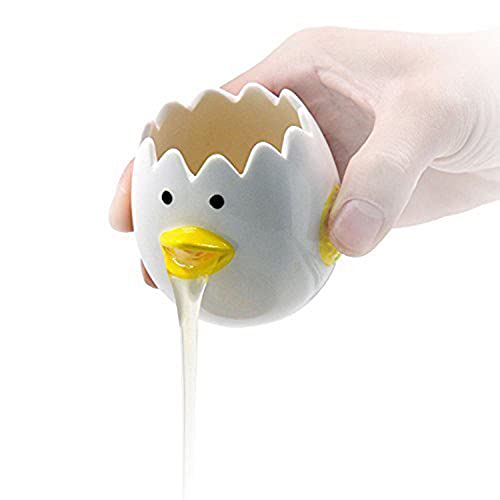
The LuoCoCo separator is a small ceramic chicken that holds a cracked egg in its body. Tip the chicken forward and the white pours out through the beak opening while the yolk stays behind inside the cup. It is the pour-off style in its most cheerful form, and the ceramic body gives it a pleasant heft that keeps it stable on the counter.
Ceramic brings practical benefits beyond the look. It is smooth and non-porous, so yolk residue washes off easily, and the listing confirms the piece is dishwasher safe. The compact footprint takes little cabinet room.
Pour-off separators are the slowest style in this roundup, and this one holds a single egg at a time, so it is not the tool for a pavlova that needs ten whites. It is also ceramic, which means a drop onto a hard floor can end it. For one or two eggs in a relaxed kitchen, and for anyone who likes tools with personality, it earns its spot.
Specs
| Feature | Detail |
|---|---|
| Material | Ceramic |
| Style | Pour-off separator, chicken shape |
| Color | Yellow |
| Care | Dishwasher safe |
| ASIN | B094NTCSDJ |
ROYIO Stainless Steel Egg Separator and Egg Opener

The ROYIO tool combines two jobs in one stainless steel piece: a separator for dividing yolks from whites and an egg opener edge for shelling eggs cleanly. That pairing suits cooks who crack eggs against whatever is nearby and end up fishing out shell; a dedicated opener gives a consistent break before the egg ever reaches the separator.
The separator section follows the slotted-cup pattern, holding the yolk while the white drains through to the bowl below. Stainless steel construction keeps the tool rigid, so the cup does not flex when a yolk lands in it, and the whole piece can be washed by hand or in the dishwasher without worrying about coatings or glued joints.
Combination tools involve a compromise, and here it is size: the opener feature makes the ROYIO longer than a plain sieve separator, so it needs more drawer room. In exchange you get one tool that handles the crack and the separation, a fair trade for smaller kitchens.
Specs
| Feature | Detail |
|---|---|
| Material | Stainless steel |
| Style | Slotted separator with built-in egg opener |
| Function | Separates yolks and whites, shells eggs |
| Care | Dishwasher safe |
| ASIN | B0BM9KG88J |
Who Should Skip It
Skip egg separators entirely if you only ever crack eggs into a pan or a scramble; the shell method is genuinely fine for that. Skip the novelty and suction styles if you separate eggs in volume, because one-yolk-at-a-time tools will slow you down; a wide rim-hook cradle is the better fit. And skip ceramic if your kitchen has hard tile floors, since stainless and silicone survive drops that ceramic does not.
FAQ
Is an egg separator better than using the shell?
For clean whites, yes. A separator gives the yolk a stable cradle and keeps shell fragments out of the bowl, which matters most for meringues, soufflés, and custards where a trace of yolk or shell can ruin the texture. For scrambled eggs, the shell method is perfectly fine.
Can these separators handle jumbo eggs?
Most cradles and sieve cups are sized around large eggs. Jumbo yolks fit the wider rim-hook and sieve designs, but suction tools can struggle to seal around an oversized yolk. If you buy jumbo eggs by default, favor the OXO cradle or a stainless sieve style.
How do you clean egg white residue off a separator?
Rinse the tool in cold water first, because hot water sets egg protein and makes it harder to remove. After the cold rinse, wash with warm soapy water or place the tool in the dishwasher if the listing allows it. Dried yolk on stainless responds well to a short soak.
Do suction separators break yolks more often?
Usually the opposite. Because the yolk is lifted rather than balanced and drained, suction separators are gentle, provided you squeeze slowly and center the tool over the yolk. Very fresh eggs with firm yolks lift the cleanest; older eggs need a slower release.
Final Verdict
The OXO Good Grips 3-in-1 is the separator most kitchens should own: it parks on the bowl, cracks the egg, and keeps both hands moving. Choose the Ytuomzi or ROYIO if you want stainless steel that will outlast trends, the Peleg YolkFrog if yolks keep breaking on you, and the LuoCoCo chicken if your kitchen tools are allowed to be fun. Any of the five beats fishing shell out of a bowl of whites.