Key takeaways
- The best rolling pins for pies, pizza and pastry, from tapered French pins to adjustable steel and marble rollers, compared by length, weight and care.
A rolling pin looks like the simplest tool in the kitchen, yet it shapes everything from flaky pie crust to pizza dough, and small design differences change how the work feels. A tapered French pin rolls with your palms and gives fine control over edges, a handled pin spins on bearings so the barrel does the moving, a marble pin stays cold to keep butter firm, and an adjustable pin with thickness rings takes the guesswork out of even dough. Choosing well means matching the pin to the dough you roll most and the storage you have.
The five pins below span those main styles. There is a maple French pin from a heritage American maker, a classic hardwood handled pin, a lightweight bamboo French pin, a stainless adjustable pin with removable rings, and a white marble pin with its own wooden stand. They differ in length, weight, and cleaning rules, so the best choice depends on whether you bake pies weekly, roll pizza for a crowd, or make laminated pastry that punishes warm tools.
As an Amazon Associate, we earn from qualifying purchases.
Quick Answer
The J.K. Adams Maple French Rolling Pin is the best pick for most bakers, with a tapered shape that gives precise control over crust edges. Choose the Farberware Classic for a familiar handled pin, the HONGLIDA bamboo pin for light weight, the Fulimax adjustable pin for exact thickness, and the Flexzion marble pin for pastry that needs a cold surface.
How to Choose
Style comes first. French pins have no handles; the barrel tapers toward the ends and you guide it with your palms, which gives excellent feel for thin spots and edges. That control makes them favorites for pie crust and pastry. Traditional handled pins keep your hands off the barrel on fixed grips while the center spins, which many bakers find easier for big, stiff doughs like pizza. Straight dowel pins split the difference and are the easiest to clean.
Material sets weight and temperature behavior. Hardwood pins such as maple are light, warm to the touch, and develop a seasoned surface that releases dough well with a dusting of flour. Marble is heavy and naturally cool, which helps keep butter in distinct layers for croissants and puff pastry, but the weight can tire your arms over a long session and the stone can chip if dropped. Stainless steel is smooth, hygienic, and often hollow or solid depending on design, and it pairs with adjustable rings on precision models. Bamboo is the lightweight budget-friendly option, very light in the hand and quick to maneuver.
Length and extras finish the decision. A barrel around ten inches with an overall length of seventeen to twenty inches covers standard pie dishes and pizza rounds. Adjustable pins use removable rings that set the dough gap, which is ideal for sugar cookies and crackers that must bake evenly. Whatever you choose, plan storage: long pins need a deep drawer or a hook, and marble pins with stands earn a small patch of counter.
J.K. Adams Maple French Rolling Pin

J.K. Adams has made wooden kitchen tools in Vermont for generations, and its FRP-2 French pin shows why the tapered design endures. The maple barrel is shaped with gently sloped ends, so pressure from your palms naturally feathers toward the edges of the dough instead of crushing them. That control matters most on pie crust, where a thin, even sheet with slightly thicker edges bakes into a rim that holds filling without slumping.
Maple is a smart pin material: dense enough to roll smoothly, light enough for long sessions, and forgiving when dough threatens to stick, since a quick dusting of flour restores release. There are no bearings to gum up and no seams to trap dough, so cleanup is a wipe and a dry. Bakers who learned on a handled pin will need a short adjustment period, but most convert quickly once they feel how much information the palms pick up about thickness.
Specs
| Feature | Detail |
|---|---|
| Material | Maple wood |
| Style | French, tapered barrel |
| Model | FRP-2 |
| Best for | Pie crust and pastry control |
| Care | Wipe clean, dry fully |
Farberware Classic Wood Rolling Pin
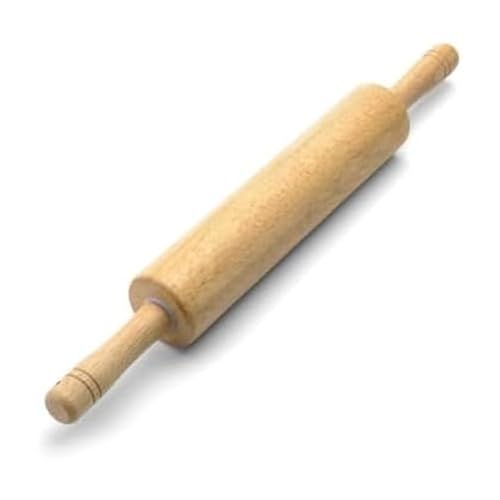
The Farberware Classic is the rolling pin many home bakers grew up with: a hardwood barrel that spins between two ergonomic handles. At 17.75 inches overall with a ten-inch barrel, it covers pie dishes, cookie sheets, and medium pizza rounds without feeling oversized in a standard drawer. The handles keep palms and knuckles clear of the dough, which helps when you are rolling stiff, cold dough that needs real downward pressure.
The bearing action does the traveling while your hands stay in one place, a motion that feels natural for beginners and for bakers with grip or wrist concerns. Hardwood construction keeps it light and durable, and the smooth barrel releases dough reliably with a light flouring. It lacks the fine edge feel of a French pin, and the handle joints deserve a quick dry after washing, but as an all-purpose first pin it remains hard to beat.
Specs
| Feature | Detail |
|---|---|
| Material | Hardwood |
| Overall length | 17.75 inches |
| Barrel length | 10 inches |
| Style | Handled, spinning barrel |
| Care | Hand wash, dry handle joints |
HONGLIDA Bamboo French Rolling Pin

HONGLIDA’s French pin swaps maple for bamboo and shrinks the weight dramatically. At 15.8 inches, it sits in the sweet spot for home counters: long enough for pie crust and pizza, short enough to store in a standard drawer or utensil crock. Bamboo’s tight grain makes the surface smooth and naturally resistant to absorbing moisture and odors, and the tapered ends give the same palm-guided control as a traditional French pin.
The light weight is the headline. Bakers who roll often, or who find a marble pin punishing, will appreciate how little effort each pass takes. The trade-off is heft on very stiff dough, where a heavier pin does more of the work for you; with chilled pizza dough you may need a few extra passes. For everyday baking, fondant work, and smaller kitchens, this is an easy pin to reach for daily.
Specs
| Feature | Detail |
|---|---|
| Material | Bamboo |
| Length | 15.8 inches |
| Style | French, tapered barrel |
| Best for | Lightweight everyday rolling |
| Care | Hand wash, dry fully |
Fulimax Adjustable Stainless Steel Rolling Pin

The Fulimax pin is built for bakers who measure success in millimeters. The seventeen-inch stainless barrel carries removable thickness rings that ride at both ends, holding the pin at a fixed height above the counter so every pass leaves dough at exactly the gap you selected. Sugar cookies come out uniform, crackers bake at the same rate, and fondant sheets stop tearing at thin spots.
Stainless steel brings its own advantages: it is smooth, non-porous, and rinses clean without absorbing flavors from garlic dough or spiced pastry. The rings swap by hand, so moving from a thick pizza base to a thin cookie sheet is a ten-second change. It is less romantic than a wooden pin and the metal feels cold at first touch, but for repeatable results across big batches, this is the precision tool of the group.
Specs
| Feature | Detail |
|---|---|
| Material | Stainless steel |
| Length | 17 inches |
| Special feature | Removable thickness rings |
| Best for | Cookies, crackers, fondant |
| Care | Rinse or hand wash, dry fully |
Flexzion Marble French Rolling Pin

Marble earns its place in a pastry kitchen by staying cold. The Flexzion pin pairs a twelve-inch white marble barrel with a wooden base that cradles it between jobs, and the stone’s natural chill helps keep butter firm while you roll laminated dough, puff pastry, or butter-rich pie crust in a warm kitchen. The weight of the stone does much of the rolling work, so dough flattens with less downward force from your arms.
The French shape keeps the control advantages of a handle-free design, guiding pressure through your palms. Marble does ask for respect: it can chip if it strikes tile or a steel sink edge, and acidic spills should be wiped promptly so the finish stays smooth. Kept on its stand, it doubles as one of the prettier tools on the counter, and for pastry-focused bakers the cold, heavy roll is worth the care.
Specs
| Feature | Detail |
|---|---|
| Material | White marble |
| Barrel length | 12 inches |
| Included | Wooden storage base |
| Best for | Laminated dough and pastry |
| Care | Hand wash gently, avoid impacts |
Who Should Skip It
Skip the French pins if wrist or grip issues make palm pressure uncomfortable, since a handled pin transfers the work to the barrel bearings. Skip the marble pin if your kitchen has tile floors and a history of dropped tools, or if you mostly roll stiff pizza dough where the weight becomes a burden over a long session. Skip the adjustable pin if you bake by feel and rarely need repeatable thickness. And skip buying a second pin at all if your current one rolls evenly and cleans easily; pins improve technique slowly, not overnight.
FAQ
Is a French rolling pin better than a handled one?
Neither style is universally better. French pins give finer control and feedback, which suits pastry and pie crust, while handled pins are easier for beginners and for stiff doughs that need force. Many bakers start with a handled pin and add a French pin when they begin making pastry regularly.
How do thickness rings on an adjustable pin work?
The rings slide onto both ends of the barrel and set a fixed gap between the pin and the counter. As you roll, the rings ride on the work surface and stop the barrel from pressing the dough any thinner than the ring height. Swap ring sizes to change the finished thickness.
Does a marble rolling pin really keep dough colder?
Yes, within limits. Marble starts at room temperature but holds coolness well, especially if you chill the pin briefly before rolling. The stone draws heat from the dough surface as you work, which helps butter stay in layers longer during a pastry session in a warm kitchen.
How should I clean a wooden rolling pin?
Wipe it with a damp cloth, scrape off stuck dough with a bench scraper, and dry it fully before storing. Avoid soaking, which can swell and crack the wood, and skip the dishwasher entirely. A light rub of food-safe mineral oil once in a while keeps the surface from drying out.
Final Verdict
For most bakers, the J.K. Adams Maple French Rolling Pin is the pin to own: balanced, precise, and built to last for decades of pies. The Farberware Classic remains the friendliest starter pin, and the HONGLIDA bamboo version delivers French-pin control at a feather weight. Pick the Fulimax adjustable pin when uniform thickness decides whether a batch succeeds, and choose the Flexzion marble pin if pastry is your passion and your kitchen runs warm.