Key takeaways
- The best dish towels for drying dishes and glassware, from lint-free flour sack sets to ring-spun cotton bar towels, compared by size, weave and care.
A dish towel is the hardest-working textile in the kitchen. It dries dishes, polishes glassware, wipes counters, lines bread baskets, and grabs the occasional hot handle, often all in the same evening. The wrong towel makes every one of those jobs worse: thin fabric saturates after three plates, a loose weave leaves lint on wine glasses, and a small towel forces you to work with a damp square held in two fingers. The right towel is absorbent, generously sized, and cheap enough per piece that you never hesitate to grab a fresh one.
The five sets below are built around the two dominant styles. Four are flour sack towels, the thin, smooth, lint-free weave that dries glassware without streaks, in quantities from a two-pack to a bulk twenty-four pack, including a certified organic option. The fifth is a ring-spun cotton bar towel set, thicker and smaller, made for heavy drying and cleanup shifts. They differ in size, pack count, and fabric weight, so the best choice depends on how much washing your household generates and whether polishing glass is a daily task.
As an Amazon Associate, we earn from qualifying purchases.
Quick Answer
The Aunti Em’s Kitchen Flour Sack Dish Towels are the best all-around set, with thirteen large, lint-free towels that dry dishes and glass without streaks. Choose HONEST WEAVE for certified organic cotton, Aunt Martha’s for a classic two-pack, WHITEWRAP for bulk value, and Utopia Towels for thicker ring-spun cotton bar towels.
How to Choose
Weave is the first decision. Flour sack towels use a thin, plain weave that drinks water quickly, releases it when wrung out, and leaves almost no lint, which is why they dominate glassware and mirror-polishing duty. Terry and bar towel weaves are thicker, with looped or ribbed surfaces that hold more water per pass and stand up to scrubbing counters and stovetops. Many kitchens run both: flour sack for drying and polishing, terry for spills and heavy cleanup.
Size changes how a towel feels in use. Generous squares around twenty-seven or twenty-eight inches fold over a shoulder, line a drying rack, and wrap a loaf of bread with room to spare. Smaller towels around fifteen by twenty-five inches suit bar-style work and small kitchens, and they launder in tighter loads. Pack size matters just as much: a household that cooks nightly should own enough towels to rotate daily and wash weekly, which usually means at least a dozen in circulation.
Fabric and care round out the choice. Cotton is the standard for absorbency, and organic cotton options exist for buyers who want certified fiber. Flour sack cotton softens with washing and works best without fabric softener, which coats fibers and cuts absorbency. White towels tolerate hot washes and the occasional bleach cycle, while colored sets hide stains between washes. Whatever you pick, retire towels that have gone stiff or sour, because a towel that smells is redepositing the problem on clean dishes.
Aunti Em’s Kitchen Flour Sack Dish Towels, Set of 13
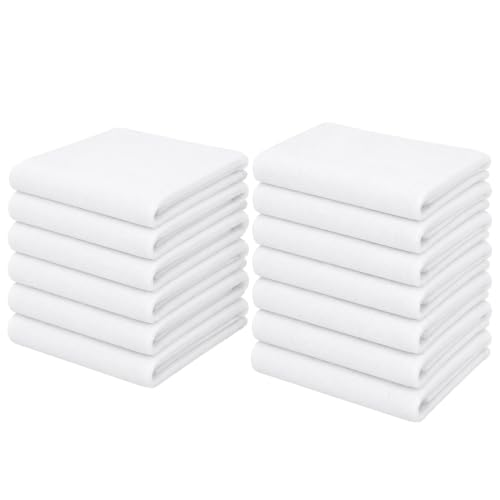
Aunti Em’s set is the benchmark flour sack bundle: thirteen towels at twenty-seven by twenty-seven inches, a size that handles a full rack of dishes and still folds neatly over an oven handle. The flour sack weave is thin and smooth, so the towels dry quickly between uses and leave glassware and stainless steel free of lint and streaks. That combination of size, count, and finish is why this style of towel shows up in so many working kitchens.
Thirteen pieces is a practical rotation: several in use, several in the wash, and a couple reserved for bread proofing or produce drying. The white cotton tolerates hot machine washing, and the towels soften further over the first few cycles. Flour sack fabric is not made for scrubbing baked-on pans, and like all thin weaves it will eventually wear at the fold lines, but at this pack size replacing the set is a minor event rather than a purchase decision.
Specs
| Feature | Detail |
|---|---|
| Material | Cotton flour sack weave |
| Size | 27 by 27 inches each |
| Count | Set of 13 |
| Best for | Drying dishes and glassware |
| Care | Machine wash hot |
HONEST WEAVE Organic Flour Sack Towels, 12-Pack

HONEST WEAVE takes the same flour sack formula and certifies the fiber. These towels are made from GOTS-certified organic cotton, which documents how the cotton was grown and processed for buyers who track that chain. The twelve-pack matches the Aunti Em’s format closely at twenty-seven by twenty-seven inches per towel, with the same thin, lint-free weave that makes flour sack the glassware standard.
In daily use the differences from conventional flour sack towels are subtle: the hand feel is soft from the start, and the set arrives without the stiff sizing that some new towels carry. The organic certification is the real reason to choose this set, and it costs a little more per towel than conventional equivalents. Care follows the usual flour sack rules: wash hot, skip the fabric softener, and expect absorbency to peak after the first few washes as the fibers open up.
Specs
| Feature | Detail |
|---|---|
| Material | GOTS-certified organic cotton |
| Size | 27 by 27 inches each |
| Count | 12-pack |
| Best for | Lint-free drying, certified fiber |
| Care | Machine wash, no fabric softener |
Aunt Martha’s Flour Sack Dish Towels, 2-Pack

Aunt Martha’s is the old-school name in flour sack towels, sold for years to cooks and crafters alike. The two-pack of twenty-eight by twenty-eight inch towels is the largest format in this group, and the smooth, even weave has a second career: it is a favorite surface for hand embroidery and stamping, which is why these towels often end up as handmade gifts. As working dish towels they are generously sized, quick to dry, and properly lint-free.
The small pack count is the trade-off. Two towels suit a single cook, a camper kitchen, or someone testing whether flour sack fabric suits them before buying a dozen. Households that cook daily will cycle through two towels too fast and end up drying dishes with a damp cloth by midweek. Think of this pack as the trial size or the craft pick, and size up to a bigger bundle if it becomes your daily driver.
Specs
| Feature | Detail |
|---|---|
| Material | Cotton flour sack weave |
| Size | 28 by 28 inches each |
| Count | 2-pack |
| Best for | Trial size, embroidery and crafts |
| Care | Machine wash hot |
WHITEWRAP Flour Sack Towels, 24-Pack

WHITEWRAP’s twenty-four pack is the volume answer for households that burn through towels: big families, frequent entertainers, and anyone who uses a fresh towel for every job from drying herbs to covering dough. At eighteen by twenty-eight inches, each towel is a rectangle rather than a square, a shape that drapes over a shoulder and lines a sheet pan neatly. The per-towel cost in a pack this size is the lowest in the group, which changes behavior in a good way: nobody rations a towel that costs so little to replace.
The flour sack weave keeps the lint-free drying performance the style is known for, and the white cotton handles hot washes that keep a big rotation sanitary. The rectangular cut is slightly less handy for wrapping round loaves than the big squares, and a pack of twenty-four needs a real drawer or shelf. For high-throughput kitchens, though, running out of dry towels stops being a problem entirely.
Specs
| Feature | Detail |
|---|---|
| Material | Cotton flour sack weave |
| Size | 18 by 28 inches each |
| Count | 24-pack |
| Best for | Bulk rotation, big households |
| Care | Machine wash hot |
Utopia Towels Kitchen Towels, 12-Pack

Utopia Towels represents the other school of dish towel: ring-spun cotton bar towels, fifteen by twenty-five inches, in a twelve-pack. Ring-spun cotton is smoother and stronger than basic open-end cotton, and these towels are woven for absorbency and repeated laundering rather than for lint-free polishing. They are the towels you grab for a flooded counter, a sink full of pots, or drying a stack of everyday plates, and the black colorway shown here hides the stains that working towels collect.
The smaller footprint suits compact kitchens and bar setups, and a dozen pieces keep the rotation healthy. What they will not do is polish a wine glass to a streak-free shine the way flour sack fabric does, since the textured weave can leave fibers on glass. Pair this set with a couple of flour sack towels for glass duty and the kitchen is covered on both fronts, which is how many households end up organizing the drawer.
Specs
| Feature | Detail |
|---|---|
| Material | Ring-spun cotton |
| Size | 15 by 25 inches each |
| Count | 12-pack |
| Color shown | Black |
| Best for | Heavy drying and cleanup |
Who Should Skip It
Skip flour sack towels if your main jobs are scrubbing and spill control, because the thin weave saturates fast and has no scrub texture; terry or bar towels serve better there. Skip the bulk twenty-four pack if your storage is a single shallow drawer. Skip white towels if you know they will never see a hot wash and will look tired within a month; a colored set ages more gracefully. And skip replacing your towels at all if your current set is absorbent and fresh-smelling, since technique and laundry habits matter more than brand at this level.
FAQ
Why do flour sack towels leave glassware streak-free?
The thin, plain weave has a smooth surface with very few loose fibers, so it wipes water away instead of pushing it around or shedding lint onto the glass. The fabric also absorbs quickly and releases water when wrung, which keeps the working surface drier through a full rack of dishes.
How many dish towels should a kitchen own?
A dozen is a comfortable minimum for a household that cooks daily, allowing a fresh towel each day plus spares for spills while a load washes. Bigger households and heavy bakers often keep two dozen. The real test is simple: if you ever reach for a damp towel because the clean ones are gone, the rotation is too small.
Should I use fabric softener on dish towels?
No. Fabric softener and dryer sheets coat cotton fibers with a film that reduces absorbency, which is the opposite of what a dish towel is for. Wash towels hot with regular detergent, and if they develop a sour smell, a hot wash with a cup of white vinegar in the rinse usually resets them.
When should dish towels be replaced?
Replace them when they stay stiff after washing, hold a sour odor through a hot cycle, or have thinned enough to tear at the folds. Working towels in a busy kitchen commonly last a year or two of heavy rotation. Demote aging towels to garage and cleaning duty before discarding them.
Final Verdict
The Aunti Em’s Kitchen set is the easiest recommendation: thirteen big, lint-free flour sack towels that cover drying, polishing, and everyday wiping without fuss. Choose HONEST WEAVE when certified organic cotton matters, Aunt Martha’s for a trial pair or craft use, and WHITEWRAP when the household runs through towels by the dozen. Add the Utopia Towels bar towels for heavy cleanup duty, and the classic two-style drawer is complete.