Our Short List of 3
All 5 Picks at a Glance
| Product | Specs | Action |
|---|---|---|
 1. Rough Country 2″ Wheel Spacer 1101 | Check price on Amazon | |
 2. ECCPP 6×5.5 Wheel Spacers 2″ | Check price on Amazon | |
 3. EVIL ENERGY 6×5.5 Wheel Spacers 2″ | Check price on Amazon | |
 4. KSP 6×5.5 Wheel Spacers 2″ | Check price on Amazon | |
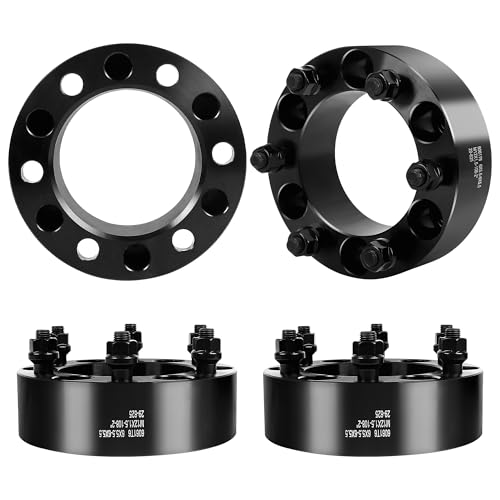 5. EZISOE 2″ 6×5.5 Wheel Spacers | Check price on Amazon |
Key takeaways
- Best hub centric wheels spacers: hub-matched bolt-on spacers for GM, Toyota and Ford trucks, with bore, pattern and thickness notes for a true fit.
Disclosure: As an Amazon Associate, this site may earn from qualifying purchases made through links on this page.
Intro
A hub centric wheel spacer centers the wheel on the hub instead of on the lug studs. The spacer has a lip or a bore that matches the hub diameter, so the hub carries the weight and the studs only clamp the wheel in place. That is the difference between a hub centric spacer and a lug centric spacer, where the studs do all the centering work and a small error can show up as vibration at highway speed.
This guide covers bolt-on hub centric wheel spacers for trucks, the kind that bolt to the hub with their own studs and then take the wheel on those studs. Every pick is a 2-inch spacer in a 6-lug pattern, because that is the size most truck owners shop for, and every pick names the hub bore it fits. The first pick is the strongest in the group, with a live product page confirmed in this session. Two more are explicitly hub centric in their listing names. Two more name a hub bore in the listing but do not use the words hub centric in the title, and the article flags both plainly so you can confirm the wording on the live listing before ordering.
Wheel spacers change how a wheel sits on a truck, and that changes handling, clearance, and load on the suspension. They also sit in a legal grey area in some states and can affect a factory warranty, so check the rules where you live and the terms of your warranty before fitting them. Torque the spacer studs to the figure in the listing or the vehicle manual, re-torque after the first 50 to 100 miles, and check them again at every tire rotation.
At a Glance
- Rough Country 2″ Wheel Spacer 1101 — 6×5.5, 3.08-inch hub bore, GM 1500 trucks, 6061-T6 aluminum, pair, live page confirmed.
- ECCPP 6×5.5 Wheel Spacers 2″ — 106mm hub side to 95.1mm wheel bore, Toyota 4Runner and FJ Cruiser, 2 pieces.
- EVIL ENERGY 6×5.5 Wheel Spacers 2″ — Hubcentric lip, 93.1mm hub bore, Ford Ranger and Bronco, 2-inch size.
- KSP 6×5.5 Wheel Spacers 2″ — 78.1mm hub bore, forged, GM 1500 trucks, 2 pieces, confirm hub centric wording on the listing.
- EZISOE 2″ 6×5.5 Wheel Spacers — 108mm hub bore, forged, Toyota 6-lug trucks, 4 pieces, confirm hub centric wording on the listing.
How to Choose
Match the hub bore first. A hub centric spacer works only when its bore matches the hub it bolts to. A spacer with a bore larger than the hub will not center the wheel, and a spacer with a bore smaller than the hub will not fit at all. Measure the hub diameter on your truck or check the vehicle manual, then match it to the bore figure in the listing. The picks in this guide cover 78.1mm, 93.1mm, 95.1mm, 106mm, 108mm, and 3.08 inches, so the right bore depends on the truck.
Match the bolt pattern and the stud thread. The picks here are all 6×5.5 inches, also written as 6×139.7mm, which is the common 6-lug pattern for GM, Toyota, and Ford trucks. The stud thread differs by brand: GM trucks use M14x1.5, many Toyotas use 12×1.5, and the Ford Ranger and Bronco use M12x1.5. A spacer with the wrong thread will not take your lug nuts, so confirm the thread in the listing against your truck.
Pick the thickness for the job. A 2-inch spacer moves the wheel out by 2 inches per side, which is 4 inches of extra track width across the axle. That helps clear larger tires and wider wheels, and it gives a wider stance. Thinner spacers exist for small clearance fixes, and thicker spacers exist for wide tires, but 2 inches is the common choice for trucks running larger tires with stock wheels.
Check the material and the studs. Forged or billet 6061-T6 aluminum is the standard for a quality spacer, and the studs should be preinstalled and rated for the load. Avoid spacers with cast aluminum or with studs that look thin for the truck. A spacer that comes as a pair covers one axle; a set of four covers the whole truck.
Check fender and suspension clearance. Pushing the wheel out changes where the tire swings at full lock, and it can rub the fender liner or the frame. It also changes the scrub radius, which can change steering feel. Check the fit with the wheels turned lock to lock and the suspension compressed before driving, and trim or adjust only if you are comfortable doing so.
Torque and re-torque. A bolt-on spacer bolts to the hub with its own nuts, and the wheel bolts to the spacer studs. Torque both sets to the figure in the listing or the vehicle manual, then re-torque after the first 50 to 100 miles. The Rough Country listing’s question section gives 100 to 120 foot-pounds for its spacer nuts, which is a useful reference, but always follow the figure for your own spacer and truck.
The Picks
1. Rough Country 2″ Wheel Spacer 1101
Rough Country 2″ Wheel Spacer 1101
The Rough Country 1101 is the strongest pick in this guide, and its live product page was confirmed in this session, with Add to Cart and Buy Now both present. It is a 2-inch spacer in 6×5.5 inches, also written as 6×139.7mm, with a 3.08-inch center bore that matches the GM hub, so the spacer centers on the hub rather than on the studs. It is made from 6061-T6 aircraft-grade aluminum, comes with preinstalled studs, and is sold as a pair covering one axle. The stud thread is M14x1.5, which matches GM trucks.
The fit list covers 1988 to 2020 Chevrolet Silverado and GMC Sierra 1500 trucks, plus the Tahoe, Yukon, Suburban, Avalanche, Escalade, and H2 in the same years, all with a 6-lug pattern. The listing also notes that the spacer does not fit 1988 to 1998 models with rear drum brakes. The spacer is covered by a limited lifetime warranty from Rough Country, and the listing’s question section gives 100 to 120 foot-pounds as the torque figure for the spacer nuts.
This is the pick for a GM 1500 owner who wants a hub-matched spacer with a live listing and a clear fit list. The 3.08-inch bore matches the GM hub, so the wheel centers on the hub as intended, and the 6061-T6 aluminum with preinstalled studs is the build to look for. Confirm the brake type on 1988 to 1998 models before ordering, since the rear drum brake version does not fit.
2. ECCPP 6×5.5 Wheel Spacers 2″
The ECCPP is a 2-inch spacer in 6×5.5 inches, sold as 2 pieces covering one axle. The listing’s model name is “hubcentri wheel spacers”, and the spacer has a 106mm bore on the hub side and a 95.1mm bore on the wheel side, with 14×1.5 studs. That two-bore shape is how a hub centric spacer works: the hub side matches the truck hub, and the wheel side matches the wheel bore, so the wheel stays centered on the hub.
The fit list covers the Toyota 4Runner from 1996 to 2009 and the FJ Cruiser from 2007 to 2014. The spacer is a bolt-on design, so it bolts to the hub with its own nuts and the wheel bolts to the spacer studs. The listing states that the spacer is made for a 2-inch track increase per side.
This is the pick for a Toyota 4Runner or FJ Cruiser owner who wants a hub centric spacer with a named hub bore on both sides. The 106mm hub side and 95.1mm wheel side are the figures to check against your truck and your wheels, since a wheel with a different bore will not center on the spacer lip. Confirm the stud thread and the bore figures before ordering.
3. EVIL ENERGY 6×5.5 Wheel Spacers 2″
EVIL ENERGY 6×5.5 Wheel Spacers 2″
The EVIL ENERGY is a 6×5.5 spacer with a hubcentric lip, a 93.1mm hub bore, and M12x1.5 studs. The listing comes in more than one thickness, including a 2-inch size, so select the 2-inch size when ordering; the 2-inch listing is sold as 2 pieces in black. The lip is the part that matters: it is the raised ring that centers the wheel on the hub, so the wheel does not hang on the studs alone.
The fit list covers the Ford Ranger from 2011 to 2024 and the Ford Bronco from 2021 to 2024. The spacer is a bolt-on design, and the black finish suits trucks with black wheels or dark trim. The listing states that the spacer is forged, which is the build to look for in a spacer that carries a truck’s load.
This is the pick for a Ford Ranger or Bronco owner who wants a hubcentric spacer with a named lip and bore. The 93.1mm hub bore matches the Ford hub, and the M12x1.5 studs match the Ford lug nuts. Confirm the year and the lug count on your truck before ordering, since the Ranger and Bronco have both 5-lug and 6-lug versions in some years.
4. KSP 6×5.5 Wheel Spacers 2″
The KSP is a 2-inch spacer in 6×5.5 inches, sold as 2 pieces, with a 78.1mm hub bore and M14x1.5 studs. The fit list covers the Chevrolet Silverado 1500, GMC Sierra 1500, Yukon XL, Tahoe, Escalade, and Avalanche. The listing describes the spacer as forged, and it names the 78.1mm hub bore in the title, which is the hub figure for GM 1500 trucks.
One flag matters here, and the article states it plainly: the listing title does not use the words hub centric, and a related KSP listing for a 108mm spacer is titled as a lug centric spacer. That does not prove this 78.1mm spacer is lug centric, since the 78.1mm bore matches the GM hub, but it does mean you should confirm the hub centric wording on the live listing before ordering. The bore figure is right for the truck, and the forged build and M14x1.5 studs match GM practice, so this spacer is worth checking rather than skipping.
This is the pick for a GM 1500 owner who wants a forged spacer with the right hub bore and is willing to confirm the hub centric wording on the listing. If the live listing does not confirm hub centric fitment, the Rough Country 1101 in this guide is the safer GM choice.
5. EZISOE 2″ 6×5.5 Wheel Spacers
The EZISOE is a 2-inch spacer in 6×5.5 inches, sold as 4 pieces, with a 108mm hub bore and 12×1.5 ET lug nuts included. The fit list covers the Toyota Tacoma, 4Runner, FJ Cruiser, Sequoia, and Tundra in 6-lug form, plus the Lexus GX, Chevrolet Colorado, and GMC Canyon. The listing describes the spacer as forged, and the 108mm hub bore is the Toyota hub figure, so the spacer is shaped to center on the hub.
The same flag applies here as with the KSP pick, and the article states it plainly: the listing title names the 108mm hub bore but does not use the words hub centric, so confirm the hub centric wording on the live listing before ordering. The included ET lug nuts are a useful extra, since extended thread lug nuts help the wheel seat fully on the spacer studs.
This is the pick for a Toyota 6-lug truck owner who wants a forged spacer with the right hub bore and included lug nuts, and who is willing to confirm the hub centric wording on the listing. If the live listing does not confirm hub centric fitment, the ECCPP spacer in this guide is the safer Toyota choice, since its listing names hub centric fitment directly.
Comparison Table
| Pick | Pattern | Thickness | Hub bore | Stud thread | Fits |
|---|---|---|---|---|---|
| Rough Country 1101 | 6×5.5 in | 2 in | 3.08 in | M14x1.5 | GM 1500 trucks, Tahoe, Yukon, Suburban |
| ECCPP | 6×5.5 in | 2 in | 106mm hub side, 95.1mm wheel side | 14×1.5 | Toyota 4Runner, FJ Cruiser |
| EVIL ENERGY | 6×5.5 in | 2 in | 93.1mm | M12x1.5 | Ford Ranger, Bronco |
| KSP | 6×5.5 in | 2 in | 78.1mm | M14x1.5 | GM 1500 trucks, Tahoe, Yukon, Escalade |
| EZISOE | 6×5.5 in | 2 in | 108mm | 12×1.5 | Toyota Tacoma, 4Runner, FJ Cruiser, Sequoia, Tundra, Lexus GX, Chevy Colorado, GMC Canyon |
Which One Fits Your Situation
- GM 1500 truck with a live, confirmed listing: the Rough Country 1101. Its 3.08-inch bore matches the GM hub, its page was confirmed live in this session, and its fit list is the clearest in the group. Confirm the brake type on 1988 to 1998 models.
- Toyota 4Runner or FJ Cruiser: the ECCPP. Its listing names hub centric fitment directly, with a 106mm hub side and a 95.1mm wheel side, so both the hub and the wheel center on the spacer.
- Ford Ranger or Bronco: the EVIL ENERGY. Its listing names a hubcentric lip and a 93.1mm hub bore, which matches the Ford hub, and the M12x1.5 studs match the Ford lug nuts.
- GM 1500 truck, forged build, willing to confirm the wording: the KSP. Its 78.1mm bore matches the GM hub, but confirm the hub centric wording on the live listing before ordering, since the title does not use those words.
- Toyota 6-lug truck, forged build with lug nuts included: the EZISOE. Its 108mm bore matches the Toyota hub, but confirm the hub centric wording on the live listing before ordering, since the title does not use those words.
FAQ
What does hub centric mean?
Hub centric means the wheel centers on the hub, not on the lug studs. A hub centric spacer has a bore or a lip that matches the hub diameter, so the hub carries the weight and the studs only clamp the wheel in place. A lug centric spacer has a larger bore, so the studs do the centering work, which can show up as vibration if the wheel sits slightly off center.
Do I need hub centric spacers or will lug centric spacers work?
A lug centric spacer can work if the wheel is centered carefully by hand and torqued in a crisscross pattern, but a hub centric spacer centers the wheel by shape, which is more repeatable. For a daily driver or a truck that sees highway speed, a hub centric spacer is the safer choice, since vibration from an off-center wheel wears tires and bearings.
How do I measure my hub bore?
Measure the diameter of the raised hub on the axle, the part the wheel bore slides over, with a caliper. The figure is in millimeters on most trucks, or in inches on older GM trucks. Match that figure to the hub bore in the spacer listing. If the spacer bore is larger than the hub, the spacer will not center the wheel; if it is smaller, the spacer will not fit.
Will 2-inch spacers rub the fenders?
A 2-inch spacer moves the wheel out by 2 inches per side, which changes where the tire swings at full lock. With stock tires, rubbing is unlikely, but with larger tires or wider wheels, the tire can touch the fender liner or the frame. Turn the wheels lock to lock and check the clearance before driving, and look at the suspension at full compression if you can.
How often should I re-torque wheel spacers?
Torque the spacer nuts and the wheel lug nuts to the figure in the listing or the vehicle manual when you fit them, then re-torque after the first 50 to 100 miles. Check them again at every tire rotation, and any time the wheels come off. A loose spacer nut is a serious safety problem, so do not skip the re-torque.
Final Take
The Rough Country 1101 is the strongest pick in this guide because its 3.08-inch bore matches the GM hub and its live page was confirmed in this session. The ECCPP and EVIL ENERGY spacers are the clean hub centric choices for Toyota and Ford trucks, since their listings name hub centric fitment directly. The KSP and EZISOE spacers have the right hub bores for GM and Toyota trucks, but their titles do not use the words hub centric, so confirm the wording on the live listing before ordering. Whichever spacer you choose, match the hub bore, the bolt pattern, and the stud thread to your truck, torque everything to the right figure, and re-torque after the first miles. The hub bore is the figure that decides whether a spacer is truly hub centric, so let it make the call.